
The Christian Mind Reset
Intrusive Thoughts, Taking Thoughts Captive, and the Neuroscience of Renewing the Mind
Jun 18, 2026 · 23m
Prefer sermons downloaded automatically?
About this sermon
SHOW NOTES
Have you ever had a thought enter your mind that felt disturbing, unwanted, or completely inconsistent with who you are?
Many Christians experience intrusive thoughts and immediately feel fear, guilt, or shame. They wonder if the thought means something about their character, their faith, or their relationship with God.
But what if the presence of a thought is not the same thing as agreement with a thought?
In today’s episode of The Christian Mind Reset, Dr. April Joy explores intrusive thoughts through the lens of Scripture, neuroscience, and psychology. You’ll learn what intrusive thoughts are, why they occur, what happens in the brain when unwanted thoughts become “sticky,” and how biblical principles align with what we know about attention, thought patterns, and neuroplasticity.
We’ll discuss the neuroscience behind intrusive thoughts, including the role of the amygdala (the brain’s alarm system), the hippocampus (memory processing), and the prefrontal cortex (reasoning and decision-making). We’ll also examine Daniel Wegner’s famous “White Bear” studies and why trying to force thoughts away often makes them more noticeable.
Most importantly, we’ll explore what Scripture teaches about taking thoughts captive, renewing the mind, and finding freedom from shame.
Today’s episode reminds us that we are not defined by every thought that enters our minds. Our identity is found in Christ.
In This Episode
• What intrusive thoughts are and why they are often misunderstood
• The difference between a thought, a temptation, and an action
• The neuroscience of intrusive thoughts explained in simple language
• Daniel Wegner’s thought suppression research and the “White Bear” experiments
• Why fighting a thought can sometimes make it feel stronger
• Psalm 139 and the comfort of being fully known by God
• What 2 Corinthians 10:5 means when it says to “take every thought captive”
• Neuroplasticity and how repeated focus shapes the brain
• Practical ways to respond to unwanted thoughts
• Biblical truths for overcoming shame and fear
Key Scriptures
Psalm 139:1-3
Psalm 139:23-24
Philippians 4:8
2 Corinthians 10:5
Romans 8:1
Romans 8:6
2 Timothy 1:7
1 Peter 5:7
Hebrews 4:15
Key Takeaway
The thought that arrives is not your identity.
Not every thought deserves your attention, agreement, or fear. Scripture teaches us to examine our thoughts, compare them against truth, and redirect our minds toward what is good, true, and praiseworthy. Through God’s Word, the renewing work of the Holy Spirit, and intentional focus, we can learn to respond to unwanted thoughts with wisdom rather than shame.
Connect with Dr. April Joy:
Connect with Dr. April Joy:
Substack: The Christian Mind Reset
If you liked today’s episode, please subscribe, leave a review, follow, like, or share. You can find me on Instagram at @thechristianpsychnp and also on Instagram and Substack at The Christian Mind Reset for more Scripture, neuroscience, and practical tips for renewing your mind.
My eBook, The Christian Mind Reset: A 28-Day Psalms Guide to Biblical Meditation, Neuroscience, and Renewing Your Mind, is available in my Stan Store at https://stan.store/thechristianpsychnp
Disclaimer
Disclaimer: This podcast/letter is for informational purposes only. It contains general information, drawn from my experience, research, and best practices. It is not health care advice, and is not intended to replace the counsel of your health care provider. Consult your provider before starting any new treatments or making changes to your health routine. This message does not constitute a provider-patient relationship between us.
If you are experiencing significant anxiety, distress, or need support, please seek care from a qualified healthcare professional. You may also consider reaching out to a licensed Christian counselor or pastor for additional support.
Emails, portal messages, text messages, and other communications are not monitored and will not receive a response in an emergency or crisis, or regarding medical or therapy advice. These methods should never be used for medical advice, therapy, urgent, crisis, emergent, or time-sensitive concerns. If you are experiencing a medical or psychiatric emergency, are in crisis, having thoughts of harming yourself or others, or feel unsafe, call 911 (US), or contact your local emergency services, or go to the nearest emergency room or hospital immediately.
References
Anderson, M. C., & Green, C. (2001). Suppressing unwanted memories by executive control. Nature, 410(6826), 366–369.
Harvard Health Publishing. (2024). Managing intrusive thoughts. Harvard Medical School.
Norman, L. J., Taylor, S. F., Liu, Y., Radua, J., Chye, Y., & de Wit, S. J. (2019). Error processing and inhibitory control in obsessive-compulsive disorder: A meta-analysis. Biological Psychiatry, 85(9), 713–725.
Thomas Nelson. (1982). The Holy Bible, New King James Version. Thomas Nelson.
Wegner, D. M., Schneider, D. J., Carter, S. R., & White, T. L. (1987). Paradoxical effects of thought suppression. Journal of Personality and Social Psychology, 53(1), 5–13.
This is a public episode. If you would like to discuss this with other subscribers or get access to bonus episodes, visit thechristianmindreset.substack.com
More from The Christian Mind Reset
The Neuroscience of Gratitude & Cultivating a Thankful Heart: Daily Declarations
Nov 26, 2026 · 19m
Season 2, Episode 5The Christian Mind Reset | Daily DeclarationsWhat happens in the brain when we practice gratitude? Can cultivating a thankful heart influence anxiety, emotional well-being, and even...
Christian Daily Declarations, Neuroplasticity & Scripture: You Are Not Stuck
Nov 23, 2026 · 11m
Season 2, Episode 4The Christian Mind Reset | Daily DeclarationsCan the words we repeatedly speak to ourselves influence the way we think? And what does Scripture teach us about renewing our...
The Power of Self-Talk: 10 Biblical Declarations to Renew Your Mind
Nov 20, 2026 · 12m
Season 2, Episode 3 (Daily Declaration)The Christian Mind Reset | Dr. April JoyDid you know that the words you speak can influence your thoughts, emotions, and behavior? Proverbs 18:21 reminds us that...
The Neuroscience of Fasting: 3 Days With Jesus and the Feeding of the 4,000
Nov 8, 2026 · 37m
Season 2, Episode 2Show NotesWhat happens to your brain after three days without food? Can fasting affect cellular repair, hormone production, and how your brain uses energy?In this episode of The...
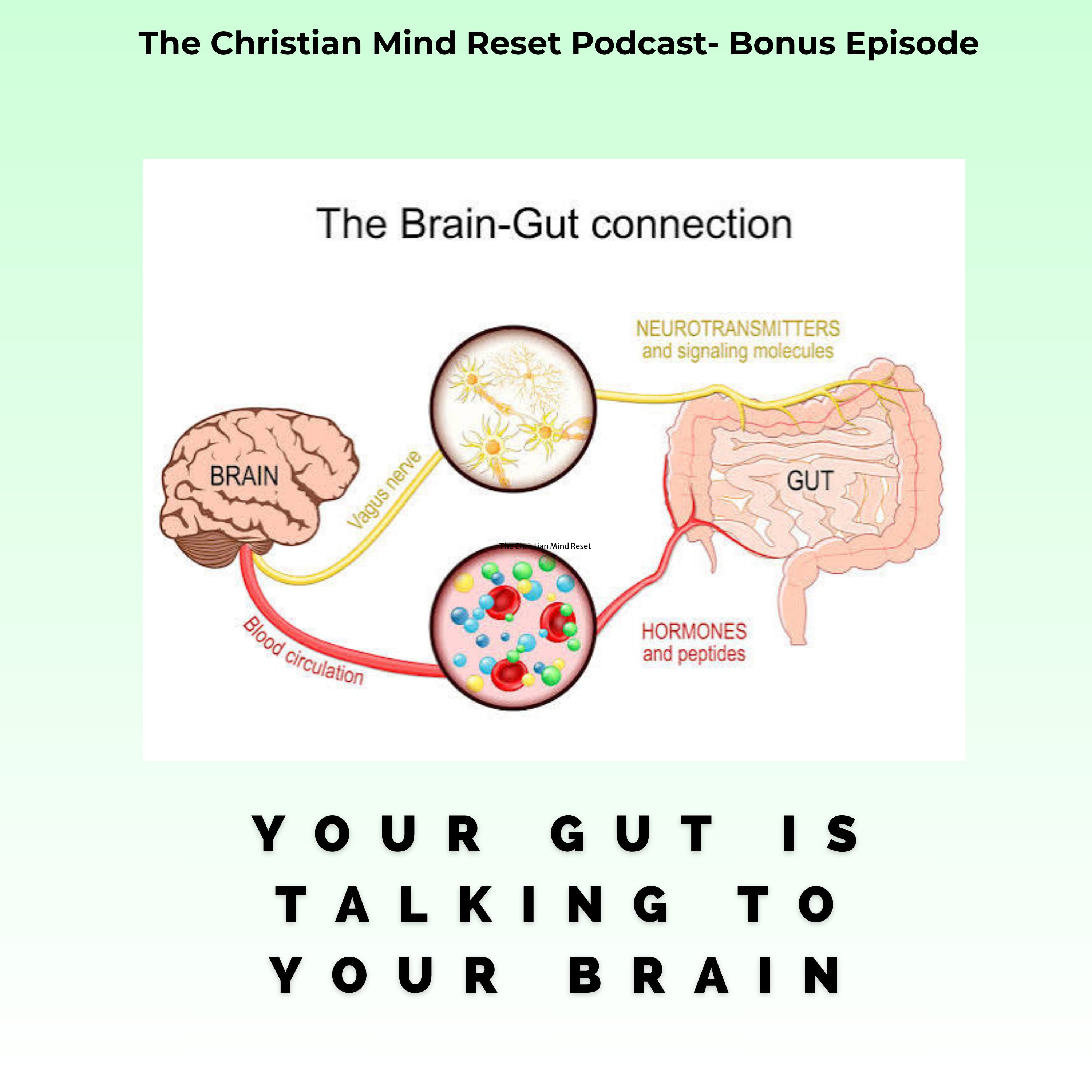
Your Gut Is Talking To Your Brain: Why Anxiety Can Make You Feel Sick & What Psalm 23 Teaches Us About Peace
Sep 10, 2026 · 39m
Bonus EpisodeSeason 2, Episode 1Show NotesWhy can anxiety make the stomach hurt? Why do some people feel nauseated, lose their appetite, experience digestive changes, or feel a pit in their stomach...
The Neuroscience of Renewal: What the “Batman Effect” Can Teach Us About Putting On the New Self
Sep 4, 2026 · 1h 25m
Episode 29, Season 1In the final episode of Season One of The Christian Mind Reset, Dr. April Joy brings together the neuroscience, psychology, and biblical practices explored throughout the past 28...
Take these sermons with you.
Follow The Christian Mind Reset in the Getsermons app to get every new sermon, build playlists, and pick up right where you left off.

