
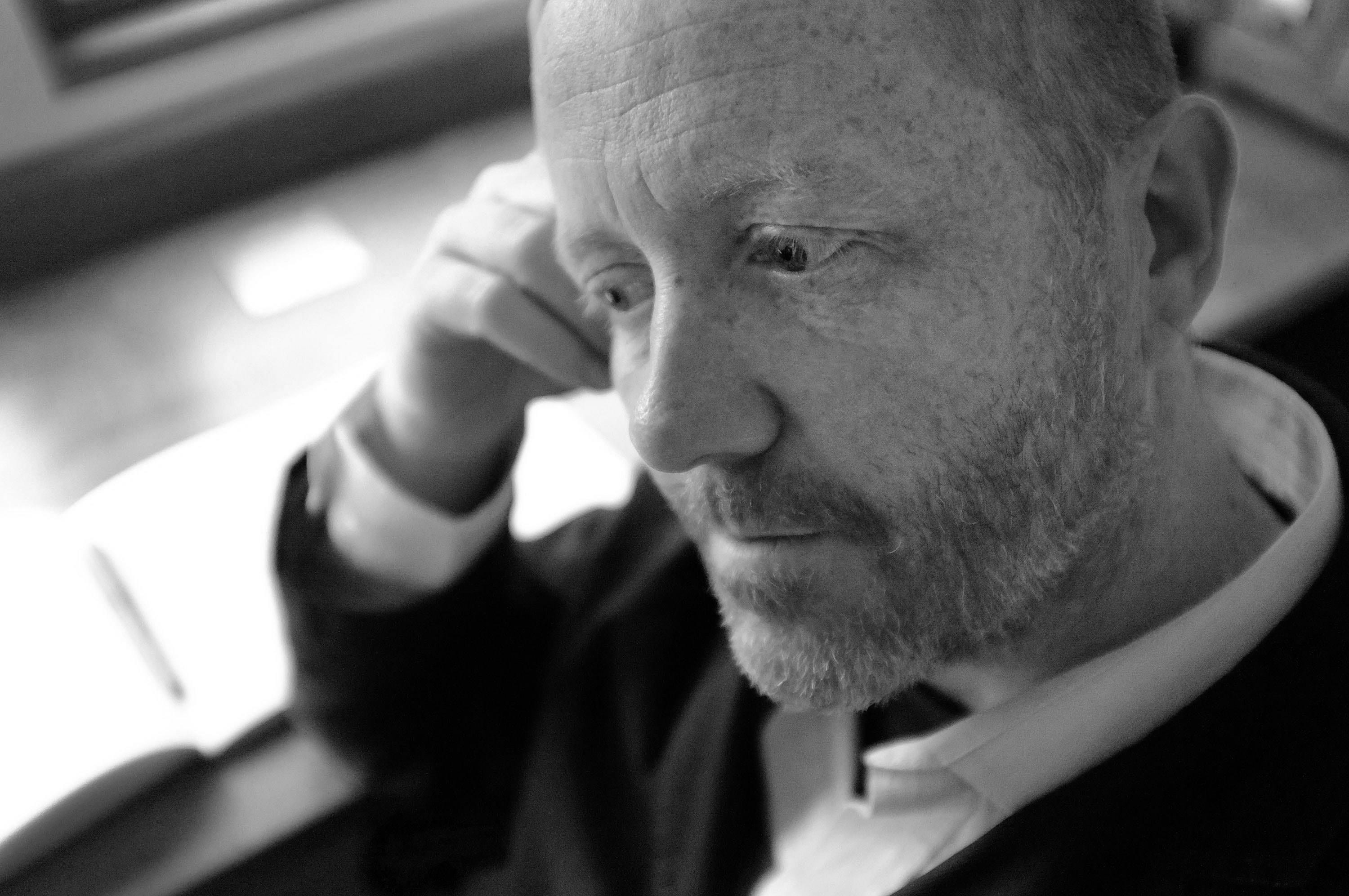
About this sermon
We especially miss those we have lost during holidays and anniversaries. Today we consider the poem Last Words by Michael Symmons Roberts, which was written to commemorate the first anniversary of 9/11. One of the purposes of physicality, says Dr. Thomas Dilworth during our conversation, is the expression of love. He traces love through the motifs of touch, Paradise Lost, the Crucifixion, and the Big Bang. We discover that silence is not absence, as well as the importance of saying “I love you” while we still have the chance.
We trust you will find Dr. Dilworth’s exposition of the poem to be both insightful and moving, as well as the recitation of the poem by Seth Wieck at the end. We’ve included the poem below, in addition to information about the music selected for this episode. There is also a PDF of an essay that Dr. Dilworth wrote about the poem.
Michael Symmons Roberts is an award-winning British poet with a degree in philosophy and theology from Oxford. He is also a librettist, writing operas with the composer James MacMillan. Symmons Roberts is Professor of Poetry at Manchester Metropolitan University. His website is symmonsroberts.com.
The Poem
Last Words
Michael Symmons Roberts
(i)
You have a new message:
Kiss the kids goodbye from me
Keep well, keep strong, you know
I’m sure, but here’s to say I love you.
I lay these voice-prints
like a set of tracks, to stop
you getting lost among the tall trees
beneath the break-less canopy,
on the long slow walk you take
from here without me.
(ii)
You have a new message:
I do not want to leave you this
magnetic print, this digit trace,
my coded and decoded voice.
I do not want to leave you.
If I had a choice, my last words
would be carried to your window
on three slips of sugar paper in
the beaks of birds of paradise.
The words would say,
I’m sure you know,
I love you.
(iii)
You have a new message:
I throw my voice across the city,
but it meets such a cacophony
we overload the network.
Countless last words divert
on to backup spools and hard drives.
Systems analyst turns archaeologist:
his fingertips, as delicate as brushes,
sift through sediment of conferences,
helpline hints, arguments and cold calls,
searching for the ones that say
You know, I’m sure, I love you.
(iv)
You have a new message:
This is the voice you hear in dreams,
this is the tape you cannot
bear to play. This is the voice-mail
you keep in a sealed silk bag
in a tin box in the attic.
But the message is out - in
the sick-beds and the darkened rooms;
in the billowing curtains
and the hush so heavy
you can hear the pulse in your wrists.
The message is out, in the ether,
in the network of digits and wires.
I know, you’re sure, I love you.
(v)
You have a new message:
Don’t remember this, don’t save
this message. Keep instead
the pictures of last Sunday
in the park when summer
leaves were turning, Rollerbladers
hand-in-hand, our boys
throwing fists of cut grass at each other.
Think of the extravagance of green,
and think especially of the sky,
its blinding cloudlessness.
You know, I’m sure, but here’s
to say I love you.
(vi)
You have a new message:
This is the still, small voice
you longed to hear among the ruins.
This is the voice you fished
with microphones on long lines,
lowered into cracks between
the rocks of this new mountain.
And your ears ache with the effort,
the sheer will to listen, to conjure
my words, your name on my lips,
out of nowhere. Here’s to say.
(vii)
You have a new message:
When a city is wounded,
before it moans, before it kneels,
it draws a breath, and keeps it,
as though all phones are on hold,
all radios de-tuned, cathedrals locked
and all parks vacant.
It becomes a windless forest.
But remember, silence is not absence.
Learn to weigh them,
one against the other.
Each room of our house contains
a different emptiness. Listen.
Then break it. Say
you know, I’m sure, I love you.
(viii)
You have a new message:
Do not forget the beauty of aeroplanes,
those long, slow pulses from the sun
which passed above our garden as
we lay out in the heat. Do not forget
their gentle night-time growl,
and how we used to picture people in them
- sleeping, talking, just as we were,
how we used to guess the destinations.
Do not forget the grace of aeroplanes,
the majesty of skyscrapers.
You know, I’m sure.
(ix)
You have a new message:
Still, a year on, you rifle through
black boxes, mail-boxes, voice-boxes,
in search of my final words.
You hunt them in the white noise
between stations on the radio, the blank
face of a TV with the aerial pulled out.
You walk in crowds, wondering
if my words were passed to him,
or her, as messenger. If I’d had time
to leave you words, you know, I’m sure,
they would have been I love you.
(x)
You have a new message:
Now, my voice stored on your mobile,
I can tell you fifty times a day
how much I love you. “Tell the kids,”
I say. I don’t know if you still do.
Sometimes, when you’re out of town,
on trains, or in the shadow of tall buildings
You lose the signal. The network breaks.
You hear vowels splinter in my throat,
as if struck by a sudden despair.
(xi)
You have a new message:
Where did my last words go?
Out and out on radio waves
into the all-engulfing emptiness,
fading to a whisper as they cross
from sky, to space, to nothing.
Or in, and in, as litany repeated
in your heart until all tape is obsolete.
Each cadence, every tongue-tick,
every breath is perfect, as you say
my words: You know, I’m sure.
(xii)
You have a new message:
There is nothing new in this.
My voice has printed like a bruise,
like a kiss, like a kiss so strong
it leaves a bruise. I love you.
You know it, I’m sure.
Beyond the smoking ruins,
smoking planes, and empty rooms,
above and beyond is a network.
A matrix of souls,
as fragile as lace,
but endless and unbreakable.
To save the message, press.
The Music
I chose the well-known composition Gymnopedie No. 1 by Erik Satie for a couple of reasons. The Greek word gymnopaedia refers to an ancient annual festival where young men danced “stripped” either of clothing or of weapons. Symbolically, appropriately, this is the reversal of an event like 9/11, where men took-up weapons, airplanes, in an act of destruction. It is also a reversal of the fall into shame of Adam and Eve. But at the same time, the music points to moments when we can put aside our violence and stand before each other naked and unarmed: physicality as violence vs. physicality as beauty.
The second reason I chose this music was for its intense peacefulness. A commenter online wrote, “It’s a piece that always makes you stop what you’re doing, and feel like you have suddenly become more aware of everything.” The music does what grief does, and what this poem does. Below you will find a downloadable version of the song from Classicals.de.
Our “Fourth” Cohost
Dr. Thomas Dilworth is the author of the collection of poems Here Away. He is also the pre-eminent reader and interpreter of the work of David Jones, and his forthcoming book is on the illustrated limericks of Edward Lear. Here is the essay he wrote about the poem Last Words, which you can download.
Thank you for spending some time with The Color of Dust. We hope you enjoy this special poetry episode. Subscribe to receive future episodes like this one.
This is a public episode. If you would like to discuss this with other subscribers or get access to bonus episodes, visit colorofdust.substack.com
More from The Color of Dust
The Color of Dust Finale
Mar 19, 2026 · 1h 20m
Jack and Seth host the final episode of The Color of Dust, reflecting on the last two years of conversations with Sam, what we set out to do, and what's next. This is a public episode. If you would...
85. The Rolling Rood Screen Manifesto
Feb 11, 2026 · 1h 17m
In this episode, we team up with Dr. Matt Miller (Matt was on episode 34) to continue our conversation about The Rolling Rood Screen (for context, listen to episode 70, More < 1). We were very excited...
84. We Are the Art that Makes Art
Jan 21, 2026 · 1h 4m
It is a human necessity to make art, to tell a story. It is as important to us as food is. Join us as we talk about art that is slow to unfold, and how it is that we are images that need to make...
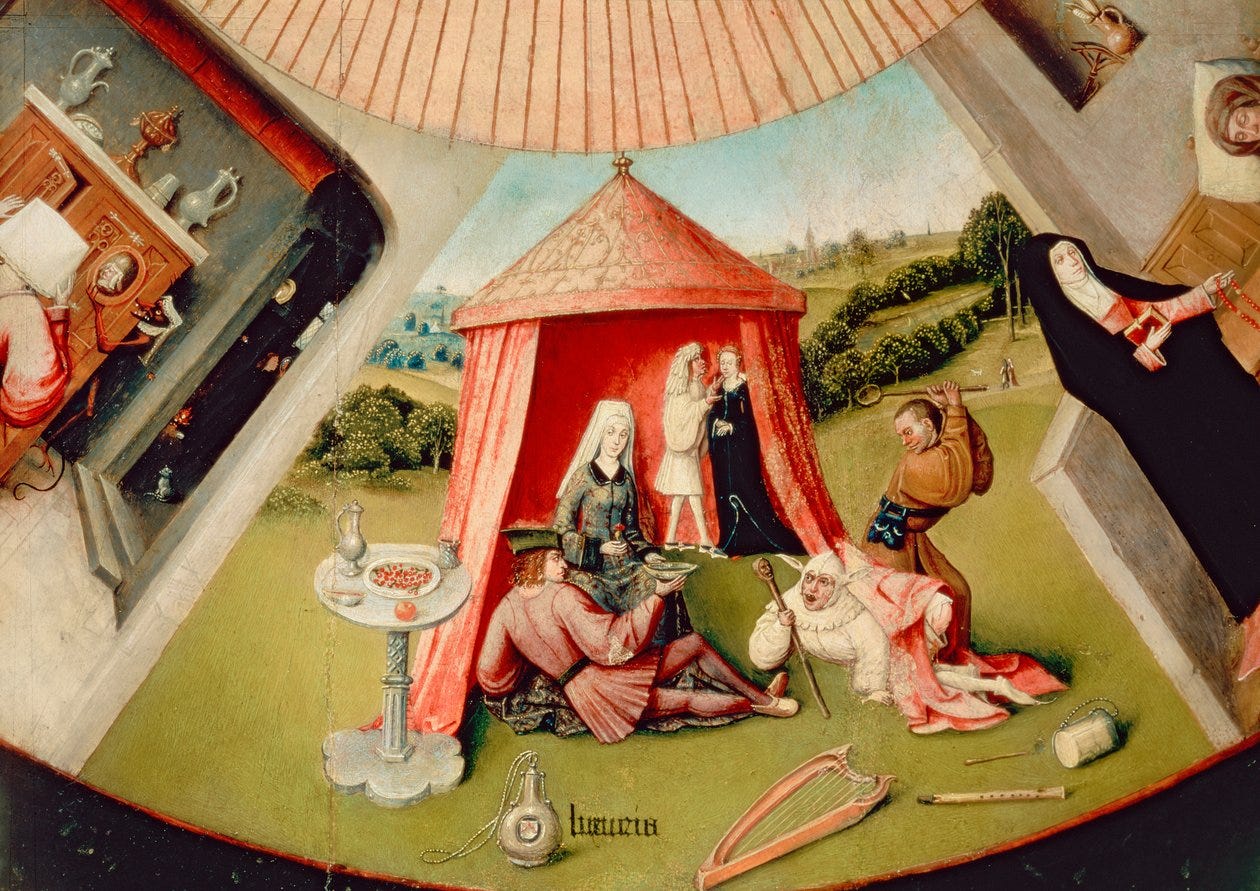
83. Lust, Luxuria
Jan 14, 2026 · 1h 10m
We continue our journey with the table top painting by Hieronymus Bosch (c. 1450-1516) called The Seven Deadly Sins and the Four Last Things. Today we talk about lust or luxuria.Thanks for visiting...
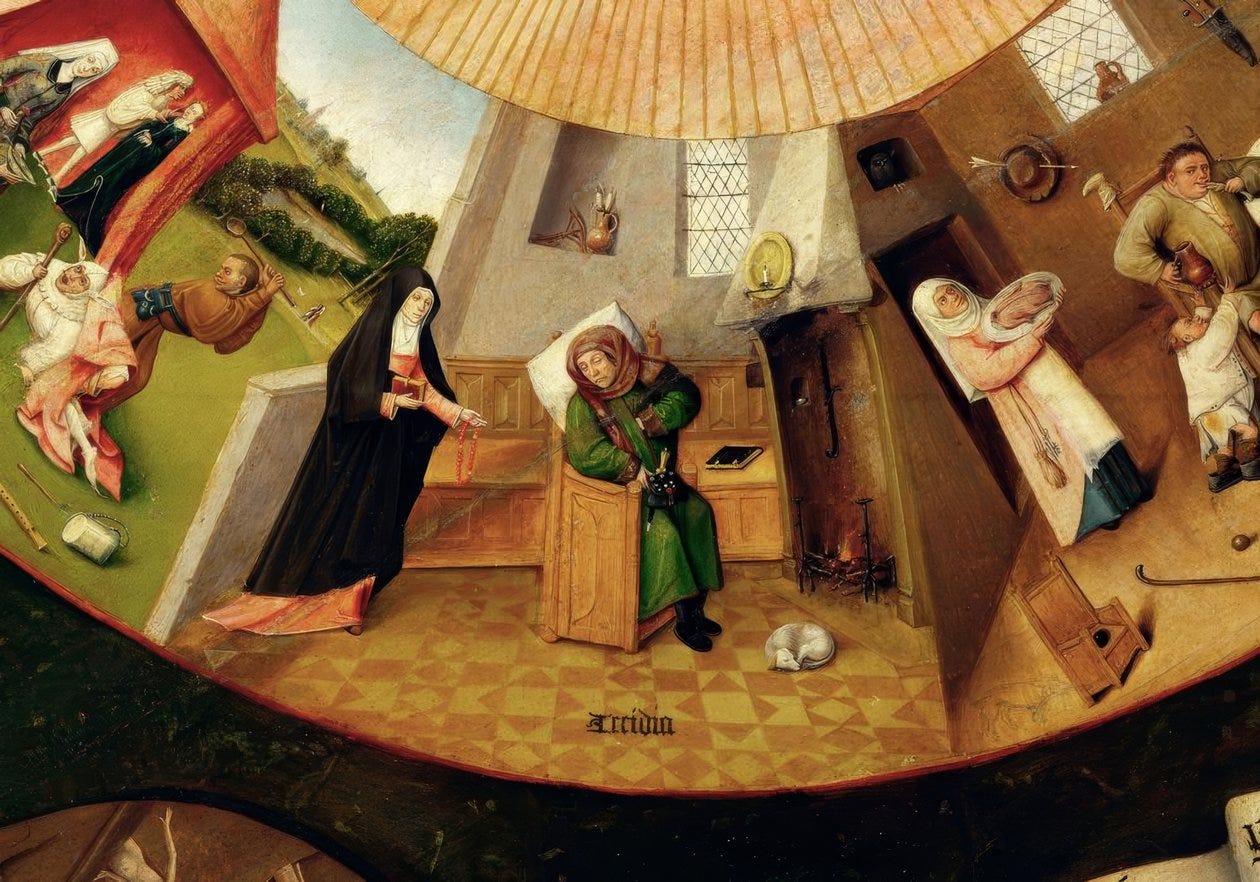
82. Sloth: from Music to Mercy
Dec 31, 2025 · 1h 14m
We continue our journey with the table top painting by Hieronymus Bosch (c. 1450-1516) called The Seven Deadly Sins and the Four Last Things. Today we talk about acedia or sloth, using Jack’s recent...
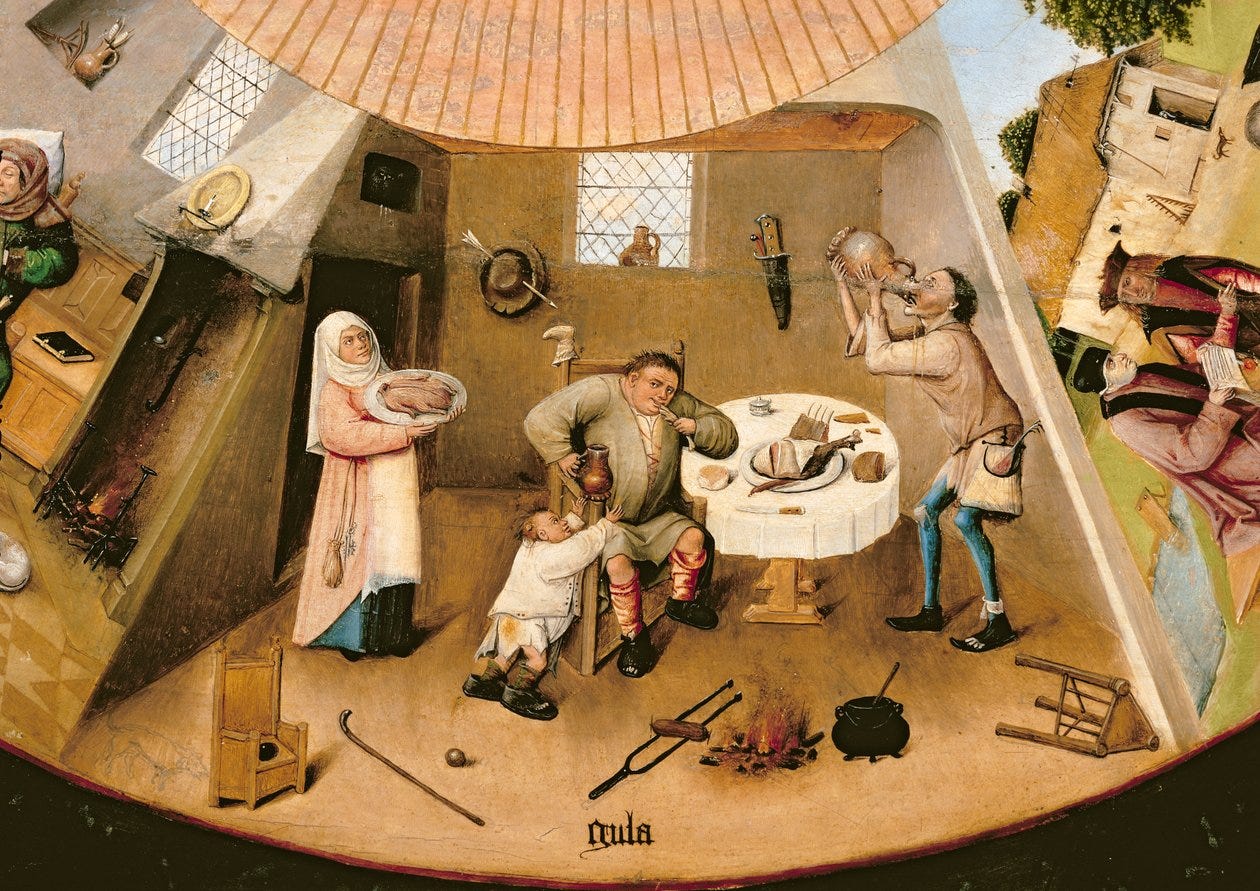
80. Gluttony, Gula
Dec 10, 2025 · 1h 16m
In this episode, we discuss gluttony, or gula, from the table top painting by Hieronymus Bosch (c. 1450-1516) called The Seven Deadly Sins and the Four Last Things. Gluttony does not have to do...
Take these sermons with you.
Follow The Color of Dust in the Getsermons app to get every new sermon, build playlists, and pick up right where you left off.

