
The C.W. Steinle Perspective
Have We Already Given Up?
Apr 26, 2026 · 10m
Prefer sermons downloaded automatically?
About this sermon
Rethinking Israel, Prophecy, and theEnd of the World
What if one of the most widelyaccepted assumptions about the end of the world is not only mistaken—but quietly reshaping how we think, live, and hope?
In this video, we step into one of the most sensitive and consequential conversations of our time: therelationship between modern Israel, biblical prophecy, and the widespread expectation that the world is nearing its end. For generations, many within the West—especially within Christian circles—have been taught to see theestablishment of the State of Israel in 1948 as the central prophetic milestone of our age. For some, it is the sign that history is nearing its final chapter.
But what if that conclusion deserves closer examination?
This presentation does not aim to provoke for the sake of controversy. Rather, it seeks to slow the conversationdown—to examine assumptions carefully, to revisit the biblical text with fresh eyes, and to ask whether our modern frameworks align with what the prophets actually described. The goal is not to dismiss Scripture, but to take itseriously—perhaps more seriously than we have in a long time.
At the heart of this discussion is a simple but weighty question: Have we already given up?
Not given up in the sense of despair—but given up on the full weight of what biblical prophecy promises.Given up on the idea that the restoration of Israel is inseparable from repentance, from divine kingship, and from the unmistakable intervention of God Himself. Given up, perhaps, on the expectation that the culmination of history is something far more definitive than a gradual unfolding of geopolitical events.
The modern narrative often assumes that prophecy can be fulfilled in stages that the prophets themselves neverclearly described—partial fulfillments, incomplete restorations, and ongoing processes that stretch across decades or even centuries. This perspective allows for a kind of “already, but not yet” framework that places currentevents within the trajectory of fulfillment without requiring the full conditions described in Scripture.
But is that how the prophets spoke?
When we return to the biblical text—Isaiah, Ezekiel, Jeremiah, Amos, and others—we encounter a consistent pattern. The restoration of Israel is not presented as a purely political orgeographical event. It is not simply a return to land. It is inseparable from spiritual transformation. It is tied to repentance, to cleansing, to a renewed covenant, and ultimately to the reign of the Messiah. The gathering of Israelis not described as a quiet or ambiguous development—it is depicted as a decisive, unmistakable act of God.
And this raises an important tension.
If the prophets consistently describe restoration in terms that include both physical regathering and spiritual renewal—if they bind the return to the land with recognition of God’skingship—then how should we evaluate a modern development that includes one but not the other?
This is not a political question. It is not even primarily a historical question. It is a theological one.
In this video, we explore that tension carefully and respectfully. We consider how modern interpretations havedeveloped, how they have influenced popular thought, and how they may be shaping expectations about the future in ways we do not always recognize. We also examine the broader cultural impact of apocalyptic thinking—how the belief that the end is imminent can subtly affect how individuals engage with the world around them.
If this video resonates with you…
Subscribe for more content exploring theology, culture, andthe future.
Share this video with someone wrestling with questions about the end times.
Leave a comment: Do you think apocalyptic thinking isshaping our culture more than we realize?
Check out my books: https://www.amazon.com/stores/C.-W.-Steinle/author/B005JK2HNY
More from The C.W. Steinle Perspective
Do the Unborn Have Souls?
Jun 6, 2026 · 5m
When does human life truly begin?That question has been debated for generations, oftenthrough the lenses of biology, medicine, law, philosophy, and politics. But what happens when we step beyond the...
What did Jesus think He was doing on the cross?
May 11, 2026 · 11m
What did Jesus think He was doing on the cross? That question cuts through centuries of religious debate and brings us directly to the claims of Jesus Himself. In this video, we examine the words of...
Israel Prophecy Fulfilled… or Assumed?
Apr 18, 2026 · 7m
What if one of the most widely accepted beliefs in modern Christianity—repeated from pulpits, reinforced through bestselling books, and echoed across headlines—has quietly shifted from...
History's Best Kept Secret about Christians and Jews
Apr 13, 2026 · 9m
Is fellowship between Christians and Jews truly possible—and if so, on what terms?The Fellowship of Christians and Jews explores one of the most profound and often misunderstood questions in...
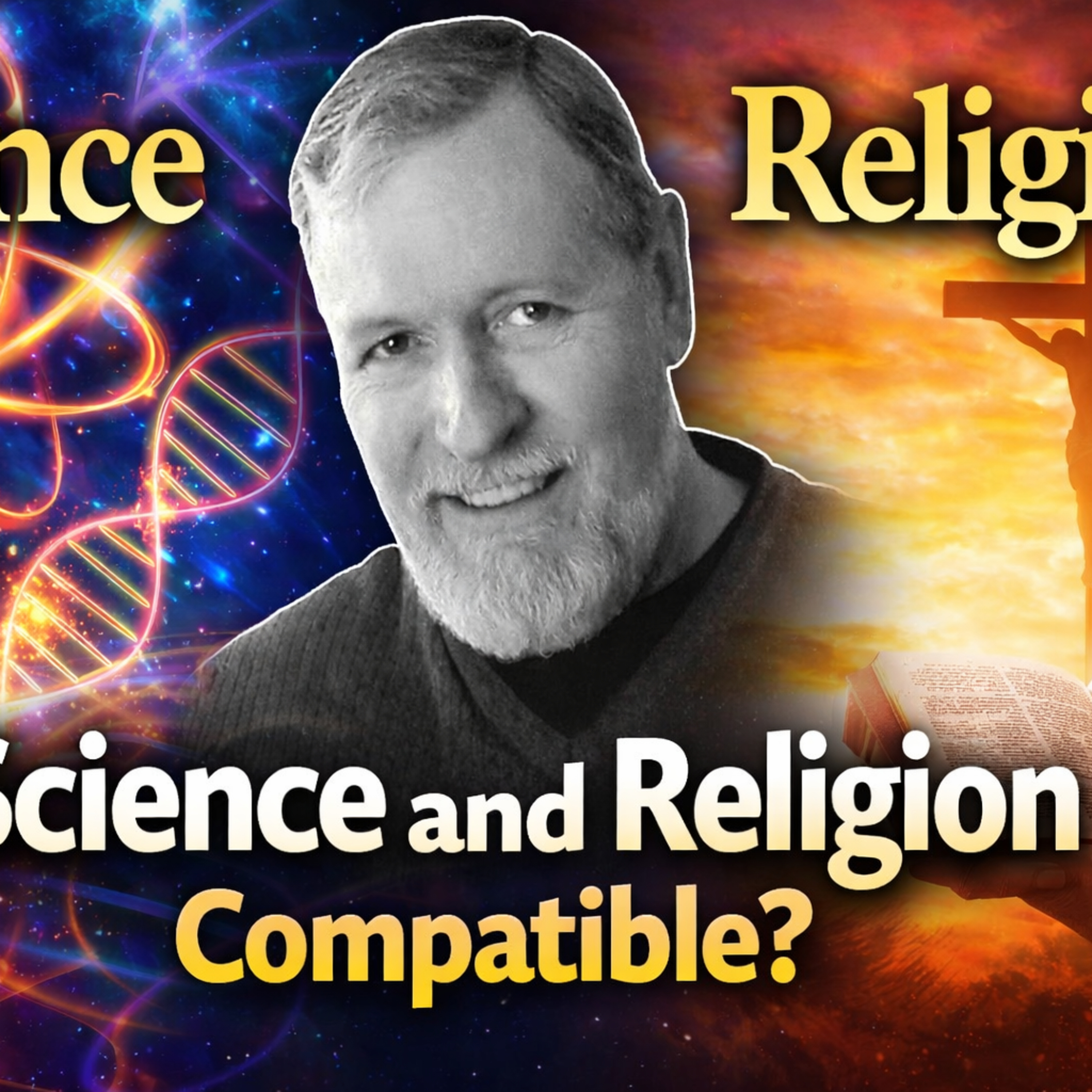
Space Age religion
Feb 25, 2026 · 8m
Short monologue introduces my pilot podcast tearing into the schizophrenic divide between western views on science and religion—on par with the political polarization that has both sides not...
Take these sermons with you.
Follow The C.W. Steinle Perspective in the Getsermons app to get every new sermon, build playlists, and pick up right where you left off.

