
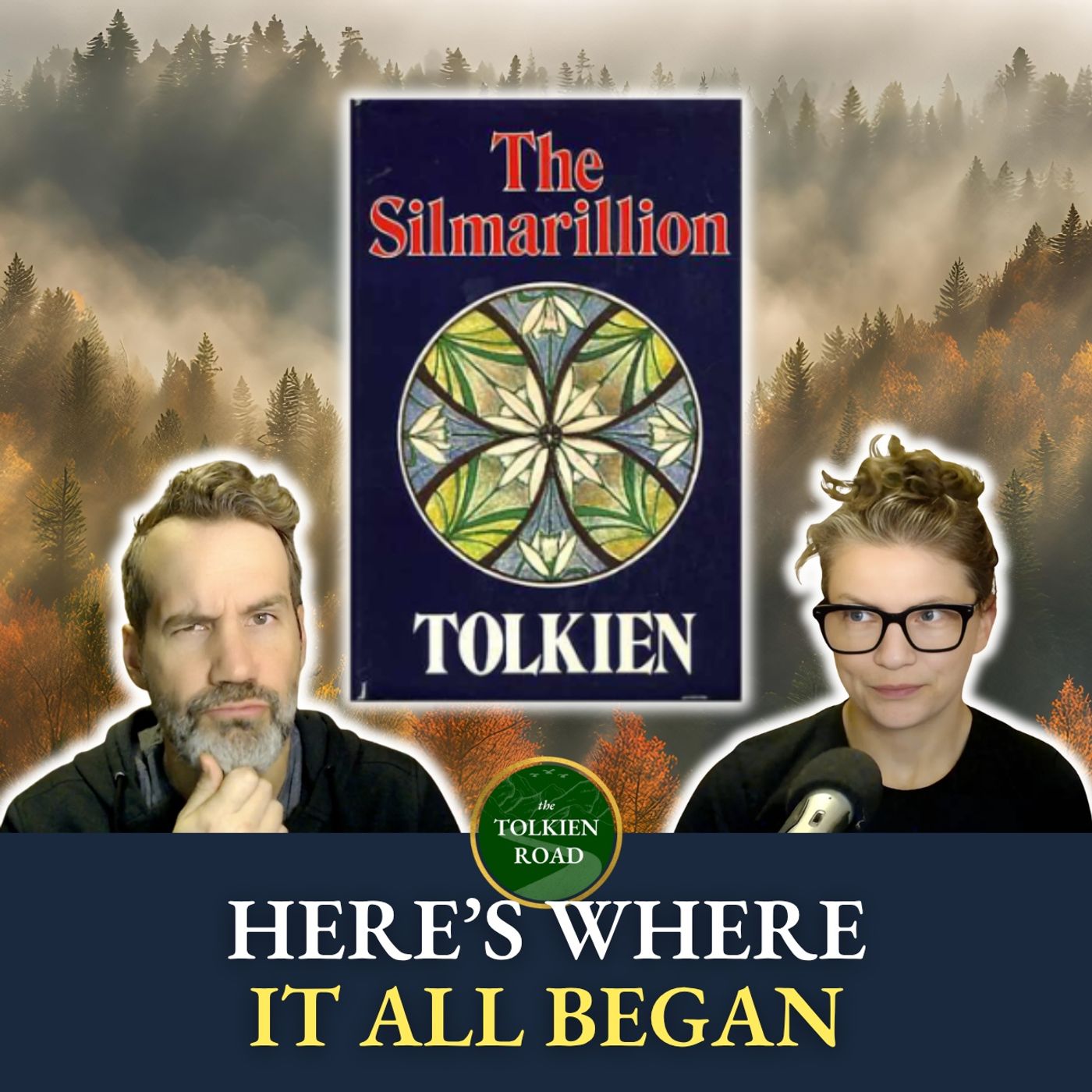
The Tolkien Road
0001 - The Silmarillion - Introduction
Feb 2, 2015 · 1h 13m
Prefer sermons downloaded automatically?
About this sermon
Why is The Silmarillion so difficult to read—and what exactly are you getting into when you open it for the first time?
In the very first episode of Talking Tolkien, John and Greta begin their journey through The Silmarillion by looking at the structure of the book, its relationship to The Hobbit and The Lord of the Rings, and Tolkien’s own explanation of the deeper ideas behind his mythology.
CHAPTERS
00:00 — Introduction to Talking Tolkien
02:36 — Why The Silmarillion Is So Difficult
03:47 — How to Approach It as a First-Time Reader
08:36 — Tolkien’s Long Road to The Silmarillion
09:23 — Why Publishers Wanted Another Hobbit
11:01 — Elrond as a Bridge Between Tolkien’s Worlds
11:54 — How The Lord of the Rings Connects to The Silmarillion
13:06 — Christopher Tolkien and the Published Silmarillion
14:16 — Why the Map Is So Confusing
15:55 — The Structure of The Silmarillion
16:38 — The Valaquenta
17:18 — The Quenta Silmarillion
17:47 — The Akallabêth
21:26 — The First, Second, and Third Ages
22:43 — Genealogies, Pronunciation Guides, and Reference Material
29:25 — Break
31:03 — The Waldman Letter
36:28 — “I Do Not Remember a Time When I Was Not Building It”
1:00:10 — Why Tolkien Felt Compelled to Create
1:01:33 — Fall, Mortality, and the Machine
1:03:25 — Mortality and the Desire to Possess
1:06:22 — What Tolkien Means by “The Machine”
1:10:10 — Art vs. Domination
1:12:12 — Final Thoughts
WHY THE SILMARILLION IS HARD
• It does not read like The Hobbit or The Lord of the Rings.
• The language can feel elevated, archaic, or biblical.
• Readers immediately encounter unfamiliar names, places, peoples, and histories.
• There is no Hobbit-like point of view easing us into the world.
• Understanding the book’s structure makes it much easier to navigate.
Talking Tolkien is designed as a chapter-by-chapter guide that helps readers enter the work without reducing its depth.
HOW IT CONNECTS TO TOLKIEN’S OTHER WORKS
Tolkien began developing many of these stories around the First World War, decades before The Hobbit.
After The Hobbit became successful, Tolkien wanted to publish his deeper mythology. His publishers wanted another Hobbit story instead.
The result was The Lord of the Rings, which became a bridge between the accessible world of The Hobbit and the much older mythology behind The Silmarillion.
THE STRUCTURE OF THE SILMARILLION
• The Ainulindalë — the creation of the world through the Music of the Ainur
• The Valaquenta — the great spiritual powers who entered the world
• The Quenta Silmarillion — the main body of the First Age mythology
• The Akallabêth — Númenor and its downfall in the Second Age
• Of the Rings of Power and the Third Age — the bridge toward The Hobbit and The Lord of the Rings
The genealogies, pronunciation guides, maps, and index are also valuable tools for new readers.
THE WALDMAN LETTER
The second half of the episode explores Tolkien’s long explanatory letter to publisher Milton Waldman.
The letter reveals just how central the mythology was to Tolkien’s life. He could not remember a time when he was not building it.
That leads into a deeper question: why do human beings feel compelled to create?
For Tolkien, the artist or storyteller is a sub-creator—someone who makes within a reality that ultimately precedes and exceeds him.
FALL, MORTALITY, AND THE MACHINE
Tolkien identifies three major concerns running through his mythology:
• Fall
• Mortality
• The Machine
Fall often begins when a creator becomes possessive of what he has made.
Mortality creates a desire to preserve, possess, and resist loss.
“The Machine” is not merely technology. It is the desire to achieve power quickly and impose one’s will upon the world.
ART VS. DOMINATION
Tolkien contrasts genuine art with magic or machinery.
Art works with the nature of a thing and develops it.
The Machine seeks control.
This distinction helps explain Tolkien’s concerns about industrialization, mechanized warfare, and systems built primarily to increase power.
The enemy ultimately seeks domination.
THE BIG TAKEAWAY
The Silmarillion is difficult because it was never conceived as a conventional modern novel.
It is the product of Tolkien’s lifelong attempt to build an entire mythology—complete with languages, creation stories, histories, peoples, tragedies, and ages of the world.
Understanding the structure makes the book manageable.
Understanding Tolkien’s deeper concerns—creation, mortality, possession, fall, and domination—reveals why these stories mattered so deeply to him.
Become a supporter of this podcast: https://www.spreaker.com/podcast/the-tolkien-road--5222755/support.
More from The Tolkien Road
0403 » The Rings of Power » S3E4 » Gundabad » 10 Critical Problems
Nov 27, 2026 · 8m
Check out my new book Tolkien's Tragedy, where I set the record straight on the Second Age.10 CRITICAL PROBLEMS WITH THE RINGS OF POWER S3E4GUNDABAD, EAGLES & ARONDIR'S DEATHSeason 3 of The Rings of...
0402 » The Rings of Power » S3E3 » The Secret Fire » 10 Critical Problems
Nov 23, 2026 · 7m
Want to discover the Second Age as Tolkien actually envisioned it?Check out Tolkien's Tragedy: Concerning Númenor, an exploration of the rise and fall of the greatest kingdom of Men, and the spiritual...
0401 » The Rings of Power » S3E2 » The Gift Of Men » 10 Critical Problems
Nov 20, 2026 · 15m
10 CRITICAL PROBLEMS WITH THE RINGS OF POWER S3E25 CONTRADICTIONS & 5 CRINGE MOMENTSSeason 3 of The Rings of Power continues, and we're back with another installment of 10 Critical Problems!This...
0400 » The Rings of Power » S3E1 » Marnûkh » 10 Critical Problems
Nov 16, 2026 · 14m
10 CRITICAL PROBLEMS WITH THE RINGS OF POWER S3E15 CONTRADICTIONS & 5 CRINGE MOMENTSSeason 3 of Amazon's The Rings of Power is here, and we're kicking off a new series on The Tolkien Road: 10 Critical...
0235: The Book of Lost Tales II » Tolkien's First Great Tales
Nov 11, 2026 · 1h 18m
What did Beren and Lúthien, Túrin, Gondolin, and Eärendil look like when Tolkien first imagined them?In Episode 235 of The Tolkien Road, John and Greta survey The Book of Lost Tales 2, containing...
0394: The Lord of the Rings » Foreword & Prologue » Mailbag
Nov 9, 2026 · 22m
What did Tolkien Road listeners notice in the Foreword and Prologue that deserved a second look?In Episode 394 of The Tolkien Road, John opens the Do Not Be Hasty mailbag to discuss Tolkien’s creative...
Take these sermons with you.
Follow The Tolkien Road in the Getsermons app to get every new sermon, build playlists, and pick up right where you left off.

