
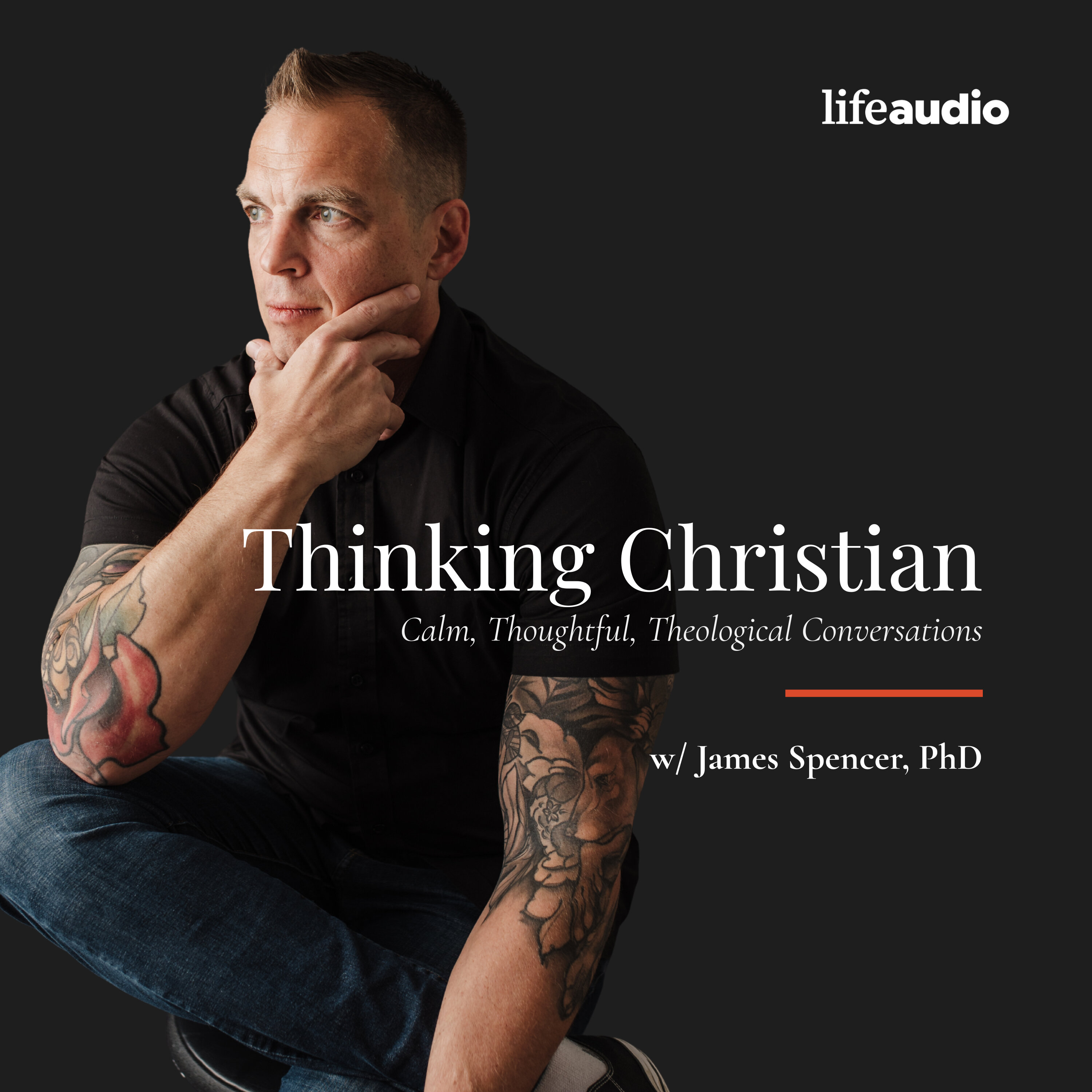
Thinking Christian: Bible, Theology, and Culture
Immoral Torah? Why Removing Hard Biblical Laws Does More Harm Than Good
Mar 26, 2026 · 55m
Prefer sermons downloaded automatically?
About this sermon
What should Christians do with the hardest laws in the Bible—texts about slavery, sexual violence, capital punishment, and social inequality? Should they be explained away… or even crossed out?
In this episode of the Thinking Christian Podcast, Dr. James Spencer is joined by Dr. Gary Edward Schnittjer, Distinguished Professor of Old Testament at Cairn University, to discuss Schnicker’s recent article in the Journal of the Evangelical Theological Society examining a provocative proposal by biblical scholar James W. Watts: that “immoral” commands in Scripture—especially in the Torah—should be struck through or repealed.
Watts argues that certain biblical laws are morally indefensible by modern standards and that retaining them enables abuse, violence, and injustice. Schnicker agrees that these texts deeply trouble modern readers—but strongly disagrees with the solution. In this wide-ranging and careful conversation, James and Gary explore why removing or canceling difficult passages creates dangerous “collateral damage”, both theologically and pastorally.
At the heart of the discussion is a crucial claim: many of the biblical laws that offend modern sensibilities are not endorsements of evil, but divine constraints on evil—laws designed to protect the most vulnerable people in the ancient world: slaves, women, the poor, and victims of violence. When these laws are removed or ignored, the Bible is reshaped into something that actually empowers the strong and exposes the weak.
Gary explains how Old Testament law often functions not to establish an ideal society, but to curtail injustice in deeply broken social realities. Drawing on ancient Near Eastern context, Jesus’ own teaching on the law, and long-neglected biblical scholarship, he argues that God meets people where they are—without endorsing the world as it is.
The conversation also addresses:
Why bad interpretation is not the same as biblical meaning
How “reception history” can be misused as a moral veto on Scripture
Why Christians are often embarrassed by parts of the Old Testament
The danger of modern “neo-Marcionism” and un-hitching the Old Testament
Why apologetics answers often fall flat for younger Christians
How ignoring these texts creates faith crises rather than resolving them
James and Gary reflect candidly on the church’s failure to teach these passages well—and how that failure has contributed to widespread biblical confusion, especially in a digital age where moral objections to Scripture circulate constantly but context rarely follows.
Rather than advocating pulpit shock tactics, Schnicker calls pastors, teachers, and church leaders to patient, informed engagement—to stop brushing difficult texts under the carpet and instead learn how they reveal God’s concern for justice, restraint of violence, and care for the vulnerable.
Resources mentioned:
Gary Edward Schnittjer,JETS article (available free at com)
com(Gary’s Substack)
If you’ve ever struggled with parts of the Old Testament—or wondered why Christians seem embarrassed by their own Scriptures—this episode offers a careful, honest, and deeply pastoral way forward that refuses to cancel the Bible while taking moral questions seriously.
Subscribe to our YouTube channel
🔗 Download a free resource "Making Everyday Decisions So That God Gets the Glory" from Useful to God:www.usefultogod.com
To read James's article on this topic, check out his author page on Christianity.com.
📢 Stay Connected & Keep Growing!
If you enjoyed this episode, be sure to subscribe to Thinking Christian so you never miss an insightful conversation!
Topics include:
“Immoral” commands in the Torah—what’s really going on?
Law as restraint, not endorsement
Slavery, sexual violence, and justice in the ancient world
Why cutting Scripture creates moral blind spots
The limits of modern moral frameworks
Teaching difficult texts without fear or defensiveness
Rebuilding trust in the Bible for the next generation
This episode is sponsored by Trinity Debt Management. “Whether we’re helping people pay off their unsecured debt or offering assistance to those behind in their mortgage payments, Trinity has the knowledge and resources to make a difference. Our intention is to help people become debt-free, and most importantly, remain debt-free for keeps!" If your debt has you down, we should talk. Call us at 1-800-793-8548 | https://trinitycredit.org/
Discover more Christian podcasts at lifeaudio.com and inquire about advertising opportunities at lifeaudio.com/contact-us.
More from Thinking Christian: Bible, Theology, and Culture
Love Is Our Logo: What Should Christians Be Known For? (Rolando Remedios)
Nov 24, 2026 · 49m
What should Christians be known for? Pastor Rolando Remedios, author of Love Is Our Logo, joins James Spencer to explore John 13:35, forgiveness, and living from God's love. Ro argues that the...
How Should Christians Think About Global Politics? (Robert J. Joustra) | Faith & Politics #19
Nov 17, 2026 · 1h 5m
How should Christians think about global politics? Robert J. Joustra joins James Spencer to apply Augustine's order of loves to international relations and Christian nationalism. Robert J. Joustra,...
Women of the Bible for Kids: Fierce and Faithful (Carmen Joy Imes)
Nov 16, 2026 · 41m
Women of the Bible for kids: Carmen Joy Imes on Fierce and Faithful, her new book with Nijay Gupta, and why children deserve the real stories of women who dared to trust God. Carmen Joy Imes, an Old...
Is Mercy in Judgment a Sign of Weakness?
Nov 6, 2026 · 1h 7m
s mercy in judgment a sign of weakness? In part 2 of their capital punishment conversation, James Spencer and Ashish Varma ask whether the death penalty fits God's long-suffering. Ashish Varma...
Jonathan Leeman on the Church as Embassy | Faith & Politics #16
Nov 5, 2026 · 51m
Jonathan Leeman — president of 9Marks and author of Political Church: The Local Assembly as Embassy of Christ's Rule — joins James Spencer for the eleventh episode in the faith and politics series....
Should Christians Support Livestreaming an Execution?
Nov 4, 2026 · 1h 5m
Should Christians support livestreaming an execution? James Spencer and Ashish Varma weigh capital punishment, the Bible, and spectacle. James Spencer and Ashish Varma respond to the proposal to...
Take these sermons with you.
Follow Thinking Christian: Bible, Theology, and Culture in the Getsermons app to get every new sermon, build playlists, and pick up right where you left off.

