
Tipping Point Prophecy Update
Dispensationalism: A Framework for Understanding God’s Prophetic Plan
Mar 16, 2026 · 13m
Prefer sermons downloaded automatically?
About this sermon
Dispensationalism is a term that gets thrown around a lot. Some people hate it—though I think some who hate it may not even know exactly what it is. But dispensationalism is simply a way to view the whole Bible, a framework for understanding God’s entire prophetic program. The word comes from the Greek oikonomia, meaning the management of a household. God is managing His household—this world—according to His will in various stages throughout history. There are two essentials to dispensationalism: consistent literal interpretation of Scripture, and a consistent distinction between Israel and the Church. If you interpret the Bible literally, you’ll see that God has a distinct plan for Israel and a distinct plan for the Church. The Church hasn’t replaced Israel. After the Rapture ends this current dispensation, God will complete His unfinished business with Israel during the Tribulation and the Millennium.
Support Tipping Point Ministries
To help us produce more content like this please consider supporting Tipping Point! All income from subscriptions goes back into this ministry to cover production of this site, articles, videos, our annual conference and other resources. Please subscribe and give gift subscriptions. Thank you for buying our books. We are also grateful for one-time donations to our ministry. We appreciate your support!
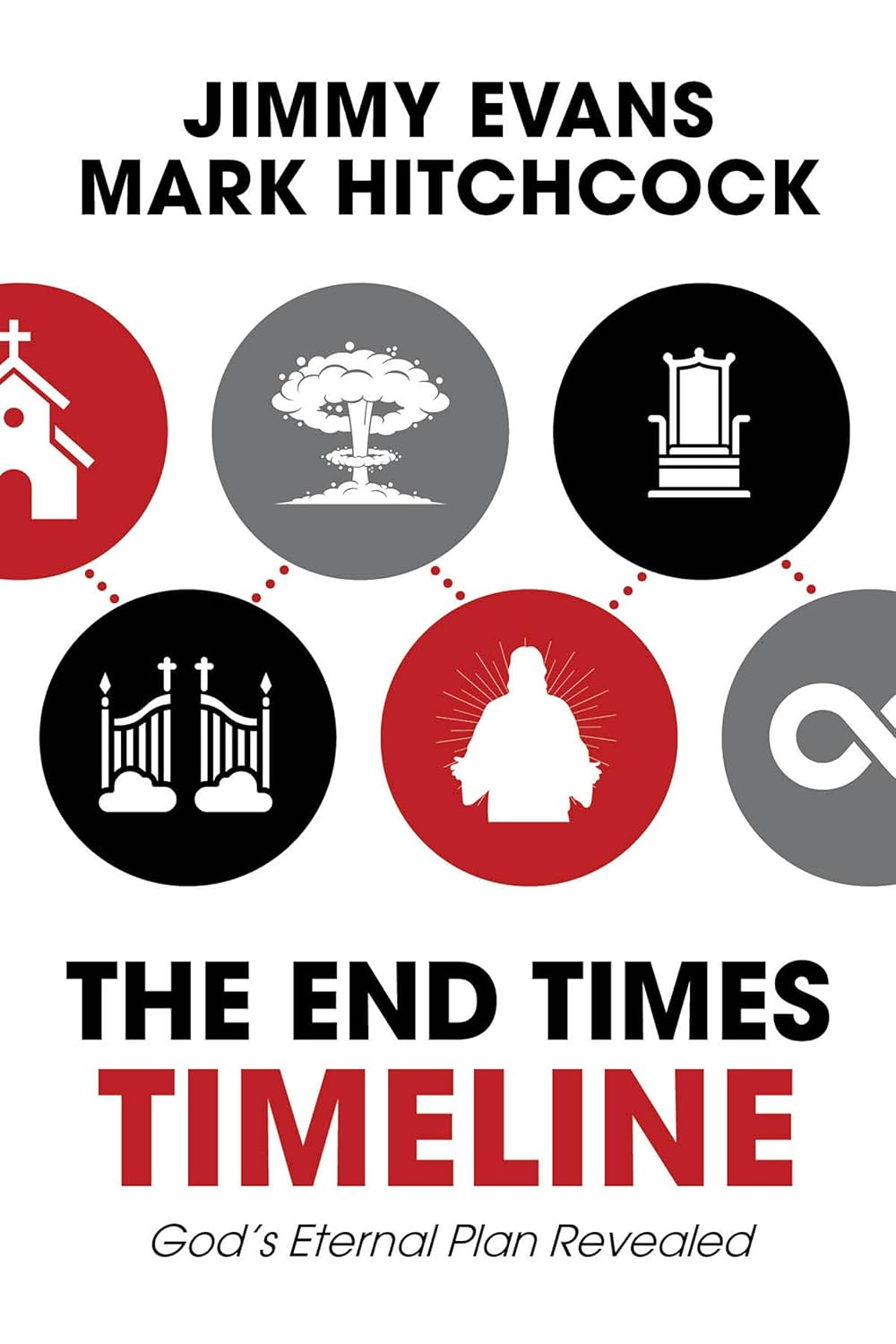
The End Times Timeline: God’s Eternal Plan Revealed
This small comprehensive book, The End Times Timeline provides believers with an accessible framework for understanding biblical prophecy. It traces God’s prophetic program from the Old Testament through the eternal state. What’s particularly noteworthy is how current events align with ancient predictions—Israel’s restoration, technological advances enabling global surveillance, and the geopolitical alignment of nations mentioned in Ezekiel 38–39.
The timeline identifies key prophetic milestones: the Rapture preceding the Tribulation, the rise of Antichrist, the rebuilt Temple, and Christ’s Second Coming. While some debate the timing of particular events like the Gog-Magog War, the overall framework reflects solid Bible research. This resource serves as an excellent tool for both new believers seeking prophetic clarity and mature Christians desiring to understand their place in God’s unfolding plan.
Personal Reflection & Group Discussion
For our paid subscribers, we provide a set of personal reflection and group discussion questions. These are designed to help you dig deeper into the content of the show, whether you’re watching alone, with a spouse, with a friend, or as part of a small group.
Personal Reflection
* Do I interpret the Bible literally and consistently, or do I tend to spiritualize or allegorize passages that seem difficult or uncomfortable?
* Have I understood that God has distinct purposes for Israel and the Church, and that He is not finished with the Jewish people?
* Am I living with an awareness that this current Dispensation of Grace will end suddenly at the Rapture, just as it began suddenly at Pentecost?
* Do I recognize that salvation has always been by grace through faith in every dispensation, and that Jesus Christ is the only way to God?
* How does understanding God’s management of history give me confidence that He is sovereignly working out His plan in my own life?
Small Group Discussion
* Dr. Hitchcock said that consistent literal interpretation is the “bottom line” of dispensationalism. Why do you think some people resist interpreting the Bible literally, especially when it comes to prophecy?
* The distinction between Israel and the Church is essential to dispensationalism. Why is it significant that the New Testament never calls the Church “Israel”?
* Dr. Hitchcock used the illustration of managing a household differently as children grow up. How does this help you understand why God deals with humanity differently in different dispensations while His character and salvation remain the same?
* Some people accuse dispensationalists of teaching different ways of salvation in different ages. How would you respond to this based on what Dr. Hitchcock taught?
* If the Church Age began suddenly and dramatically at Pentecost, and will end suddenly and dramatically at the Rapture, how should this shape the way we live today?
Study Notes Feature
I’m making a resource available: a downloadable PDF with study notes for each episode. My prayer is that these notes will help you go deeper in your understanding of Bible prophecy and strengthen your walk with the Lord. I hope it’s a blessing to you.
Key Facts
· Dispensationalism comes from the Greek word oikonomia (oikos = house, nomos = law), meaning the management of a household
· A dispensation is “a distinguishable economy in the outworking of God’s purpose” (Charles Ryrie)
· Two essentials of dispensationalism: consistent literal interpretation and a consistent distinction between Israel and the church
· Dispensationalists do not teach different ways of salvation in different ages—salvation is always by grace through faith in Christ
· The Church was born at Pentecost; Israel existed for centuries before—therefore they are distinct
· The Church was a “mystery” not revealed in the Old Testament (Ephesians 3), so it cannot be the same as Israel
· In the book of Acts, “Israel” is used 20 times and “church” 19 times—always kept distinct
· There are at least four dispensations: Innocence (pre-fall), Human Government/Promise (pre-law), Law, and Grace/Spirit (current age)
· The current Dispensation of Grace will end at the Rapture; then God will complete His plan for Israel
· Charles Ryrie’s book Dispensationalism is the go-to resource on this topic
This is a public episode. If you'd like to discuss this with other subscribers or get access to bonus episodes, visit endtimes.substack.com/subscribe
More from Tipping Point Prophecy Update
Animal Sacrifices, a High Priest, and the Veil Being Woven for the Temple
Nov 25, 2026 · 19m
During our last time together, I explained how passionate the Jewish people are about rebuilding the temple. Today, we will look at something even bigger. The rebuilt temple is no longer just a dream;...

Straight to the Heart: Why Songs and Stories Win Where Arguments Fail (Part 1)
Nov 24, 2026 · 34m
Why do arguments so often fail to change minds about Israel, when a single song can? How did one song with humor and irony win an Israeli-born chef 15,000 followers overnight? And what did the...
Revelation 17:8–13 — Final Portrait of Antichrist: Death, Resurrection & World Domination
Nov 23, 2026 · 14m
On today’s episode, we’re continuing our discussion about the Antichrist. This is going to be our final episode about him, and we’re going to look at Revelation 17:8–13 This is really the last main...

The Gift of Encouragement
Nov 22, 2026 · 12m
This week I share a good word on the gift of encouragement. Everyone you meet is facing something, and one kind word at the right moment can change someone’s life. God has comforted you so you can...
Ten Keys to Understanding the Mark of the Beast
Nov 19, 2026 · 27m
There are more questions about the Mark of the Beast than most other biblical topics. Recently, a well-known pastor said that he believes the mark is symbolic and already active in the world today....
What Jesus Said, What the Culture Denies, and How You Can Be Saved
Nov 18, 2026 · 26m
If you ask people what topic Jesus talked about most, the majority will say love. That is wrong, and the correct will probably surprise you. Jesus’ words cover 1,870 verses in the New Testament, and...
Take these sermons with you.
Follow Tipping Point Prophecy Update in the Getsermons app to get every new sermon, build playlists, and pick up right where you left off.

