
Tipping Point Prophecy Update
Ezekiel 40-48: The Millennial Temple
Nov 10, 2025 · 16m
Prefer sermons downloaded automatically?
About this sermon
We’ve come to some studies about the Millennium—the thousand-year reign of Jesus Christ. You know, the word “utopia” was coined in 1516 by Sir Thomas More, meaning literally “no place”—and that’s certainly true of earth right now. But the Bible tells us that someday when Jesus returns, there will be ten centuries of global peace and prosperity. Today I want to answer two of the most controversial questions about the Millennial Kingdom: Will there be a literal Temple on earth during the Millennium? And will animal sacrifices be offered there? I believe the Bible teaches there will be a fourth Jewish Temple—what I call the Millennial Temple or Ezekiel’s Temple, described in Ezekiel chapters 40 through 48. This Temple will be massive—one mile square—and the glory of God will fill it. We’ll also discuss why sacrifices will be offered as memorials, not for atonement.
Key Facts
· Four Jewish Temples: (1) Solomon’s Temple (destroyed 586 BC by Babylonians), (2) Zerubbabel’s/Herod’s Temple (finished 64 AD, destroyed 70 AD by Romans), (3) Tribulation/Antichrist Temple (Matthew 24:15, 2 Thessalonians 2:4—Antichrist sits in Temple declaring he’s God), (4) Millennial/Ezekiel’s Temple (Ezekiel 40–48)
· Millennial Temple Size: Ezekiel 40:2–4—Ezekiel sees man with measuring rod; must measure it (proves literal, not symbolic); Ezekiel 45:1—holy portion 25,000 cubits x 10,000; total area ~2,500 square miles; Temple itself one mile square; Temple Mount today only 36 acres—requires major topographical changes when Jesus returns
· Glory Returns: Ezekiel 43:1–5—glory of God comes from East Gate, voice like many waters, earth shines with glory, fills house; first Temple (Solomon’s)—glory departed before Babylonians (Ezekiel 8-11, Ichabod); second Temple—glory never came; third Temple—no glory; fourth Temple—glory returns, comes full circle
· Animal Sacrifices: Ezekiel 45:21–23—Passover feast, bulls, rams, goats for sin offering, burnt offerings; Ezekiel 46:13—daily lamb without blemish; also Isaiah 56:7, Jeremiah 33:16, Zechariah 14:21–22 predict sacrifices
· Purpose of Sacrifices: Two views: (1) Ritual cleansing for people in mortal bodies entering God’s presence, or (2) Memorial sacrifices (most common view); John Walvoord: OT sacrifices never took away sin, were prophetic looking forward to Christ; Millennium sacrifices memorial looking back to Christ; Tommy Ice: doesn’t diminish Christ’s work or violate literal interpretation; like Lord’s Supper today—memorial of Christ’s death
· Paul’s Example: Acts 21:26—Paul offered sacrifices in second Temple after Christ’s death; didn’t take away sin but was memorial; shows precedent for memorial sacrifices
Support Tipping Point Ministries
To help us produce more content like this please consider supporting Tipping Point! All income from subscriptions goes back into this ministry to cover production of this site, articles, videos, our annual conference and other resources. Please subscribe and give gift subscriptions. Thank you for buying our books. We are also grateful for one-time donations to our ministry. We appreciate your support!
The End Times Timeline: God’s Eternal Plan Revealed
This small comprehensive book, The End Times Timeline provides believers with an accessible framework for understanding biblical prophecy. It traces God’s prophetic program from the Old Testament through the eternal state. What’s particularly noteworthy is how current events align with ancient predictions—Israel’s restoration, technological advances enabling global surveillance, and the geopolitical alignment of nations mentioned in Ezekiel 38–39.
The timeline identifies key prophetic milestones: the Rapture preceding the Tribulation, the rise of Antichrist, the rebuilt Temple, and Christ’s Second Coming. While some debate the timing of particular events like the Gog-Magog War, the overall framework reflects solid Bible research. This resource serves as an excellent tool for both new believers seeking prophetic clarity and mature Christians desiring to understand their place in God’s unfolding plan.
Personal Reflection & Group Discussion
These are designed to help you dig deeper into the content of the show, whether you’re watching alone, with a spouse, with a friend, or as part of a small group.
Personal Reflection
* Dr. Hitchcock says “utopia” literally means “no place”—and there’s no utopia on earth right now. Our world is broken, messed up, chaotic. But the Bible promises ten centuries of peace and prosperity when Jesus returns. How does knowing a literal, physical utopia is coming affect how you endure current brokenness? Does it give you hope or do you forget about it in the middle of daily struggles?
* The glory of God departed from Solomon’s Temple before the Babylonians destroyed it (Ezekiel 8–11), never returned to the second Temple, and won’t be in the Tribulation Temple. But Ezekiel 43 shows the glory returning from the East Gate to fill the Millennial Temple—everything coming full circle. What does God’s glory departing and returning teach you about His holiness and His unwillingness to dwell with unrepentant sin?
* Dr. Hitchcock quotes David Jeremiah: “You and I will be able to visit this Millennial Temple...we’ll bask in the presence of God with no fear of condemnation.” You’ll walk where Aaron walked as high priest, but without fear. How does picturing yourself physically present in that Temple—seeing God’s glory, no separation—change your understanding of what resurrection life will be like?
* Animal sacrifices in the Millennium trouble many people. “We have Christ’s once-for-all sacrifice—why go back to animal sacrifices?” But Hitchcock explains they’ll be memorials, just like we take communion today as a memorial (1 Corinthians 11:26). After the Second Coming, we may stop taking communion, and Israel returns to memorial sacrifices. Does understanding them as memorials—not for atonement—resolve the difficulty for you?
Small Group Discussion
* Read Ezekiel 40:2–4 where Ezekiel sees a man with a measuring rod who tells him to “see with your eyes, hear with your ears...declare to the house of Israel all you see.” Then read Ezekiel 45:1 about the massive 25,000 x 10,000 cubit holy portion. Discuss: Why does God command Ezekiel to measure if this is just symbolic? How do the specific measurements and details prove this must be a literal, physical Temple? What topographical changes (mountains flattened, valleys raised) will be needed to accommodate a one-mile-square Temple when the Temple Mount today is only 36 acres?
* Read Ezekiel 8–11 (glory departing first Temple) and Ezekiel 43:1–5 (glory returning). Dr. Hitchcock says, “everything’s coming full circle.” Discuss: Why did God’s glory depart before the Babylonians destroyed Solomon’s Temple? Why didn’t the glory return to the second Temple or dwell in the Tribulation Temple? What’s significant about the glory coming from the “east gate”? How does God’s glory returning show that sin is finally dealt with and God can dwell with His people?
* Read Ezekiel 45:21–23 and 46:13 about animal sacrifices—Passover lambs, bulls, rams, goats, daily burnt offerings. Then read Hebrews 10:1–4 (“the blood of bulls and goats can never take away sins”) and Hebrews 10:10–14 (Christ’s sacrifice “once for all”). Discuss: If animal sacrifices never took away sin in the Old Testament, why do people think they would in the future? How does understanding they were always prophetic/memorial resolve the tension? What does it mean that God ordained different memorial symbols for different peoples (sacrifices for Israel, bread/wine for the Church)?
* Read 1 Corinthians 11:23–26, focusing on verse 26: “As often as you eat this bread and drink this cup, you proclaim the Lord’s death until He comes.” Mark Hitchcock says this suggests after the Second Coming we’ll stop taking communion. Discuss: What does “until He comes” imply about communion being temporary? If we stop taking communion at the Second Coming because we’re physically with Christ, why wo…
This is a public episode. If you'd like to discuss this with other subscribers or get access to bonus episodes, visit endtimes.substack.com/subscribe
More from Tipping Point Prophecy Update
Animal Sacrifices, a High Priest, and the Veil Being Woven for the Temple
Nov 25, 2026 · 19m
During our last time together, I explained how passionate the Jewish people are about rebuilding the temple. Today, we will look at something even bigger. The rebuilt temple is no longer just a dream;...

Straight to the Heart: Why Songs and Stories Win Where Arguments Fail (Part 1)
Nov 24, 2026 · 34m
Why do arguments so often fail to change minds about Israel, when a single song can? How did one song with humor and irony win an Israeli-born chef 15,000 followers overnight? And what did the...
Revelation 17:8–13 — Final Portrait of Antichrist: Death, Resurrection & World Domination
Nov 23, 2026 · 14m
On today’s episode, we’re continuing our discussion about the Antichrist. This is going to be our final episode about him, and we’re going to look at Revelation 17:8–13 This is really the last main...
The Gift of Encouragement
Nov 22, 2026 · 12m
This week I share a good word on the gift of encouragement. Everyone you meet is facing something, and one kind word at the right moment can change someone’s life. God has comforted you so you can...
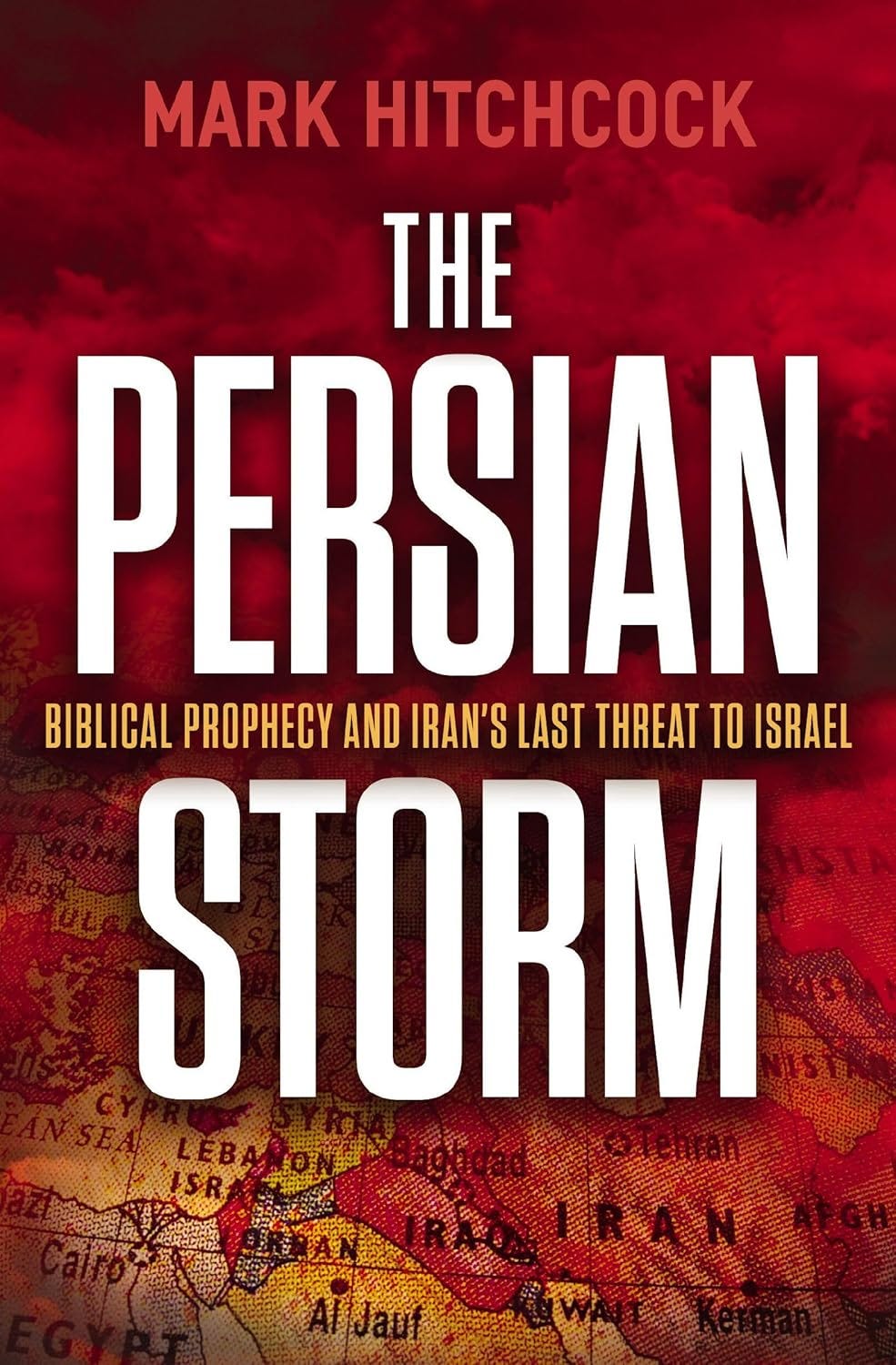
Ten Keys to Understanding the Mark of the Beast
Nov 19, 2026 · 27m
There are more questions about the Mark of the Beast than most other biblical topics. Recently, a well-known pastor said that he believes the mark is symbolic and already active in the world today....
What Jesus Said, What the Culture Denies, and How You Can Be Saved
Nov 18, 2026 · 26m
If you ask people what topic Jesus talked about most, the majority will say love. That is wrong, and the correct will probably surprise you. Jesus’ words cover 1,870 verses in the New Testament, and...
Take these sermons with you.
Follow Tipping Point Prophecy Update in the Getsermons app to get every new sermon, build playlists, and pick up right where you left off.

