
About this sermon
This is one of the free public Payneful Truth posts that I put out once a month. If you’d like to get every edition, every week, see the info at the end of this post about how to get a free trial subscription.
I’m training a bunch of would-be, could-be pastors at Campus Bible Study, and it occured to me that I should figure out what it is exactly that I’m training them to become.
What does it mean to be a ‘pastor’ or an ‘overseer’ or a ‘gospel minister’? What is the purpose and nature of these roles? What makes for a good pastor?
Over the next little while in The Payneful Truth, I’m going to dig into these questions from a few different angles and see what we might unearth. In doing so, I won’t pretend for a minute that it will be a comprehensive (or even adequate) total picture of pastoral ministry and leadership. But I hope to achieve two things:
* to give pastors and pastors-to-be some fresh or clarified thoughts about the nature and purpose of their work;
* to help non-pastors in a number of ways: to encourage you to support, pray for and appreciate the work of your leaders; to have better expectations of what pastors are and do; and to understand more clearly how your own gospel ministry (and the gospel work of all Christians) relates to the work of pastors (hint: very closely!).
Where to begin?
I guess one way to start would be to look at the various titles that are given to ‘ministry leaders’ in the Bible and ask what those labels say about the role. We could look at ‘overseer’, ‘elder’, ‘shepherd’ (which is what ‘pastor’ means), ‘worker’ or ‘fellow-worker’ (a very common Pauline term for himself and his ministry colleagues), ‘leader’ (in Heb 13:7, 17), and possibly ‘man of God’ (in 1 Tim 3:17 and 6:11).
This word-study exercise would tell us something—for example that the role had something to do ‘watching over’ people (overseer), or that it related in some way to a shepherd looking after a ‘flock’ (pastor), or that it involved labour and toil (‘workman’), and so on. But as a way of understanding the nature of ‘pastoral leadership’ it would be a limiting and potentially misleading way to proceed. Which aspects of the ‘shepherd’ metaphor apply and which ones don’t and with what emphasis? Is ‘elder’ just about having authority as a mature person, or does the title require that the person is actually old?
Understanding pastoral leadership by focusing on the titles or labels would be like trying to understand doctoring by focusing on the words used to describe doctors—medico, general practitioner, surgeon, physician, clinician, quack, sawbones—and constructing a model of medical practice from the meaning and derivation and usage of those words.
In fact, I can see the journal article now:
The word ‘clinician’ comes from the Greek ‘kline’ meaning ‘bed’, and there are multiple instances in the literature of the ‘clinic’ word-group being associated with the practice of medicine as a ‘bed-side’ or ‘bed-ward’ or ‘bed-oriented’ activity. ‘Clinic’ is bed language. Clinical medicine is thus unavoidably bed-centric. To practice medicine is to ‘visit the bed’, and doctors today who see their patients at impersonal so-called ‘clinics’, far removed from the beds of their patients, have lost touch with the essential character of doctoring.
It would be funny if it wasn’t also a bit sad (because I have read many a theological article that argues in exactly this fashion).
Words are the building blocks of meaning, but they don’t convey meaning until they are assembled into sentences and paragraphs. We discover what ministry leadership is like—its nature and function and purpose—by looking at the sentences and paragraphs of the New Testament that describe its nature and purpose and function.
Like those in Acts 20, for example.
In this passage, Paul is giving the pastoral leaders of the Ephesian church an emotional pep talk before he leaves them for the final time. As he reminds them about what he has done in their midst, and what he now wants them to keep doing in his absence, we learn quite a bit about the role of these ‘elders’ and ‘overseers’ (both labels are used, seemingly interchangeably, in the passage).
In fact, one of the most famous books in Christian history about pastoring—Richard Baxter’s The Reformed Pastor (1656)—is based on an exposition of this passage, and in particular verse 28:
Take heed therefore to yourselves, and to all the flock, over which the Holy Ghost has made you overseers, to feed the church of God, which he hath purchased with his own blood. (KJV)
Baxter argues that the pastoral task basically consists of obeying the two commands in this verse: take heed to yourselves, and take heed to all the flock over which you have been made overseers.
If you’ve never read Baxter, or it’s been too long, it’s really worth the time (or if you’re short of time, see below for a cheat-sheet summary). His challenges about the essential need for the pastor to watch and ‘take heed’ of his own soul and character are bracing to say the least. (His section on ‘pride’ is a killer.)
But Baxter is famous for how seriously he took the second aspect of pastoral work, the ‘taking heed’ of the flock. In his view, this was impossible to do unless you took the time and labour to meet with parishioners personally and instruct them in the word. He regarded sermons as central and vital, but insisted that unless you also took the time to meet with each family in the parish, and instruct them, and answer their questions, and find out where they stood, and what their spiritual needs and dangers were, then there was no way you could fulfil your duty to ’take heed of all the flock’.
For Baxter, this was a matter of following Paul’s own example, which he was urging the Ephesians elders to follow: “I did not shrink from declaring to you anything that was profitable, and teaching you in public and from house to house” (Acts 20:20; cf. v 31 “I did not cease night or day to admonish every one with tears”).
Baxter had a whole system for this. He would set aside all day Tuesday and Wednesday each week and meet with families by appointment, hour by hour, for spiritual instruction. Astonishingly (to us at least), this allowed him to get through 15 or so families per week, and thus spend individual time with all 800 families in the parish at least once a year.
Whenever I have discussed Baxter’s approach with pastors, the conversation has very quickly turned to the impossibility of implementing his approach today. And that’s very likely correct—it was a very different context and time and place.
But the principle that Baxter was expounding is not so easily dismissed. The task of overseers/elders in Acts 20 involves watching, paying attention, guarding and ‘shepherding’ all the individual people over which you have been appointed (by the Holy Spirit!). In the passage, this not only flows from Paul’s own example and the need for them to continue in this work after his departure—it also particularly relates to the threats and dangers that the flock will inevitably experience (the "fierce wolves" that will come, and even from within their own number, in vv 29-30).
This is also a very common theme in the Pastoral epistles (which we will need to come to in our investigation of pastoral leadership)—that one of the important roles of elders and overseers is to guard the gospel itself, and the people to whom we preach it, from the various threats and dangers that will continually come. As the Book of Common Prayer summarizes the job of the presbyter in the Ordinal: “to drive away all false and strange doctrines that are contrary to God’s word; and to this end both publicly and privately to warn and encourage all within your care”.
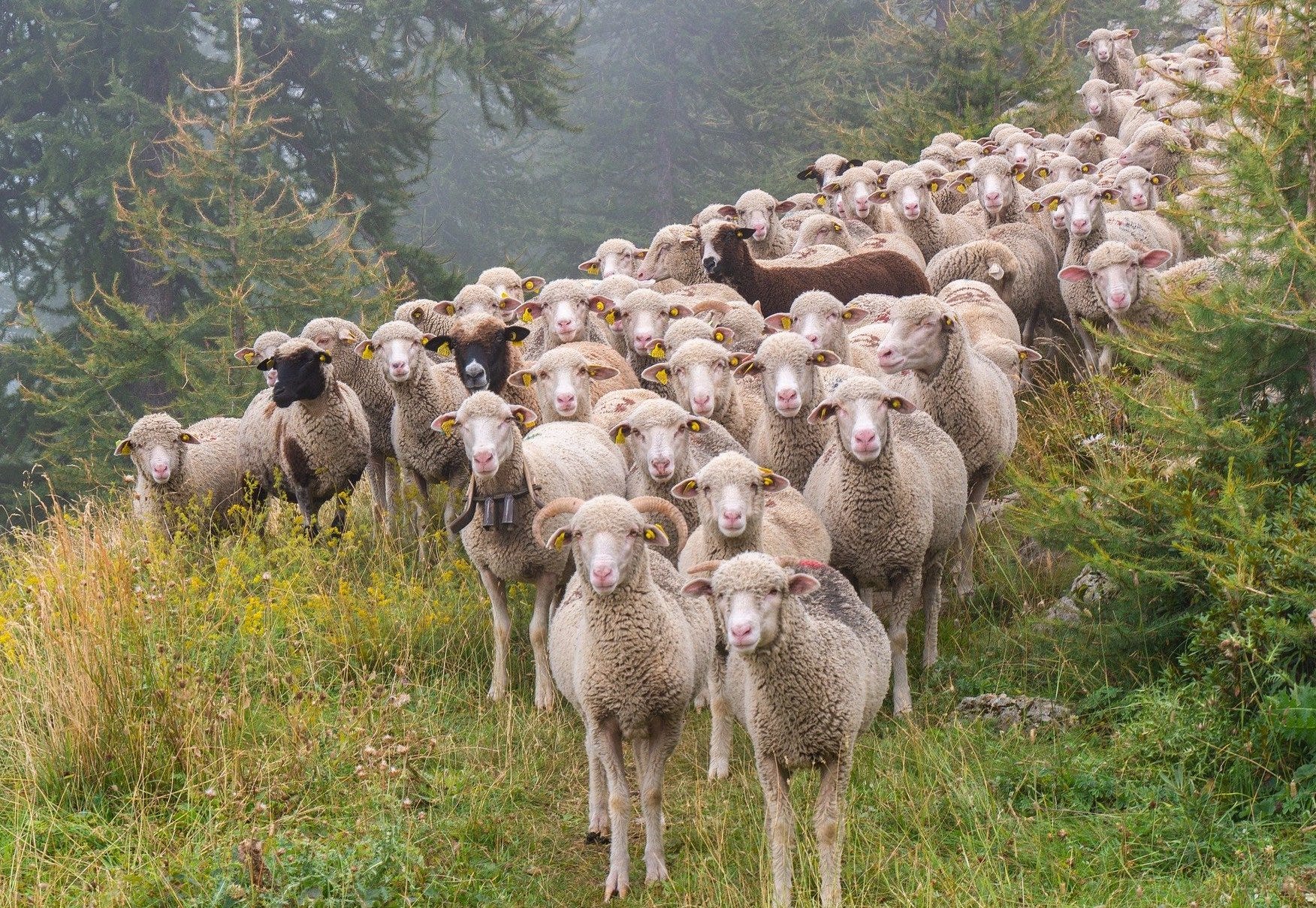
The Christian life is a dangerous journey. We’re all under threat. Pastors are given the vital responsibility to ‘take heed’ of all their flock in light of these threats.
However, it’s not just pastors. God has also given us each other, as fellow-travellers and fellow-strugglers, to watch and w…
This is a public episode. If you'd like to discuss this with other subscribers or get access to bonus episodes, visit www.twoways.news/subscribe
More from Two Ways News

Sense and Sensibility
Nov 23, 2026 · 27m
Dear friends,Last week, Peter answered the question of why he is still a Christian, in terms of the arguments for Christianity found in the person and work of the Lord Jesus Christ. This week, in part...

Persuasion
Nov 16, 2026 · 33m
Dear friends,When Peter and I became Christians in the middle of the 20th century, the great atheist mathematician and philosopher of the time was Bertrand Russell. He produced a book of great...

Always Let Your Conscience Be Your Guide?
Nov 9, 2026 · 23m
Dear friends,Some topics are such a universal way of thinking that it is surprising to see how rarely they are mentioned in the Bible. Conscience is such a topic that is critical to our behaviour...
Blessed Assurance
Nov 2, 2026 · 26m
Dear friends,As Peter and I turn to different topics of Christian concern, it is sad to see how often old problems keep on being recycled through our churches. One such issue is that of assurance....

Institutional Captivity
Oct 26, 2026 · 35m
Dear friends,In this second episode of our series of topics, Peter and I are discussing institutional captivity. Christians, especially evangelical Christians, have been very enterprising and...

Two New Books
Oct 19, 2026 · 31m
Dear friends,In this episode of Two Ways News, we welcome back Tony Payne, because each of us has published a new book this year. Tony’s book entitled Let The Word Dwell Richly helps us understand the...
Take these sermons with you.
Follow Two Ways News in the Getsermons app to get every new sermon, build playlists, and pick up right where you left off.

