
About this sermon
After living in Paul’s first letter to the Corinthians an awful lot over the last three years, I have realized two things—first, I’ve been living in Corinth for most of my life; and second, with God’s help, I hope to live a Corinthian life till I die.
I’ve lived so long in Sydney now I can hardly remember what a shock it was to arrive here as an uncomplicated country boy in my late teens. Brash, beautiful, vibrant Sydney, with its abundance of natural gifts, its melting pot of cultures, its love of money and real estate, its status anxiety, and its rampant, polyvalent sexuality—a city as much like ancient Corinth as I suppose any modern city is likely to be.
And just as churches in Sydney cannot help but be corrupted by the characteristic sins of its city—perhaps materialism and status-seeking would be on the list—so the church of God in Corinth struggled to escape the gravitational corruption of its own civic culture.
To that church, the Apostle writes the masterpiece of Christian instruction that we call 1 Corinthians. In this extraordinary letter, he skewers the sins and pretensions of Corinthian culture, especially its arrogant pride and obsession with status. And at the same time, he describes and commends the radical alternative culture that the immature Corinthian Christians should have grasped by now, and should be living out.
The Corinthian church should have understood and embraced the new culture of Christ, because it is simply the daily outworking of the most important thing the Apostle ever told them—the message that he passed onto them as of first importance: “that Christ died for our sins in accordance with the Scriptures, that he was buried, and that he was raised on the third day in accordance with the Scriptures” (15:3-4). Or as he puts it in the two word summary of his entire preaching: “Christ crucified” (1:23; cf. 2:2).
What the Corinthians had not yet really grasped was that this twin event—the death and resurrection of Christ—was not only the stupendous truth that brought them righteousness, sanctification and redemption (1:30); it also laid out the entire shape and course of their lives. It was their wisdom, a wisdom from God that proud, worldly Corinth could only regard as foolish and weak.
Part of the genius of 1 Corinthians is that the letter teaches this wisdom in its very structure. The shape of the Christian life is the shape of 1 Corinthians—starting with the foundation of the cross and its stunning reversal of their previous cultural values and narratives (ch 1-4), proceeding through all the different issues the church faces in its context (ch 5-14), and concluding with the resurrection of Christ, which guarantees the Corinthians’ own resurrection on the last day (ch 15).
As each issue is dealt with—whether factionalism or sexual immorality or marriage or how they are to behave their gatherings—the answer is always the wisdom of the cross, awaiting resurrection. The confounding, counter-intuitive wisdom of the cross, which turns upside down the worldly values and cultural narratives of Corinth (and Sydney and every city), is the wisdom that now teaches them to make judgements about all things (ch 2).
For example, if God chose to save us by the seemingly weak and stupid message of the cross, so that there could no boasting except in the Lord, how could we be so juvenile as to boast in impressive individual teachers or leaders, and factionalize around them (ch 3-4)? And if God has cleansed, redeemed and justified us for himself at the cross, how could we think of reintroducing into our midst the ‘old leaven’ of sexual immorality and greed and all the other sins of our former Corinthian selves (ch 5-6)? And if Christ laid down his life in sacrifice for others, how could we do anything but sacrifice our own preferences and lives so that we might save some (1 Cor 9-10)? And if the heartbeat of the cross is self-denying, other-person-oriented love, how could we use our gifts for arrogant self-expression and personal status rather than for the advantage and edification of others (ch 12-14)?
This is the new Corinthian life—a life lived in the wisdom of the cross awaiting resurrection, the life I hope to keep living in the particular Corinth in which God has placed me.
I have been writing this week’s post in the midst of the strange, post-apocalyptic Easter that we’ve all been experiencing, with its deserted streets and parks and churches.
It occurs to me that the new life Paul is describing in 1 Corinthians is like a life lived on Easter Eve—which is what the Saturday between Good Friday and Easter Day is properly called (Easter Saturday is the Saturday after Easter). Easter Eve, which is a bit of a nothing day for most of us, is the day that looks back to the cross and forward to the resurrection.
That is the day in which we now live, whether we’re in Corinth or Sydney or anywhere else—a life lived by the wisdom of the cross; a life that runs counter to the narratives and ‘wisdom’ of our city; a life that looks eagerly forward to the next Day that is coming, when the trumpet shall sound, and the perishable shall take on the imperishable.
PS. As I was writing this week’s post, I was tempted to explore how the particular sins of Sydney penetrate and weaken our Sydney churches—but thought better of it. Making generalisations about ‘what is wrong with our churches’ is a popular armchair sport, but like most armchair sports it has a tenuous connection with the action. We shout at the screen, but usually have little idea what is really happening on the field, what pressures and difficulties the players are under, and what solutions would actually help them. Every church has its own sub-culture (influenced no doubt by the sub-culture of its suburb and network), its own besetting sins, and its own challenge to live out the wisdom of the cross. Best I think to leave each of us (as individuals and churches) to reflect on how the wisdom of the cross challenges our Corinthian immaturity.
PPS. If you haven’t yet signed up to get The Payneful Truth emailed to you each week, take a second to do so!
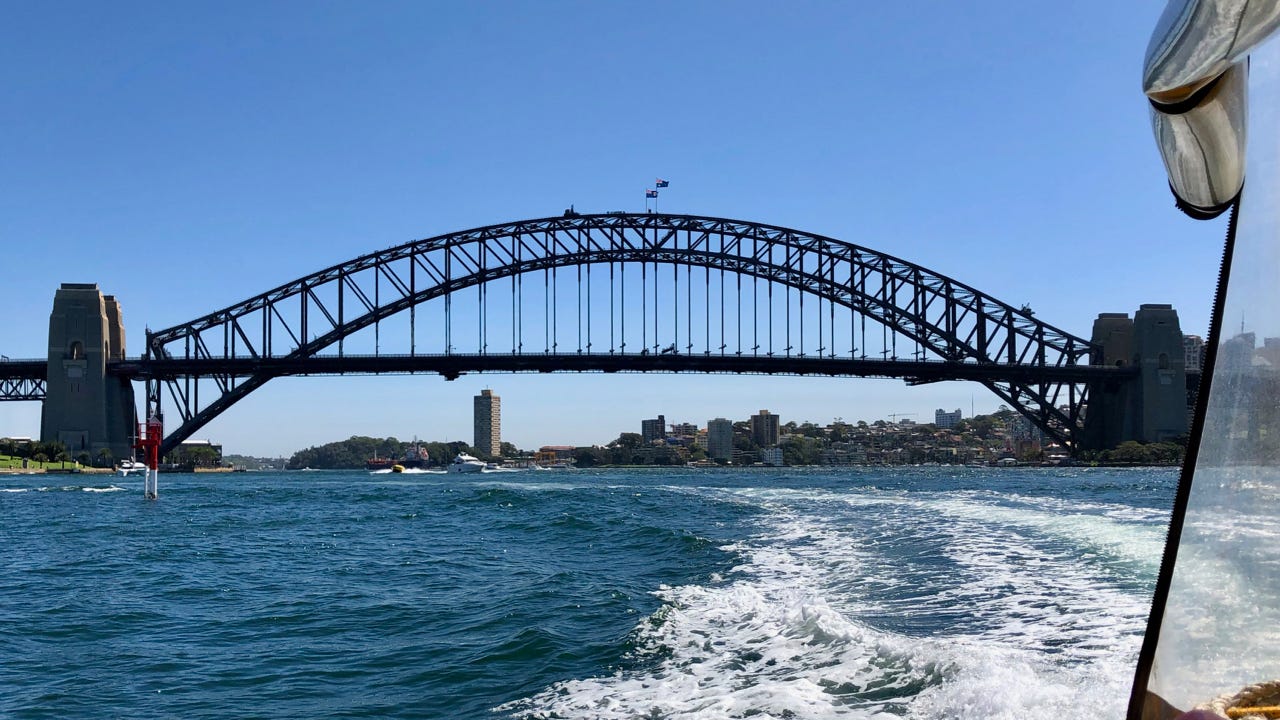
PPPS. This week’s image is self-explanatory—taken on my iPhone from a water taxi headed for Watson’s Bay.
This is a public episode. If you'd like to discuss this with other subscribers or get access to bonus episodes, visit www.twoways.news/subscribe
More from Two Ways News
Sense and Sensibility
Nov 23, 2026 · 27m
Dear friends,Last week, Peter answered the question of why he is still a Christian, in terms of the arguments for Christianity found in the person and work of the Lord Jesus Christ. This week, in part...
Persuasion
Nov 16, 2026 · 33m
Dear friends,When Peter and I became Christians in the middle of the 20th century, the great atheist mathematician and philosopher of the time was Bertrand Russell. He produced a book of great...
Always Let Your Conscience Be Your Guide?
Nov 9, 2026 · 23m
Dear friends,Some topics are such a universal way of thinking that it is surprising to see how rarely they are mentioned in the Bible. Conscience is such a topic that is critical to our behaviour...
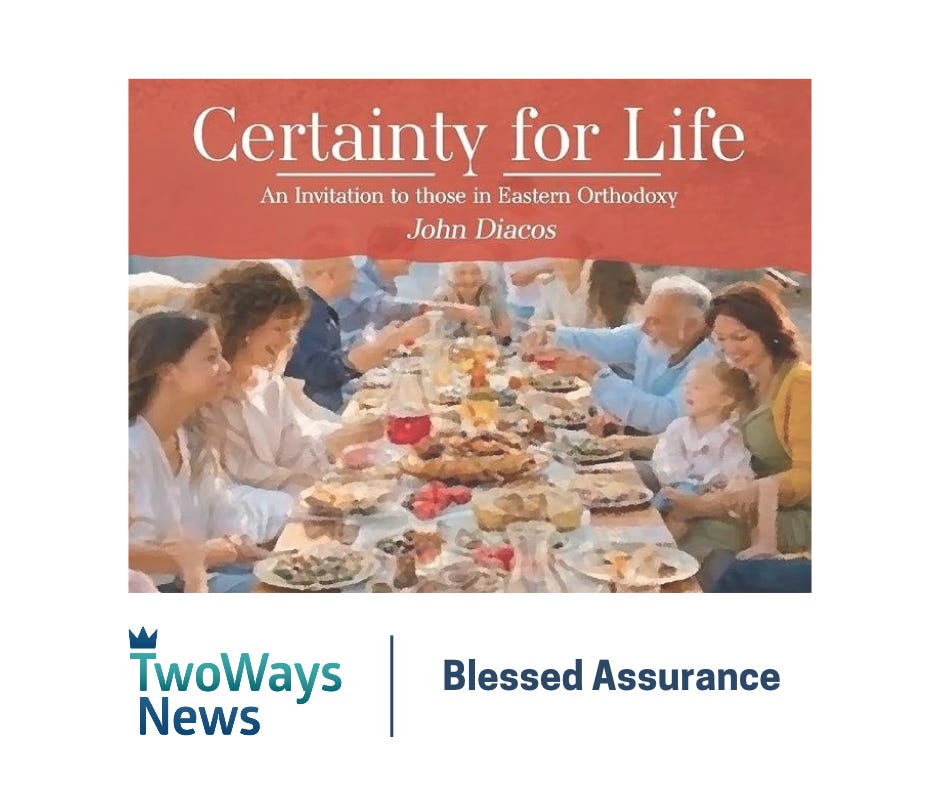
Blessed Assurance
Nov 2, 2026 · 26m
Dear friends,As Peter and I turn to different topics of Christian concern, it is sad to see how often old problems keep on being recycled through our churches. One such issue is that of assurance....
Institutional Captivity
Oct 26, 2026 · 35m
Dear friends,In this second episode of our series of topics, Peter and I are discussing institutional captivity. Christians, especially evangelical Christians, have been very enterprising and...
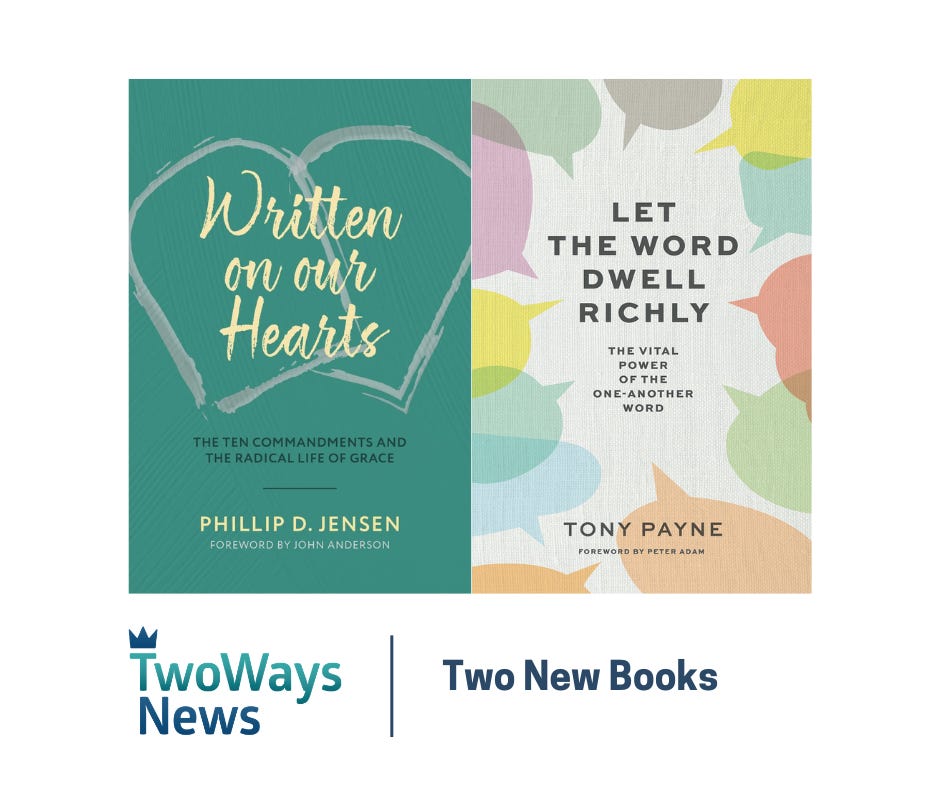
Two New Books
Oct 19, 2026 · 31m
Dear friends,In this episode of Two Ways News, we welcome back Tony Payne, because each of us has published a new book this year. Tony’s book entitled Let The Word Dwell Richly helps us understand the...
Take these sermons with you.
Follow Two Ways News in the Getsermons app to get every new sermon, build playlists, and pick up right where you left off.

