
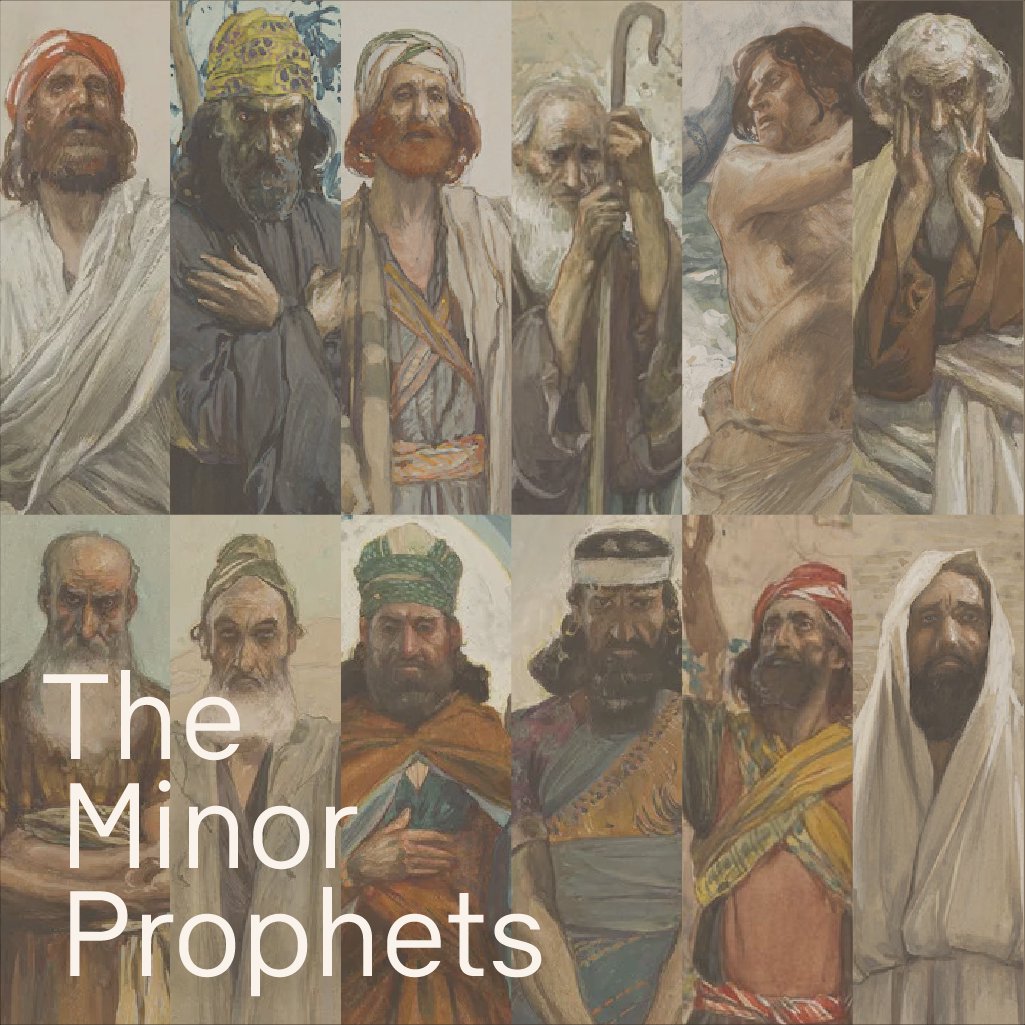
About this sermon
As we continue to make our way through the Minor Prophets, we arrive at the smallest book of prophecy, the book of Obadiah. In just 21 verses, we see God’s determination to restore His people through judgment on display in the destruction of Edom. We also learn four important lessons for our lives today about the destructive nature of pride and the trustworthy sovereignty of God, our good and just Judge.
Main Points:
- Through judgment, God will restore His people.
Lesson #1: Obadiah reminds us of the destruction of pride.
Lesson #2: Obadiah reminds us that God’s people are saved through judgment.
Lesson #3: Obadiah reminds us that God is just and will judge; this is good news.
Lesson #4: Obadiah reminds us that the eternal kingdom is the Lord’s.
Key Takeaways:
- Napoleon is known for his pride. His pride led to his destruction.
- Similarly, the book of Obadiah tells about the pride and fall of the Edomites. Yet it also contains a message of hope that through judgment God will restore His people.
- God’s indictment against Edom (vv. 1-2) is sent among the nations as a warning against pride.
- Verses 3-4 describe the Edomites’ problem: their arrogance. God promised to oppose Edom for their pride.
- The Lord declares total devastation will come to Edom (vv. 5-9).
- Verses 10-14 demonstrate how this pride from Edom has manifested toward the Israelites, their blood relatives. - They should have allied with Israel but instead, they were violent toward them because of their pride. In doing so, they opposed both God and God’s people.
- Verse 15 is a key verse. It describes a reversal of fortune. Essentially, in colloquial terms, “what goes around comes around.” God promises the Edomites will drink a cup of judgment, bringing about their own demise by their destructive actions even as God Himself judges them for rejecting Him. Thus we see the balance between human responsibility and divine sovereignty.
- Obadiah’s prophecy was fulfilled, and quickly. The Nabateans overthrew Edom. This was the prophecy’s immediate fulfillment.
- But the ultimate fulfillment will be Jesus’ second coming when God judges all the nations—the righteous unto salvation and unrighteous unto judgment.
- Verses 17-21 transitions from a message of destruction to a message of hope and restoration. Though God judged His people (see the book of Amos), a remnant remains and God will restore them.
- God’s ultimate objective is the realization of His eternal kingdom to bless His people forever.
Lesson #1: Obadiah reminds us of the destruction of pride.
The Noah Webster Dictionary of 1828 defines pride this way: “Pride is inordinate self-esteem; an unreasonable conceit of one’s own superiority in talents, beauty, wealth, accomplishments, rank or office, which manifests itself in lofty airs, distance, reserve, and often in contempt of others.”
The ultimate expression of pride is living without an understanding and declaration of our desperate need for God. The most severe manifestation is the willful rejection of the triune God and His Word.
All pride leads to destruction. Yet it’s inherent in our fallen nature. Even as believers, our flesh wrestles with our new self in Christ. But God in His love allows the destructive consequences of pride to humble us and bring us to repentance.
Lesson #2: Obadiah reminds us that God’s people are saved through judgment.
We have all acted in the sin of pride in opposition to God. And we are saved through judgment—God’s judgment of sin poured out on Christ in our stead.
Lesson #3: Obadiah reminds us that God is just and will judge; this is good news.
God will right all wrongs. And He is a better Judge than we are. Vengeance is His (Romans 12:19-21).
Lesson #4: Obadiah reminds us that the eternal kingdom is the Lord’s.
Justice is coming. This world is not our treasure. As we sing, “Though the nations rage and kingdoms rise and fall, there is still one King reigning over all; and I shall not fear, for this truth remains—that my God is the Ancient of Days.”
The greatest declaration of pride is, “Lord, I don’t need You.” May our humble declaration be, “Lord, I need You.”
Discussion Questions/Application:
Personal application:
1. Spend some time asking the Spirit to help you identify pride in your heart. How do you see pride show up in your life on a weekly/daily basis? How do you live as though you don’t need God? How do you see apathy toward God show up in your life? If you have trouble, think through a recent conflict. How did your pride play a role? Are you experiencing any destructive consequences of pride right now?
2 Consider: Do you see a holy hatred of pride growing in your life? How? If not, how can you begin—through the Holy Spirit’s power—to cultivate it more?
Discuss with your community group:
1. What wrongs are you struggling with right now, desiring to see justice prevail? How can you more fully embrace God as our Judge and trust His timing and plan in this?
2. Share about a time when pride led to destruction in your life. What happened? How did God use the consequences of your sin to lovingly discipline you and draw you to Him? How did you see James 4:4-10 at work?
Scripture Referenced:
James 4:4-10; Romans 3:23; Romans 6:23; Romans 12:19-21
Worship Set List:
The Passion, Firm Foundation (He Won't), Nothing Else, Death Was Arrested, Lord I Need You
More from Watermark Fort Worth
Philippians 2:12-18
Nov 15, 2026 · 43m
This week's sermon on Philippians 2:12–18 explored what it looks like to grow in faith without relying solely on our own strength or passively waiting for God to change us. Jason Bradshaw walked...

A Generous People
Nov 8, 2026 · 54m
What does it really mean to trust God with our money, comfort, and security? In Matthew 6:19–24, Jesus challenges us to examine what we treasure most and where we place our trust. Through three...

Our Generous God
Nov 1, 2026 · 51m
This week, we began a three-week series on generosity by looking first at the extraordinary generosity of God Himself. Drawing from Ephesians 1:3–14, Newley Spikes reminded us that God's generosity is...
Philippians 2:5-11
Oct 25, 2026 · 43m
This week's sermon walked through Philippians 2:5-11, exploring what it means to embrace a life of humility modeled after and made possible by Jesus Christ. The passage unfolds through three...
Philippians 2:1-4
Oct 18, 2026 · 42m
In Philippians 2:1–4, Paul reminds us that our unity begins with what we have already received in Christ: His encouragement, love, comfort, and the presence of the Spirit. Because of what Christ has...
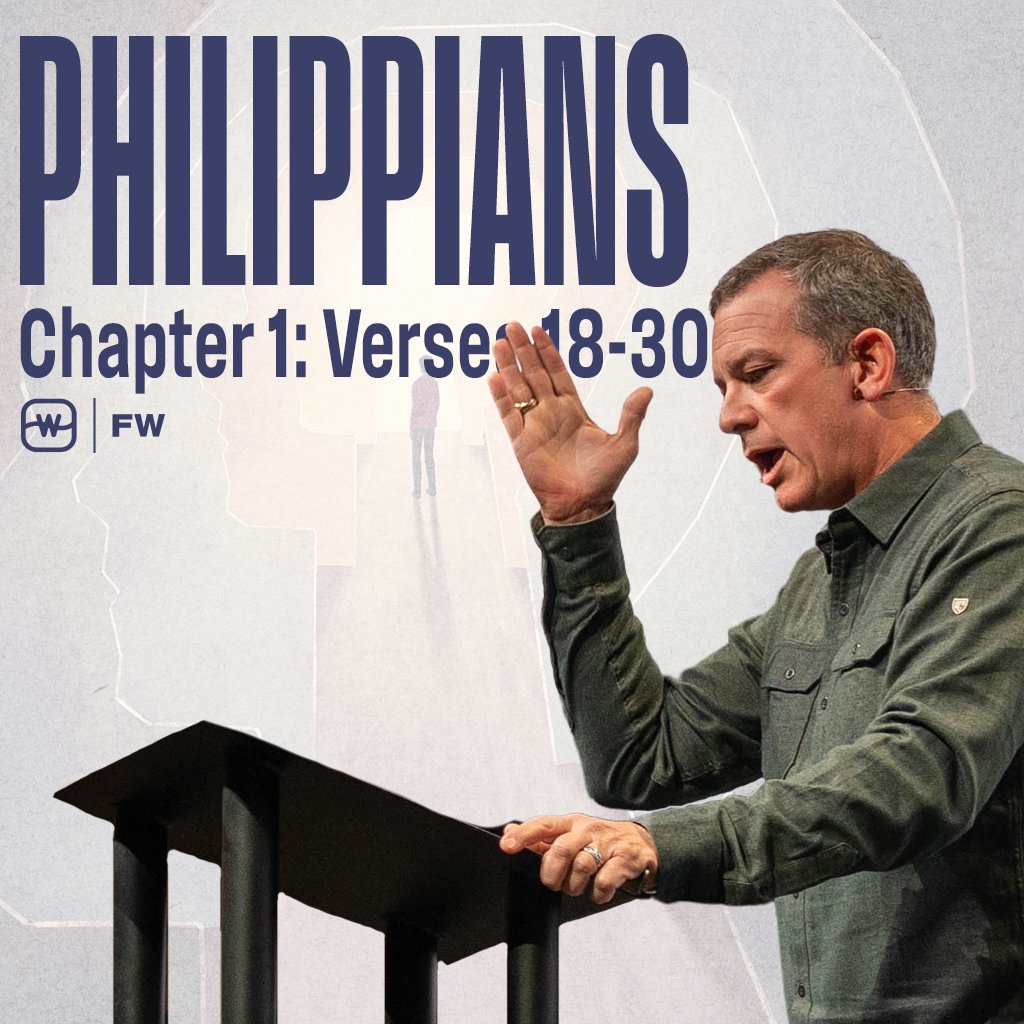
Philippians 1:18-30
Oct 11, 2026 · 50m
In Philippians 1:18–30, Paul writes from a prison cell with a clarity and peace that defies his circumstances, declaring that “to live is Christ and to die is gain.” His life has been completely...
Take these sermons with you.
Follow Watermark Fort Worth in the Getsermons app to get every new sermon, build playlists, and pick up right where you left off.

