
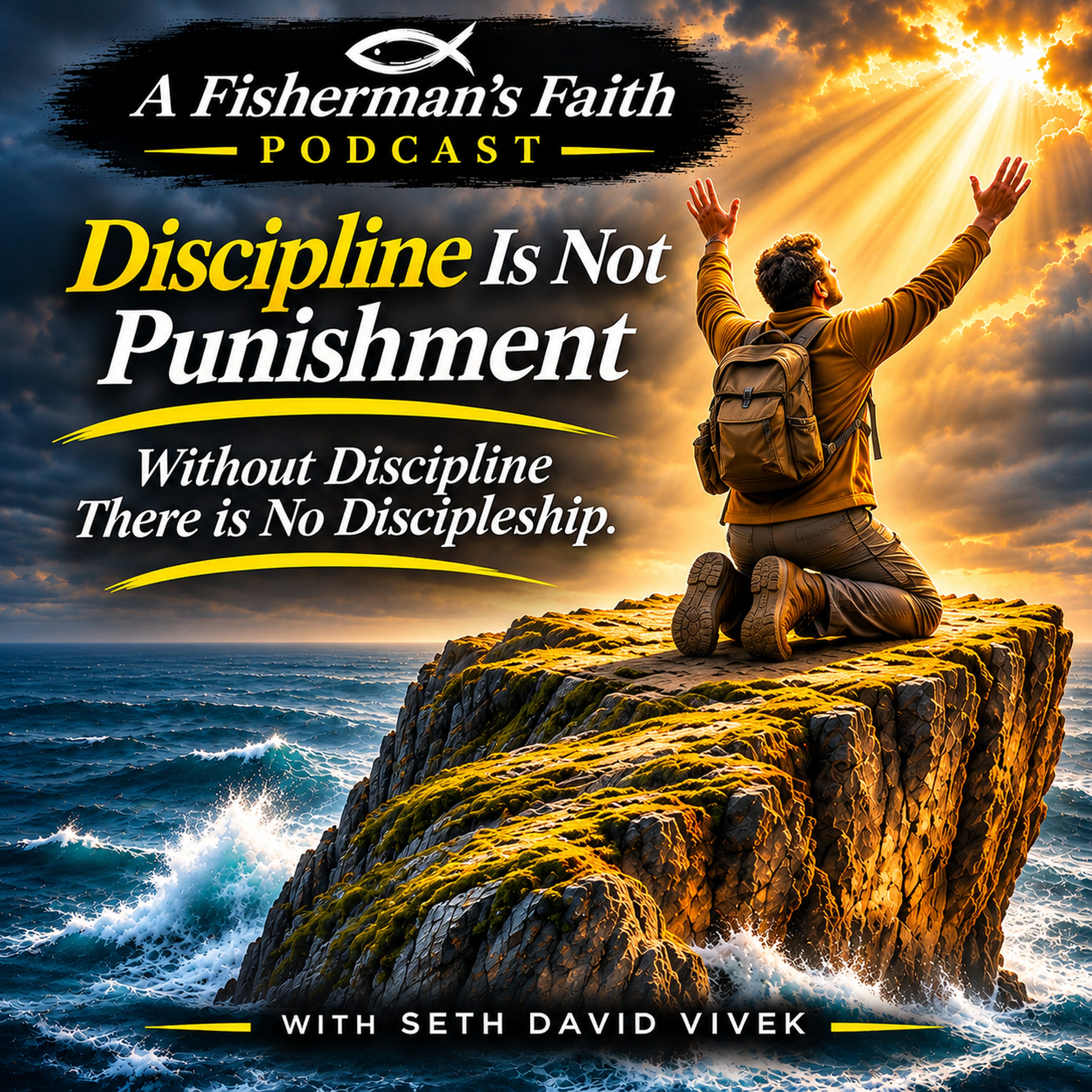
A Fisherman's Faith
Discipline Is Not Punishment, Without Discipline, There Is No Discipleship.
Nov 18, 2026 · 12m
Prefer sermons downloaded automatically?
About this sermon
A Fisherman’s Faith Podcast by Seth David Vivek
For most of my Christian life, I wanted to be loved, encouraged, prayed for, and supported by my church and small group. I wanted brothers and sisters who would walk alongside me and pastors who would care for me and guide me. But there was something I was not always willing to embrace: spiritual accountability. I wanted the love, fellowship, and encouragement that come with discipleship, but I was not always willing to accept the correction and discipline that are equally important. Looking back, I realize this was a pattern that followed me for much of my life. Today, I want to reflect on something I believe many of us need to examine in our walk with Christ: discipline is not punishment, and without discipline, there is no true discipleship.
Before I go any further, I want to look at the word discipline itself, because I believe many of us have misunderstood its meaning. The word comes from the Latin disciplina, meaning instruction, teaching, learning, and training. It is closely related to discipulus, meaning a pupil or learner, from which we get the word disciple. Think about that connection. A disciple is someone who is willing to learn, and discipline is part of the process of being taught and trained. We often associate discipline primarily with punishment, restrictions, and consequences. While correction can be part of discipline, its purpose is much greater. It is about teaching, training, and preparing someone to walk in the right direction. It is not simply about telling us what we cannot do; it is about teaching us how we ought to live. *A disciple must be willing to learn, and a person who refuses discipline is refusing the very process through which discipleship takes place.*
I am 55 years old now, and when I look back at my younger years, I can see that I was a very rebellious teenager. I wanted to do things my way. I did not respect the authority of my father, my schoolteachers, or even my college professors. I resisted being told what to do. I wanted freedom without accepting the responsibility and correction that came with it.
As I look back, I realize something I intentionally missed during my teenage and young adult years: discipline is an essential part of a father’s discipleship of his son. A father does not simply love his son, provide for him, and encourage him. He also teaches him, corrects him, sets boundaries, and prepares him for life. I resisted that process because I wanted to make my own choices without being questioned or corrected.
As I have grown older in my walk with Christ, I have come to understand that the same principle applies to our relationship with our Heavenly Father. Without allowing ourselves to be discipled, corrected, and trained in His ways, we remain vulnerable to the desires of our flesh. We may receive the gift of salvation, but if we continually resist the Lord’s authority and the transforming work of the Holy Spirit, we will struggle to live as people who are truly surrendered to Christ.
At the age of 25, I received the gift of salvation. I embraced the love of Christ, His sacrifice on the cross, and the wonderful truth that my sins could be forgiven. I was deeply grateful for His grace and the clean slate He offered me. But although I had received the gift of salvation, I did not fully understand what it meant to live under the lordship and authority of Christ. I understood His love and forgiveness, but I had not yet understood the depth and responsibility of discipleship.
For many years, I defined my own convenient path. I welcomed encouragement, fellowship, and prayer, but I was not always willing to receive correction. I wanted the benefits of discipleship without necessarily accepting the discipline that comes with it.
Then, when I was 52, something began to change. I encountered what I came to understand as the true body of Christ. I began experiencing fellowship that went beyond encouragement, kindness, and sacrifice. It included genuine spiritual accountability. I experienced brothers and sisters who cared about my spiritual growth, who were willing to speak the truth in love, and who walked alongside me through difficult seasons of transformation.
During that season, the Lord used circumstances in my own life, including decisions made by my sons, to bring me to a place of deep brokenness. I am not suggesting that every painful circumstance is God’s punishment or that every hardship is a direct consequence of something we have done. But I can testify that the Lord used those circumstances to expose things in my own heart that I had not been willing to confront.
And He did not leave me in that brokenness. He began rebuilding my life through relationships within the body of Christ. Through the love, patience, prayers, counsel, sacrifice, and sometimes difficult conversations of brothers and sisters, I began to understand what it meant to be discipled.
I had received the gift of salvation at 25, but it was at 52 that I began to understand the depth and responsibility of discipleship. That realization changed the way I looked at my walk with Christ.
Hebrews 12:6 tells us, “For whom the Lord loveth he chasteneth.” And Hebrews 12:11 reminds us that discipline, although painful at the time, produces a harvest of righteousness and peace for those who have been trained by it.
Think about that. Discipline is not God rejecting us or withdrawing His love. It is part of His loving work of training and shaping us. A loving father corrects his child because he wants that child to grow and mature. In the same way, God’s discipline trains us in righteousness and holiness.
As we talk about discipline and spiritual accountability, I think it is important to remember that correction must always come from a place of love and humility. Those who guide, teach, or shepherd others should do so with gentleness, patience, and a genuine desire to see others grow in Christ. Spiritual accountability is never about controlling someone or imposing our own will on them. It is about helping one another remain grounded in God’s Word and encouraging one another toward a life that honors Christ. Galatians 6:1 reminds us to restore someone in a spirit of gentleness, while also watching ourselves. We are all growing, and those who offer correction must remain humble and willing to be corrected themselves.
At the same time, we must be careful not to let past hurts, disappointments, or a fear of being corrected prevent us from receiving genuine, loving guidance. There is a difference between correction that seeks to control and correction that seeks to restore. We should never tolerate unhealthy treatment, but neither should we close our hearts to every challenge or word of correction. We must be willing to examine ourselves and take responsibility for our own spiritual growth. Ephesians 4:15 calls us to speak the truth in love. Sometimes love means offering encouragement, and sometimes it means having a difficult conversation. Both can be part of the way God helps us grow.
This brings me to another important truth. Romans 7:18 says, “For I know that in me (that is, in my flesh,) dwelleth no good thing.” Our flesh wants its own way. It wants comfort, recognition, control, and independence. Without allowing ourselves to be discipled, corrected, and trained in God’s ways, we remain vulnerable to the desires of our flesh. We cannot expect to grow in the likeness of Christ while continually resisting His authority.
Romans 8:13–14 speaks about putting to death the deeds of the body through the Spirit and tells us that those who are led by the Spirit of God are the sons of God. Our identity as children of God is not something we earn through discipline. Through faith in Jesus Christ, we are brought into God’s family by grace. Salvation is a gift, not a reward. But as His children, we must be willing to receive our Father’s training.
Jesus says in Luke 9:23 that anyone who wants to follow Him must deny …
This is a public episode. If you would like to discuss this with other subscribers or get access to bonus episodes, visit sethdavidvivek.substack.com
More from A Fisherman's Faith

My Flesh Sees Only the Eye of the Needle, Yet Faith Sees the Beautiful Gate.
Nov 10, 2026 · 7m
For the last couple of weeks, I have been struggling with a decision I need to make concerning one of my sons. Deep down, I know it is God’s will. I also know it is one of the crucial steps my son...
Lord, I Don’t Want to Fight a Battle That Hasn’t Even Begun - A Prayer for Faith When Fear Remembers.
Nov 3, 2026 · 6m
There are moments in life when you hear something, and suddenly, your heart takes you somewhere you never wanted to go again. Something happens. Someone says something. You hear something that touches...
Self-Pity Makes Us Spectators of Our Own Suffering Rather Than Participants in God’s Work.
Oct 31, 2026 · 8m
Have you ever wondered how much of our lives we spend feeling sorry for ourselves? I mean, really think about it. How often do we replay the things people said to us, the disappointments we...
Why Is Obedience So Difficult? When God Calls, Do I Follow?
Oct 19, 2026 · 9m
Welcome back to A Fisherman’s Faith Podcast.Welcome back to A Fisherman's Faith Podcast. Yesterday morning, during our morning walk, my wife and I were listening to Gospel music. One of the songs...
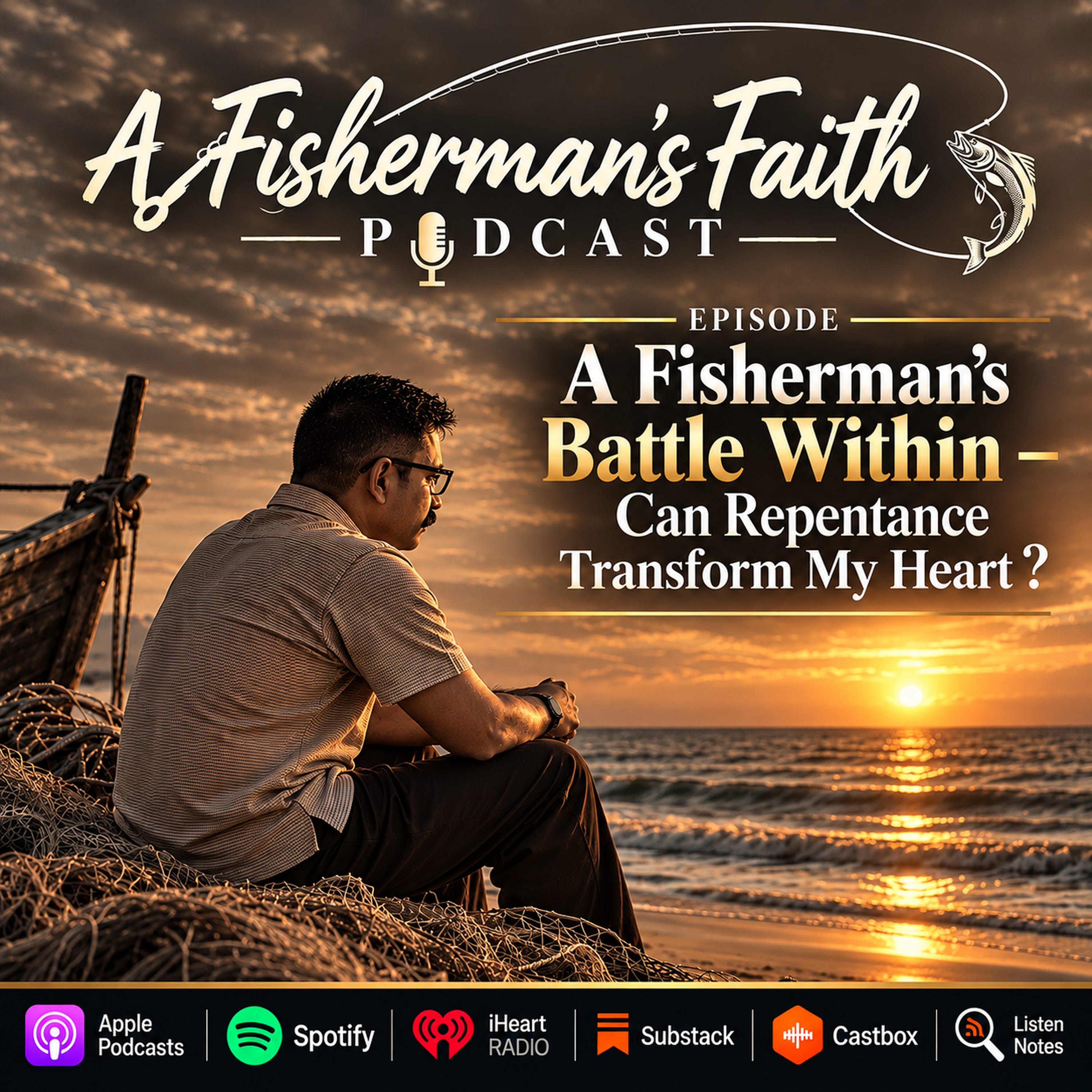
A Fisherman’s Battle Within - Can Repentance Transform My Heart ?
Oct 12, 2026 · 14m
For most of this week, my wife and I have been going through Romans chapters 6 through 8 during our morning devotions. As we have been reading and reflecting on these chapters, one thing has continued...

Rusted Shears, a Trimmed Bush, and an Unfinished Story.
Sep 29, 2026 · 9m
Hello, everyone. This is Seth David Vivek, and welcome back to another episode of “A Fisherman’s Faith” Podcast.Have you ever looked at someone you love and quietly thought, “I just don’t see how this...
Take these sermons with you.
Follow A Fisherman's Faith in the Getsermons app to get every new sermon, build playlists, and pick up right where you left off.

