
crumbs from His table fellowship podcast
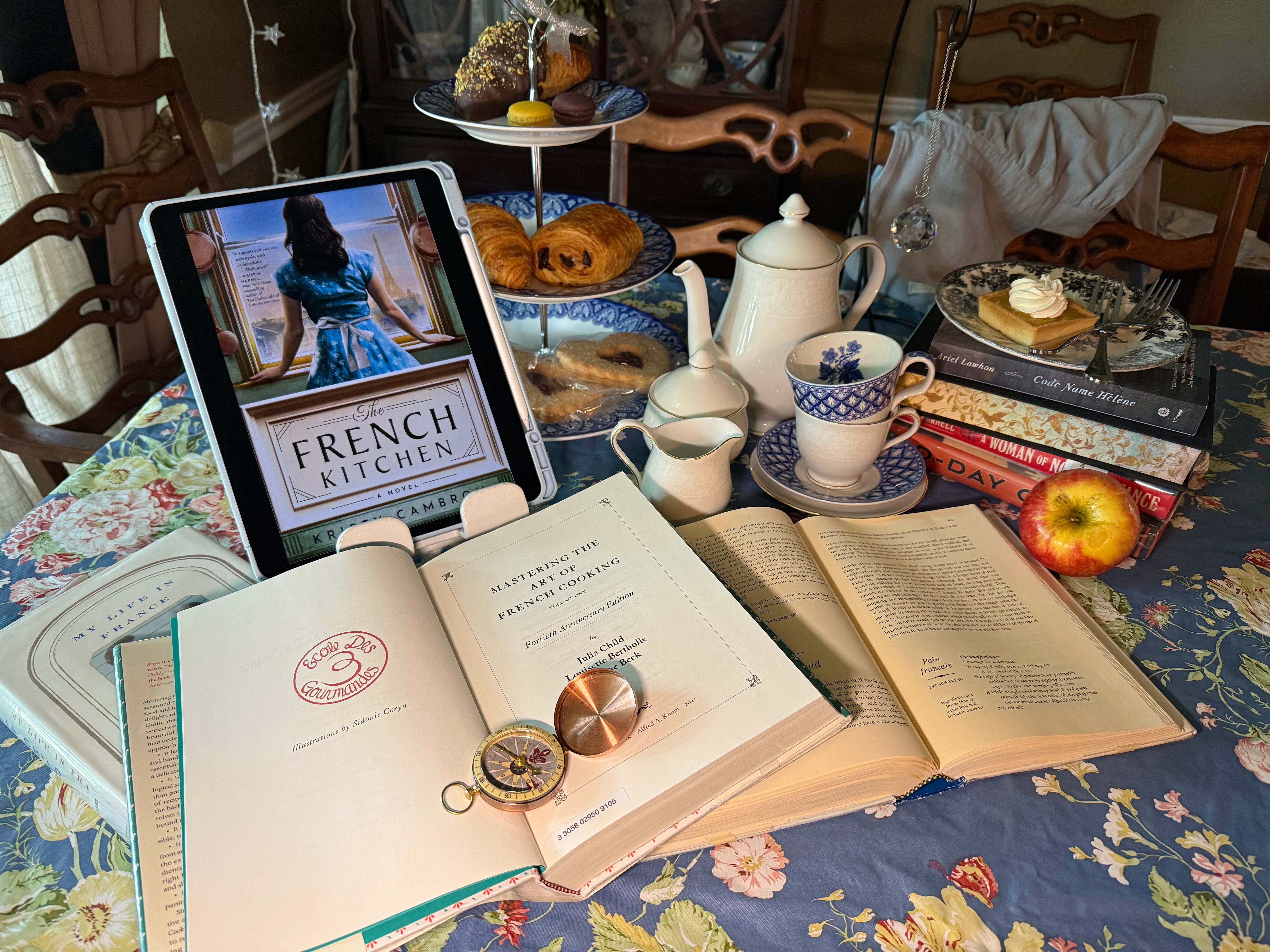
The French Kitchen
Aug 4, 2025 · 14m
Prefer sermons downloaded automatically?
About this sermon
“What would a French glamour girl wear to stash weapons in the dead of winter besides a haute couture gown? Kat Harris wished she knew.”
With that, Kristy Cambron (The Paris Dressmaker) launches the reader out of the plane into Nazi-occupied France in 1943. The rest of the dual-timeline story recounts Kat’s wartime experiences leading to that pivotal night and haute couture gown and her later attempt, in 1952 Paris, to reckon with that night and seek some degree of resolution—with a little help from Julia Child—regarding what came afterward. Kat has spent most of her life stuck in the heartaches of past loss; the reader journeys with her in discovering whether she can learn to move forward with hands outstretched into a hopeful future that is shaped but no longer shackled by the past. This novel of Allied espionage behind enemy lines serves up a rich treat as layered, coiled, and delectable as a croissant, with l’amour as the molten chocolate heart at the center of it all.
In Kathryn “Kat” Harris, Cambron has created a compelling, complex strong female lead. Daughter of an auto mechanic and a French-born Boston socialite, Kat studied languages at Wellesley but is as at home bent over a car engine with a wrench or running (for fun) through the parks of Boston as she is reading French poetry and dancing in a couture gown. She also has an invisible physical disability which proves both liability and superpower.
Her wartime experiences made me curious about the American spies of the mid-twentieth century. I had never before tried seriously to imagine what it would be like to be recruited to spy for the US in the days before the CIA, when secret intelligence agencies were exactly that: secret. Kat doesn’t really know she is being recruited at first, or for what. She has to draw on her intelligence, resourcefulness, and innate distrust from the moment she meets the man we might call her handler.
“It is not a question of what is easy but what is right.”
Julia
After rejection by the armed forces, Julia Child herself served in the Office of Strategic Services (OSS) in real life and in the book. She reported directly to the director, “Wild Bill” Donovan and served in Ceylon, where she met her future husband, Paul, an OSS colleague. After the Allied victory, Paul Child worked for the State Department, which brought them to Paris and introduced Julia to the other love of her life: French cuisine. So enamored was she with these new flavors and textures that she trained at the Cordon Bleu.
By the time Kat meets her in this novel, Julia and two fellow graduates of the Cordon Bleu are teaching French cooking to housewives. Kat and a friend join the classes of L’École des Trois Gourmandes (The school of the three hearty eaters) in the kitchen of the Childs’ flat at 81 Rue de l’Université, affectionately known as “Rue de Loo.”
“That is the best thing about French cuisine. It doesn’t have to be perfect to be exquisite.”
The classic spy tropes come into play in this novel as one would expect. We have at least one mole, strict compartmentalization of information on a need-to-know basis, hidden weapons, secret messages, code names and aliases, midnight interrogation, and the paradox of one’s life depending on knowing whom to trust while not really knowing whom to trust, even one’s own husband.
One person Kat does quickly learn to trust is Manon Altier, a Resistance operative seeking to wrest meaning from profound loss. Manon has a softer kind of strength, but she displays her own sort of courage as the French head chef of the kitchen at Chateau du Broutel, which has been claimed by the Nazis as their regional base in the Baie de Somme coastal area of northern France.
L’Amour
Both Manon and Kat have experienced the heartbreak of love and bereavement in the past, and in different ways they both have put up their guard against letting people into the secret place of their affections again. They have learned the truth of the words of C. S. Lewis in The Four Loves: “To love at all is to be vulnerable. Love anything and your heart will be wrung and possibly broken. If you want to make sure of keeping it intact you must give it to no one, not even an animal.” Their wartime experiences invite them to choose between that vulnerability and the risk of further heartbreak and Lewis’s alternative: “Lock it [your heart] up safe in the casket or coffin of your selfishness. But in that casket, safe, dark, motionless, airless, it will change. It will not be broken; it will become unbreakable, impenetrable, irredeemable. To love is to be vulnerable.”
When I noted earlier that l’amour, love, resides at the heart of this story, I don’t mean only romantic love. All kinds of love texture this novel: romantic love, to be sure, but also the platonic love between female friends, the love of a canine companion, the love between siblings, the love of a daughter for her father and a son for his mother, the love of making something wonderful with excellence, and the sacrificial love that would lay down its life for the beloved. The depth and breadth of love flavoring this tale kept me engaged and cheering for the characters to find their happily ever afters.
Period Detail
Cambron has done her homework and paints a vivid picture of France during occupation and in the post-war recovery attempts. Details of mouthwatering food, mid-century fashion, place, historical figures, and the various official and secret groups operating in wartime France add depth. Fans of classic Hollywood movies will enjoy the descriptions of Dior and Givenchy styles of post-war Paris and the more utilitarian “Kitty Foyle frock” and dungarees of Kat’s pre-war preference. The attention to detail struck me as cinematic, with serious potential for adaptation as a movie or limited series.
This is a fast-paced read. Because of the dual timelines and numerous code names, aliases, and groups, I recommend immersive reading such as on holiday or during a rainy long weekend. This isn’t the best book to read two pages at a time in the school pickup line or falling asleep at night; it is easier to keep track of the characters when reading in bigger chunks.
Audiobook
Alternately or additionally, you may enjoy the audiobook version, read by top-flight narrator Saskia Maarleveld. I enjoyed her performance and found her French and German accents convincing. One name tended to receive an American rather than French pronunciation, but that will likely pass unnoticed for most listeners. Maarleveld is an excellent and engaging reader, and I have no qualms in recommending the audio version for those who need or prefer to consume books that way or in a multisensory reading-plus-listening approach.
Content
The religious/faith references are few and not at the heart of this story. One character refers repeatedly to “Providence,” and indeed the interweaving of lives and plot seems to display the hand of God working behind the scenes, as it were, not unlike the book of Esther. Another character, at a crisis moment, recites Psalm 23 to himself, and one wedding occurs in a church.
Since I don’t know the scruples or triggers of all who read this review, here are a few additional content notes so each one can follow his or her conscience. The soldiers smoke tobacco, and most of the characters drink alcohol in moderation. Wartime violence and close combat are depicted when essential to the story. The mistreatment of women by the occupation force is mentioned a few times, briefly and without vulgar or explicit content.
Over all, I would classify this more as clean inspirational historical fiction than explicitly Christian historical fiction. As a movie, I would rate it PG.
For Further Reading
The French Kitchen serves up a feast of delights for fans of World War II history and clean historical fiction. Fans o…
Get full access to crumbs from His table fellowship at crumbsfromhistable.substack.com/subscribe
More from crumbs from His table fellowship podcast

Evening Prayer and Philippians 2
Nov 23, 2026 · 19m
This is the second post in our Philippians series. To hear or read the first post, visit this page:Call to Worship:“Blessed is the God and Father of our Lord Jesus Christ, the Father of mercies and...
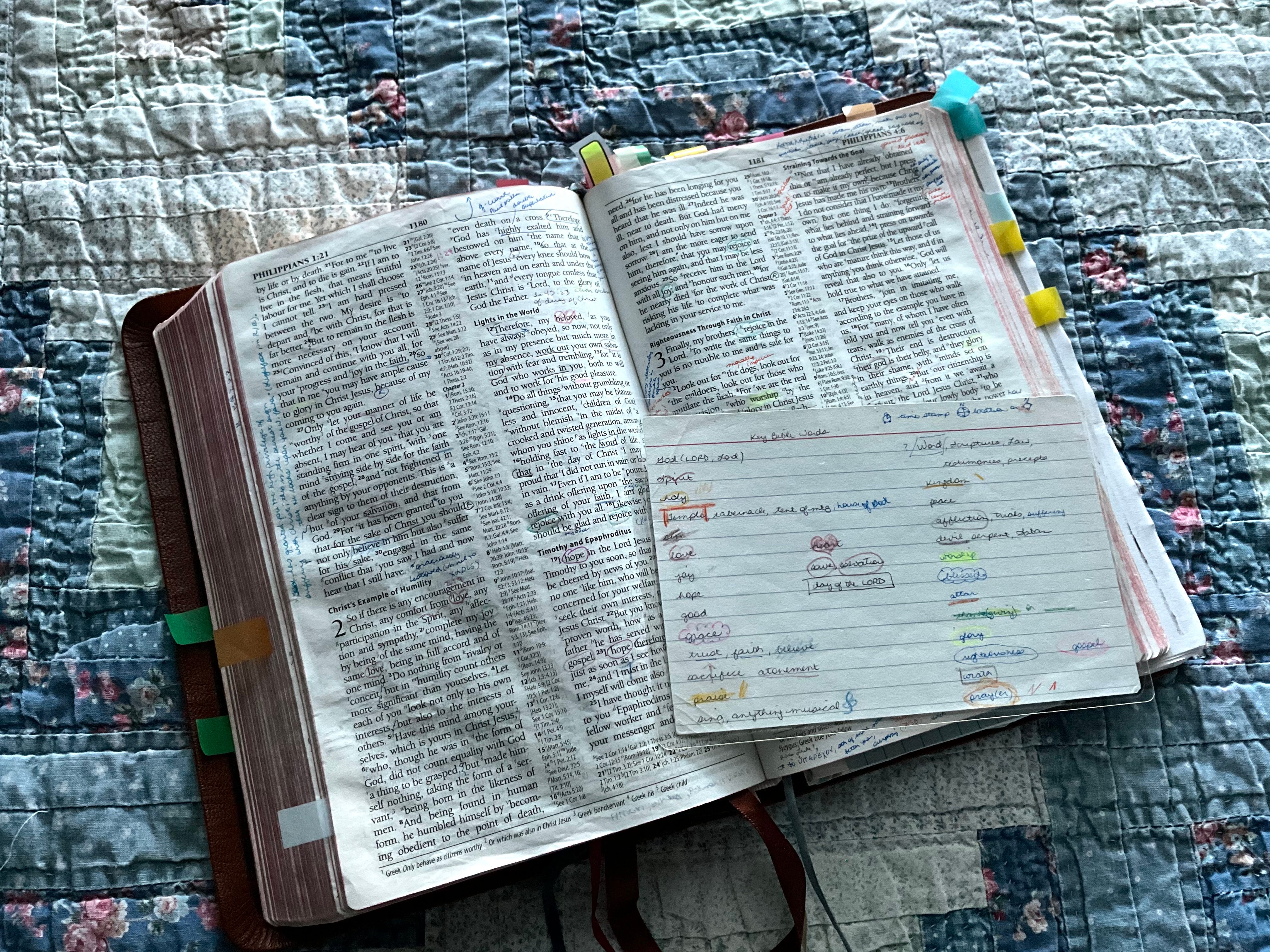
Bird’s Eye Overview of Bible Study Methods
Nov 14, 2026 · 11m
Ever-speaking God,Who spoke the world into being,Who sustains it by Your all-powerful word,Who breathed out the Scripture we approach today:In coming to Your Word,We come to You Yourself.Open our eyes...

Morning Prayer and Philippians 1
Nov 9, 2026 · 28m
Starting today, we are prayerfully reading Philippians together. If you are able, please read and pray along with me.If you would like to study this passage for yourself, please keep listening after...

Reaching
Oct 27, 2026 · 4m
My roots are in Zion;My home is not here.This groaning life is pilgrimage, a tortuous,Path winding where the wind blows.All my stability is in heaven,In the trustworthy promises of God,In the...

Parable of the Waiting Room
Oct 6, 2026 · 15m
A peek into our time capsule…The sparsely adorned walls, uncomfortable chairs, and odd assortment of magazines scattered on the various tables confirmed that the woman was in the right place. She...

A Prayer for a Life-Changing Diagnosis
Sep 18, 2026 · 6m
So as not to worry you, I myself do not have a new chronic diagnosis or cancer recurrence, thanks be to God. However, I have heard of more new diagnoses these last 2 or 3 years than in any other...
Take these sermons with you.
Follow crumbs from His table fellowship podcast in the Getsermons app to get every new sermon, build playlists, and pick up right where you left off.

