
Faith & Finance
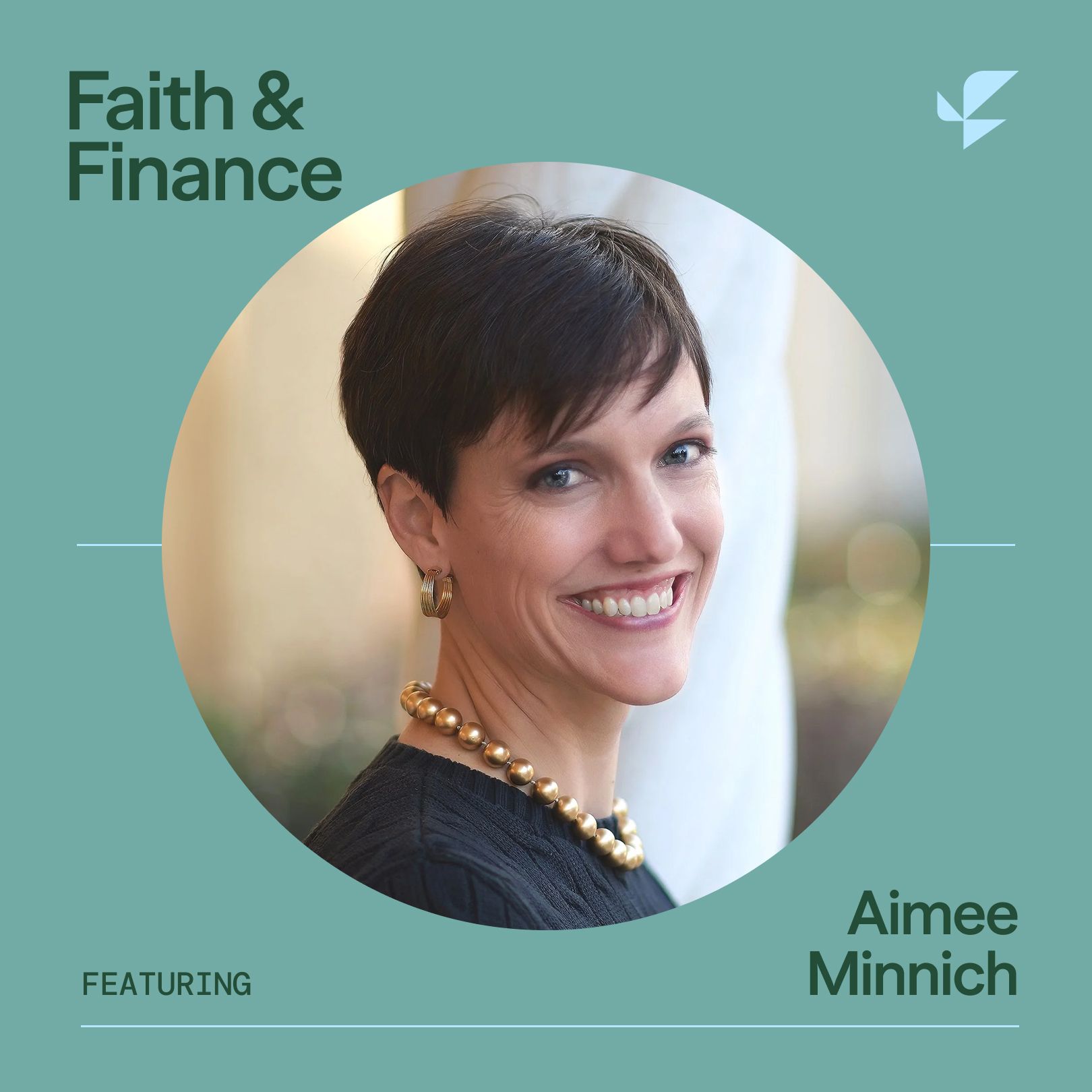
Are We Asking the Right Questions About Investing? with Aimee Minnich
Nov 5, 2026 · 24m
Prefer sermons downloaded automatically?
About this sermon
When Christians think about faithful stewardship, generosity often comes to mind first. We ask how much we should give, where our gifts should go, and how we can use our resources to bless others. But what about the money we don't give away?
Faithful stewardship extends beyond charitable donations. It includes our savings, investments, businesses, and everything else God has entrusted to our care. And that raises an important question: How can we use all of our resources, not just what we give, to advance God's purposes?
Aimee Minnich, Co-Founder, Chief Impact Officer, and General Counsel of the Impact Foundation, helps Christians explore that question by aligning their investments with their faith to promote human flourishing.
A Fourth Question About Generosity
Traditionally, Christians have approached generosity by asking three questions: What should I give? How should I give? And where should I give?
Minnich believes there's a fourth question worth considering: What would God have me do with everything I own before I give it away?
If we believe that God owns everything and that we're simply stewards of His resources, then our responsibility extends to every financial decision we make. This doesn't diminish the importance of charitable giving. Generosity remains an essential expression of God's grace at work in our lives. But giving is part of a much larger stewardship responsibility.
Our savings, investments, and businesses are also opportunities to honor God. Rather than separating the money we give from the money we keep, we can begin viewing everything He's entrusted to us through the same lens of faithfulness.
Can Business Advance God's Kingdom?
Businesses are often evaluated primarily by their ability to generate profits, create jobs, and provide goods and services. While those are important contributions, Minnich encourages Christians to recognize that business can accomplish something even greater.
Consider the opportunities businesses create for employees to use their God-given abilities, for customers to receive valuable services, and for communities to experience economic stability.
When a company treats its employees with dignity, serves customers with integrity, and develops products that genuinely improve people's lives, its daily operations can reflect biblical principles.
In other words, a business doesn't have to wait until it distributes its profits to make a meaningful difference. The work itself can become an expression of loving our neighbors. This perspective also helps us understand why charitable giving and investing should be viewed as complementary approaches rather than competing priorities.
Charity is essential, especially when people face immediate needs. When someone is hungry, providing a meal can be a direct expression of Christlike compassion. During disasters, famines, and other crises, charitable assistance can save lives. But lasting economic transformation may require something more.
Minnich recalls visiting a small village in southern Ethiopia near the Kenyan border. Famine, drought, and political instability had left residents struggling to survive. Emergency assistance provided food that literally saved lives. Yet as time passed, the community also needed opportunities for employment, training, and economic independence. That's where business can play an important role.
By creating sustainable jobs and equipping people with valuable skills, businesses can help communities build toward long-term flourishing. Charity responds to urgent needs, while investment can help develop lasting opportunities. Both have an important place in faithful stewardship.
Three Ways to Align Investments With Your Faith
If businesses can contribute to human flourishing, then the investments we make in those businesses deserve thoughtful consideration.
As Minnich explains, investing isn't spiritually neutral. The companies we support through our investments influence the world around us, whether we recognize that influence or not.
Fortunately, Christians have a growing number of opportunities to consider both financial performance and biblical convictions. Minnich identifies three primary approaches:
Screening investments: Avoiding companies or industries whose activities conflict with biblical values.
Engaging with companies: Encouraging businesses to improve their practices through dialogue, shareholder engagement, and other forms of influence.
Embracing positive investments: Intentionally directing capital toward businesses that serve people, strengthen communities, and contribute to human flourishing.
These approaches aren't necessarily mutually exclusive. Investors may use several together as they seek to manage their resources wisely. And while some opportunities involve private businesses or specialized investment funds, others may be available through more familiar investments, including mutual funds and exchange-traded funds.
The goal isn't simply to build a portfolio that avoids certain activities. It's also to consider how our investments might contribute positively to the world God loves.
What About Financial Returns?
Of course, investing involves more than considering a company's values. Financial performance matters, too.
Christians have legitimate responsibilities to provide for their families, prepare for future needs, and manage their resources prudently.
So how should we balance the desire for strong investment returns with the opportunity to accomplish good?
Minnich believes this tension deserves careful consideration. Some investors may willingly accept lower financial returns because an investment provides meaningful social or spiritual benefits. Others may determine that sacrificing returns would compromise their ability to fulfill important financial responsibilities.
Neither decision should be made automatically. Before accepting a lower return, investors should consider whether the anticipated benefits justify that trade-off. Likewise, pursuing the highest possible return deserves examination when it comes at the expense of other important values.
The underlying question isn't simply: How much money can this investment make?
It's also: What is this investment accomplishing, and how does it fit within the responsibilities God has entrusted to me?
Financial returns and meaningful impact aren't always competing objectives. But when trade-offs arise, prayerful discernment, sound financial analysis, and wise counsel can help us navigate them.
Personal Investments and Charitable Capital
Another important distinction involves the difference between investing personal savings and investing funds already designated for charitable purposes.
Personal investments often serve specific financial responsibilities. They may help fund retirement, provide for children's education, or support family members with ongoing needs. Those obligations should influence decisions about investment risk, returns, and liquidity. Charitable capital, however, has a different purpose.
For example, money contributed to a donor-advised fund or private foundation has already been irrevocably committed to charitable purposes. While those funds await distribution, they may remain invested.
Minnich encourages donors to consider an often-overlooked question: Do I know what those charitable dollars are invested in while they're waiting to be granted?
Rather than viewing charitable investments merely as a temporary holding place, donors may have opportunities to recommend investments that generate financial returns while also supporting meaningful economic, social, or spiritual outcomes. Because these resources have already been designated for charitable use, donors may approach their investment objectives differently than they would with their personal retirement savings.
Of course, any such strategy must account for the applicable legal requirements, investment risks, and policies of the charitable organization managing those funds.
The broader principle remains the same: Every resource entrusted to us deserves thoughtful stewardship.
Start With What's in Your Hands
For Christians interested in exploring this approach, Minnich recommends beginning not with a particular investment product, but with prayer and reflection.
Ask God how He has uniquely equipped you. Consider the resources He's placed in your care and the responsibilities He's given you. Then ask how you might use those resources to honor Him and serve others.
Not every Christian will make the same investment decisions. Our financial circumstances, responsibilities, convictions, and opportunities will differ. But all of us can approach investing with a greater awareness that our financial choices extend beyond ourselves.
Faithful stewardship isn't only about what we give away. It's also about what we do with everything God allows us to keep. When we begin asking how our savings, investments, businesses, and other resources can reflect God's character, we discover new opportunities to participate in His work in the world.
To learn more about investing charitable capital for economic, social, and spiritual transformation, visit ImpactFoundation.org.
On Today’s Program, Rob Answers Listener Questions:
I teach junior high Sunday school. What age-appropriate resources would you recommend for teaching students about giving and wise money management?
My mother left her house to eight children, but six of my siblings have since passed away. My only living sibling is willing to give me her share. How can I get the house titled in my name?
My wife and I are nearing retirement. If we already paid taxes and tithed on our retirement contributions while working, should we tithe again when we withdraw the money?
Resources Mentioned:
Become a FaithFi Partner
Impact Foundation
New Questions Faithful Christians Are Asking by Aimee Minnich (Article in Faithful Steward, Issue 7)
The Money Challenge for Teens, Updated: Manage Money, Understand Investing, Avoid Debt, and Impact God's Kingdom by Dr. Art Rainer
Right From the Start (Ages 11-15) from Compass Financial Ministry
Faithful Steward: FaithFi’s Quarterly Magazine
FaithFi Field Guide: How Do I Prepare the Next Steward?
FaithFi Field Guide: How Much Money is Enough?
Our Ultimate Treasure: A 21-Day Journey to Faithful Stewardship by Rob West
Wisdom Over Wealth: 12 Lessons from Ecclesiastes on Money
Look At The Sparrows: A 21-Day Devotional on Financial Fear and Anxiety
Rich Toward God: A Study on the Parable of the Rich Fool
Find a Certified Kingdom Advisor® (CKA)
FaithFi App
Remember, you can call in to ask your questions every weekday at (800) 525-7000. Faith & Finance is also available on Moody Radio Network and American Family Radio. You can also visit FaithFi.com to connect with our online community and partner with us as we help more people live as faithful stewards of God’s resources.
Hosted by Simplecast, an AdsWizz company. See pcm.adswizz.com for information about our collection and use of personal data for advertising.
More from Faith & Finance
The Genius of Generosity with Chip Ingram
Nov 27, 2026 · 24m
We often think of generosity as a sacrifice—something we give up for the benefit of someone else. But what if generosity is actually one of the wisest and most rewarding ways to live?When we live with...
The Story of Thanksgiving
Nov 26, 2026 · 24m
Thanksgiving is a time to gather with family and friends, count our blessings, and thank God for His faithfulness. But the story behind one of America's most cherished traditions began not with...
Passing On Relational Wealth with Sharon Epps
Nov 25, 2026 · 24m
When we think about leaving an inheritance, we often focus on financial assets—savings, investments, property, and other resources we hope to pass on to the next generation. But preparing the next...
Giving Within Your Means
Nov 24, 2026 · 24m
Scripture calls us to be generous, open-handed, and willing to sacrifice for others. But generosity should never become an excuse for neglecting the responsibilities God has already placed in our...
Love Good with Stephen Jackson
Nov 23, 2026 · 24m
Biblical stewardship reaches far beyond what we give away. It includes our work, our investments, and everything God has entrusted to us. But have you ever stopped to consider whether the money you're...
Count Your Blessings: The Power of Gratitude
Nov 20, 2026 · 24m
In 1897, hymn writer Johnson Oatman Jr. penned the words to a beloved gospel song that continues to encourage Christians more than a century later: Count Your Blessings.Throughout his lifetime, Oatman...
Take these sermons with you.
Follow Faith & Finance in the Getsermons app to get every new sermon, build playlists, and pick up right where you left off.

