
Faith & Finance
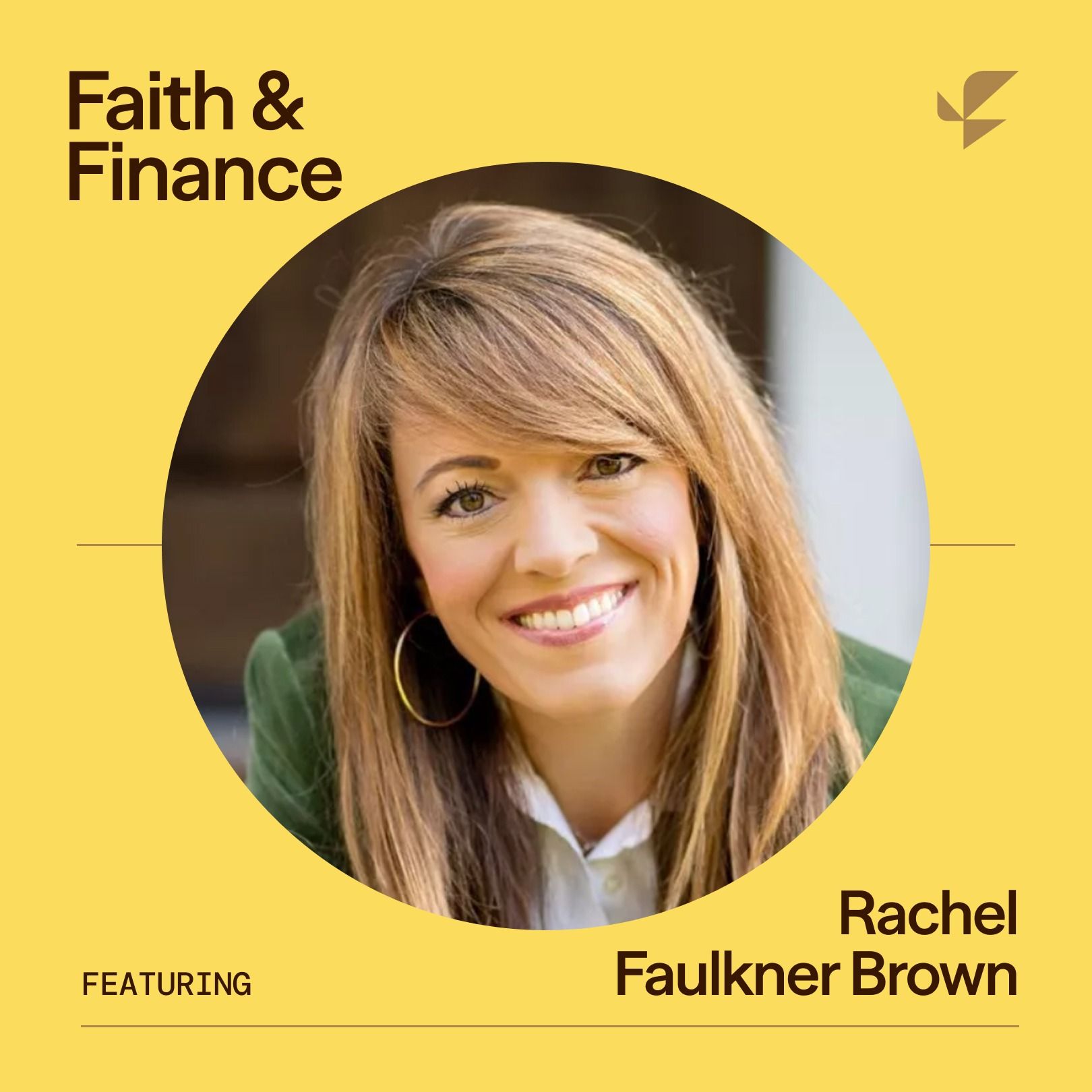
Finances When You're a Widow with Rachel Faulkner Brown
Oct 27, 2026 · 24m
Prefer sermons downloaded automatically?
About this sermon
Losing a spouse changes almost everything. Beyond the emotional weight of grief, there are practical responsibilities that can suddenly feel overwhelming. Bills still need to be paid, accounts need attention, and financial decisions that once seemed routine may now feel impossible.
For widows, navigating those responsibilities can be especially difficult when grief affects their ability to think clearly, make decisions, and plan for the future.
Rachel Faulkner Brown understands this firsthand. Widowed twice by the age of 31, she has experienced profound loss, financial mistakes, and unexpected challenges. Today, as the Founder and Executive Director of Never Alone Widows, she helps women find hope, healing, and community after losing a spouse.
Rachel joined the show today to share what those experiences taught her about stewardship, financial vulnerability, and learning to trust God when life feels out of control.
When Grief Changes Your Financial Priorities
"The day after Blair died, I threw away the Dave Ramsey envelopes."
That striking statement from Rachel's article in Faithful Steward magazine captures how dramatically grief can reshape a person's relationship with money.
Before losing her husband, Rachel had been committed to careful budgeting. At 21, she attended a Dave Ramsey conference, embraced its financial principles, and worked with her husband to manage their resources responsibly. But after his death, something changed.
"I knew that feeding my children was much more important than getting the envelopes right," she explained.
For Rachel, abandoning the envelope system wasn't necessarily about rejecting financial discipline. It was about recognizing that her circumstances had changed and the system she once relied on no longer served her immediate needs.
Grief can force us to reconsider our priorities. And sometimes, wise stewardship means adjusting our financial practices to reflect the realities of a new season.
Give Yourself Permission to Slow Down
One of the most important lessons Rachel learned was the value of patience when making major financial decisions after a loss.
She remembers meeting with a financial planner in Atlanta shortly after becoming a widow. Although she felt pressure to make investment decisions, something didn't seem right.
She ultimately chose not to move forward. The year was 2008, just before the financial crisis devastated investment portfolios across the country. Looking back, Rachel is grateful she resisted the pressure to act before she was ready.
Her experience highlights an important principle: Not every financial decision needs to be made immediately.
Grief can affect memory, concentration, and emotional well-being. Decisions that would ordinarily be straightforward may become much more difficult.
Some responsibilities, however, cannot wait. Household bills, insurance matters, and essential account management may require immediate attention. But major investments, significant purchases, and other long-term commitments can often wait until things are clearer.
Patience can be a form of wisdom, especially when circumstances make us vulnerable to pressure or manipulation.
You Weren't Meant to Navigate Financial Loss Alone
When Blair died unexpectedly, Rachel discovered just how much of their financial life he had managed. She didn't have account passwords or ready access to important financial information. Even gathering the necessary documents felt overwhelming.
Fortunately, two close friends stepped in. They contacted financial institutions, organized investment information, and assembled a notebook containing the details Rachel needed to begin managing her finances.
Their assistance made an enormous difference. Rachel encourages widows to be vulnerable with trusted people who genuinely care about their well-being.
"Get someone to help you that is a trusted friend," she said, "not necessarily someone who needs anything from you, someone who wants something for you."
She also recommends building a support circle that extends beyond financial advice.
That might include a financial professional to help navigate investments and estate matters, a counselor to process grief, trusted friends to provide accountability, and people who can offer practical support with parenting and household responsibilities.
As Rachel explained, there are many areas of life where we readily seek professional assistance. Why should managing grief, caring for our families, and preparing for the future be any different?
The biblical picture of community reminds us that we were never intended to carry life's burdens entirely on our own.
When Financial Mistakes Become Opportunities for Growth
Rachel's financial journey hasn't been without painful mistakes.
After losing her first husband, Todd, she turned to shopping as a way of coping with grief. What initially offered temporary relief eventually led to secretive spending and overdrafted accounts.
She also discovered an unexpected financial responsibility when preparing to sell a home she owned outright.
Although she had paid off the mortgage, she hadn't realized she still needed to pay property taxes. The unpaid taxes had placed the property at risk, and she learned about the problem while preparing to sell.
These experiences revealed how emotional pain and financial decisions can become intertwined.
Looking back, Rachel recognizes that she often tried to manage her struggles privately rather than allowing others to help. But her greatest lesson wasn't simply about avoiding mistakes. It was about understanding what those mistakes revealed.
Financial struggles sometimes expose areas where we need greater knowledge, healthier habits, or support from people we trust.
Rather than letting shame keep those struggles hidden, Rachel encourages people to see them as opportunities to heal and grow in wisdom.
A Painful Lesson About Financial Trust
Even after significant loss, Rachel faced another financial setback. Years after remarrying, she and her husband decided to invest outside their usual diversified, conventional approach.
A trusted family friend, active in their church community and even leading Bible studies in their home, brought the opportunity to them.
Unfortunately, the investment turned out to be part of a multimillion-dollar Ponzi scheme. The financial loss was devastating.
Rachel had viewed those investments as a source of security for her children's future. Losing that money forced her to examine how deeply she had associated financial resources with safety and stability.
She also recognized the importance of listening carefully to wise counsel.
Although she and her husband had sought advice before investing, some people had expressed reservations. Looking back, Rachel wishes she had given those concerns more weight.
Her experience offers an important reminder: Personal trust should never replace financial due diligence.
Even when an opportunity comes through someone we know and respect, it's wise to investigate the investment, understand the risks, seek independent counsel, and resist pressure to act quickly.
Christian character and sincere intentions matter, but they don't eliminate the need for accountability and careful evaluation.
Remembering Who Ultimately Owns It All
Perhaps the deepest lesson Rachel learned through her financial experiences was that stewardship begins with recognizing God's ownership.
Before losing her investment, she understood that she and her husband were responsible for stewarding what God had entrusted to them. But the loss revealed how easily that responsibility could become a sense of possession and control.
She had seen the money as their safety net, their children's future, and their security.
Losing it forced her to confront a difficult question: Where was she ultimately placing her trust?
Scripture reminds us that everything we possess belongs to God. Psalm 24:1 declares, "The earth is the LORD's and the fullness thereof, the world and those who dwell therein."
That truth doesn't make financial loss painless or remove our responsibility to manage money wisely. But it changes the foundation of our security. We are stewards, not owners. Our resources are temporary, but God's faithfulness is not.
This perspective also shapes the way we understand financial setbacks. A loss doesn't necessarily mean we've failed as stewards, just as financial prosperity doesn't necessarily demonstrate God's approval.
Wise stewardship means faithfully managing what we've been given while acknowledging that our ultimate security rests in the Lord rather than our financial circumstances.
Seeking First What Matters Most
In Matthew 6, Jesus acknowledges our everyday concerns about food, clothing, and provision. Rather than dismissing those needs, He reminds His followers that their heavenly Father knows what they need.
Then Jesus says: "But seek first the kingdom of God and his righteousness, and all these things will be added to you." - Matthew 6:33
For Rachel, that passage has transformed the way she thinks about her resources. Her financial decisions are no longer simply about accumulating enough to feel secure. They're about honoring God with everything He's entrusted to her.
As she explained, the goal is to glorify Him through the way we use our money, time, talents, and treasure.
That doesn't mean financial challenges will disappear, or that faithful stewardship will always produce favorable financial outcomes. It means we can approach those challenges with a deeper confidence in the One who provides for us.
Grief may change our circumstances, our responsibilities, and even our ability to manage everyday decisions. But it doesn't change God's character.
Whether we're navigating the loss of a spouse, recovering from financial mistakes, or learning to release our grip on what we possess, the invitation remains the same: Seek Him first, trust Him with what we cannot control, and faithfully steward what He's placed in our hands today.
Finding Hope and Support After Loss
If you or someone you love is navigating widowhood, Rachel Faulkner Brown and her team at Never Alone Widows provide encouragement, practical resources, and a community of women who understand the journey. Learn more at NeverAloneWidows.com.
You can also explore Rachel's story in the special Women Stewarding Wealth edition of Faithful Steward magazine, available at FaithFi.com/Shop.
On Today’s Program, Rob Answers Listener Questions:
My husband and I are retired and living on Social Security. We want to add about $35,000 to our home and have $16,000 in emergency savings plus a $100,000 reverse-mortgage line of credit. What’s the best way to fund the project?
My wife and I are 68 and 69 and recently gained custody of our 10-year-old granddaughter. How should we set up a trust or other plan to provide for her future?
Resources Mentioned:
Become a FaithFi Partner
Widow's Might: 365 Days of Strength for Grief and Loss – Find Comfort, Hope, and Healing by Rachel Faulkner Brown
Emotionally Healthy Spirituality: It's Impossible to Be Spiritually Mature, While Remaining Emotionally Immature by Peter Scazzero
Never Alone Widows
Finances When You're Widowed by Rachel Faulkner Brown (Article in Faithful Steward, Issue 7)
Faithful Steward: FaithFi’s Quarterly Magazine
FaithFi Field Guide: How Do I Prepare the Next Steward?
FaithFi Field Guide: How Much Money is Enough?
Our Ultimate Treasure: A 21-Day Journey to Faithful Stewardship by Rob West
Wisdom Over Wealth: 12 Lessons from Ecclesiastes on Money
Look At The Sparrows: A 21-Day Devotional on Financial Fear and Anxiety
Rich Toward God: A Study on the Parable of the Rich Fool
Find a Certified Kingdom Advisor® (CKA)
FaithFi App
Remember, you can call in to ask your questions every weekday at (800) 525-7000. Faith & Finance is also available on Moody Radio Network and American Family Radio. You can also visit FaithFi.com to connect with our online community and partner with us as we help more people live as faithful stewards of God’s resources.
Hosted by Simplecast, an AdsWizz company. See pcm.adswizz.com for information about our collection and use of personal data for advertising.
More from Faith & Finance
The Genius of Generosity with Chip Ingram
Nov 27, 2026 · 24m
We often think of generosity as a sacrifice—something we give up for the benefit of someone else. But what if generosity is actually one of the wisest and most rewarding ways to live?When we live with...
The Story of Thanksgiving
Nov 26, 2026 · 24m
Thanksgiving is a time to gather with family and friends, count our blessings, and thank God for His faithfulness. But the story behind one of America's most cherished traditions began not with...
Passing On Relational Wealth with Sharon Epps
Nov 25, 2026 · 24m
When we think about leaving an inheritance, we often focus on financial assets—savings, investments, property, and other resources we hope to pass on to the next generation. But preparing the next...
Giving Within Your Means
Nov 24, 2026 · 24m
Scripture calls us to be generous, open-handed, and willing to sacrifice for others. But generosity should never become an excuse for neglecting the responsibilities God has already placed in our...
Love Good with Stephen Jackson
Nov 23, 2026 · 24m
Biblical stewardship reaches far beyond what we give away. It includes our work, our investments, and everything God has entrusted to us. But have you ever stopped to consider whether the money you're...

Count Your Blessings: The Power of Gratitude
Nov 20, 2026 · 24m
In 1897, hymn writer Johnson Oatman Jr. penned the words to a beloved gospel song that continues to encourage Christians more than a century later: Count Your Blessings.Throughout his lifetime, Oatman...
Take these sermons with you.
Follow Faith & Finance in the Getsermons app to get every new sermon, build playlists, and pick up right where you left off.

