

Faith & Finance
How to Help the Poor this Christmas—and Beyond with Lisa Sheltra
Dec 17, 2025 · 24m
Prefer sermons downloaded automatically?
About this sermon
The holidays naturally inspire generosity. As Christians, we feel a heightened awareness of need—empty tables, struggling families, and financial hardship made more visible by the contrast of celebration all around us. And that impulse to give is good.
But God calls us to something deeper.
True, Christ-centered generosity goes beyond a one-time act of charity. It invites us to walk alongside people in ways that restore dignity, build hope, and reflect God’s heart for renewal—not just during Christmas, but throughout the year.
To explore what that kind of generosity looks like in practice, we sat down with Lisa Sheltra, Director of Community Engagement at Salt & Light, a ministry committed to helping without hurting by empowering individuals rather than creating dependency.
A Biblical Vision for Deeper Generosity
Scripture sets the tone for how we approach generosity. “Let each of you look not only to his own interests, but also to the interests of others” (Philippians 2:4). That verse reminds us that generosity is inherently relational. It’s not just about meeting needs—it’s about entering into someone’s life with humility and care.
Lisa explained that while giving material help is often necessary, biblical generosity must flow from our relationship with Christ. God’s model for giving isn’t transactional. It’s restorative.
She pointed to John 3:16 as the ultimate framework for generosity. When God gave, He didn’t offer something temporary or superficial—He gave His Son to address our deepest brokenness and bring true flourishing. If our generosity reflects God’s heart, it should aim not only to relieve immediate pain but to support long-term restoration, reconciliation, and community.
Many churches and families feel pressure in December to focus heavily on relief efforts—food drives, toy collections, clothing donations. These are good and often necessary responses, especially in moments of crisis.
But Lisa cautioned that relief, by its nature, creates a giver-receiver imbalance. When relief becomes the default instead of the exception, it can unintentionally harm both sides of the relationship. It can reduce people to passive recipients and rob them of agency, dignity, and participation.
Relief is best understood as a tourniquet—it stops the bleeding in an emergency. But most ongoing struggles, including those we notice during the holidays, are not emergencies. They are development needs, requiring long-term walking together, not repeated short-term fixes.
Relief vs. Development: Understanding the Difference
Salt & Light works closely with principles championed by the Chalmers Center, which emphasizes the importance of distinguishing between relief and development.
Relief addresses urgent, immediate crises.
Development focuses on long-term growth, dignity, and restored relationships.
During the holidays, what looks like an emergency is often a symptom of a deeper, ongoing struggle. Repeated relief may feel satisfying to the giver, but it rarely moves families toward lasting stability or community.
Development, on the other hand, invites people to use their own gifts, make their own choices, and participate fully in solutions. It treats individuals not as problems to fix, but as image-bearers with capacity and value.
At Salt & Light, empowerment isn’t seasonal—it’s woven into everyday ministry. Participants invest in the program year-round and are treated not as charity cases, but as customers and guests with agency.
Rather than handing out preselected gifts, families can choose items for their loved ones. That choice matters deeply. Lisa shared that many participants have said, “This is the first Christmas in years I’ve been able to buy gifts for my family myself.”
That shift—from receiving charity to exercising choice—restores dignity in powerful ways.
A Better Path for Churches
For churches wanting to steward holiday generosity wisely, Lisa offered several practical insights:
Partner with ministries already practicing development. You don’t need to reinvent the wheel.
Encourage relational volunteering, not just donation drives.
Support year-round ministries, not just seasonal projects.
Use the holidays as an on-ramp, connecting people’s enthusiasm for giving to sustainable, ongoing involvement.
The goal isn’t to do more—it’s to do good in ways that last.
What This Looks Like for Individuals
Many believers want to help but fear causing harm. The answer isn’t to stop giving—it’s to give differently.
Lisa encouraged individuals to approach generosity with humility and a willingness to learn. We don’t need perfect solutions. We need presence, patience, listening ears, and respect for dignity.
She reminded us that kingdom impact isn’t measured by numbers alone. While it may feel impressive to count meals served or gifts distributed, God’s metrics are relational. Sometimes faithfulness looks like doing for one what we wish we could do for everyone.
When asked to leave listeners with one guiding principle beyond the Christmas season, Lisa said it simply and beautifully:
“See others as image-bearers of God—people with gifts, agency, and dignity. Come alongside them, not as fixers, but as fellow participants in God’s work of renewal.”
When we give in ways that honor dignity and foster genuine connection, we don’t just meet needs—we participate in God’s redemptive work.
To learn more about Salt & Light and their dignity-centered approach to helping others, visit SaltandLightMinistry.org.
On Today’s Program, Rob Answers Listener Questions:
I owned my land before I got married, and my husband isn’t on the deed. But after we got married, the tax office automatically added his name to the property tax statement. Do I have to list my spouse on the tax records if the land was paid for before marriage, and what steps do I need to take to have that changed?
I’m retired and recently sold a property because I’m no longer able to maintain it. I netted about $100,000 from the sale. My home and vehicles are paid off, and I have a small 401(k) of about $30,000 that I’m living on. I’m not sure what to do with the $100,000—what would you recommend?
Resources Mentioned:
Faithful Steward: FaithFi’s Quarterly Magazine (Become a FaithFi Partner)
Salt & Light Ministries
Wisdom Over Wealth: 12 Lessons from Ecclesiastes on Money
Look At The Sparrows: A 21-Day Devotional on Financial Fear and Anxiety
Rich Toward God: A Study on the Parable of the Rich Fool
Find a Certified Kingdom Advisor (CKA)
FaithFi App
Remember, you can call in to ask your questions every weekday at (800) 525-7000. Faith & Finance is also available on Moody Radio Network and American Family Radio. You can also visit FaithFi.com to connect with our online community and partner with us as we help more people live as faithful stewards of God’s resources.
Hosted by Simplecast, an AdsWizz company. See pcm.adswizz.com for information about our collection and use of personal data for advertising.
More from Faith & Finance
The Genius of Generosity with Chip Ingram
Nov 27, 2026 · 24m
We often think of generosity as a sacrifice—something we give up for the benefit of someone else. But what if generosity is actually one of the wisest and most rewarding ways to live?When we live with...
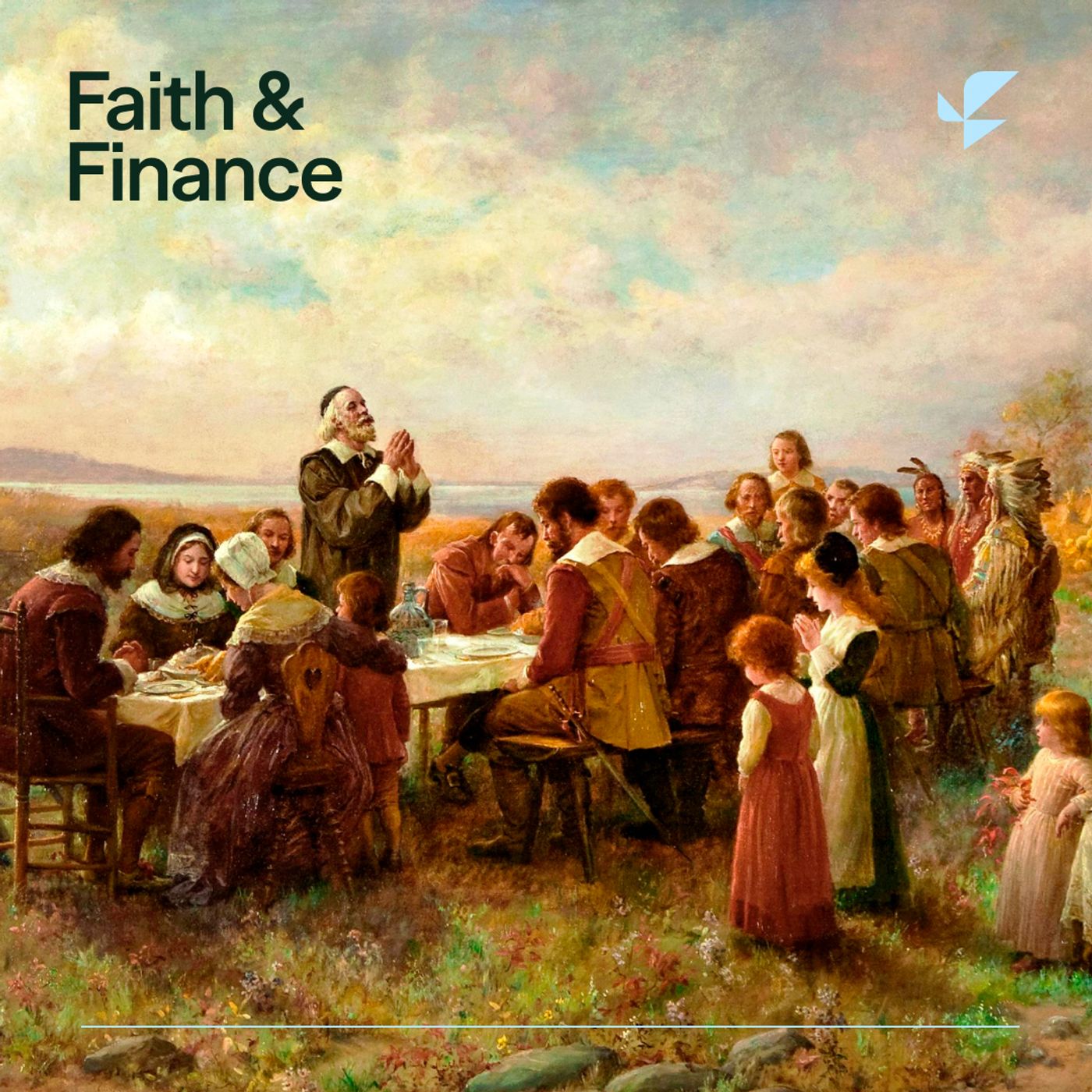
The Story of Thanksgiving
Nov 26, 2026 · 24m
Thanksgiving is a time to gather with family and friends, count our blessings, and thank God for His faithfulness. But the story behind one of America's most cherished traditions began not with...
Passing On Relational Wealth with Sharon Epps
Nov 25, 2026 · 24m
When we think about leaving an inheritance, we often focus on financial assets—savings, investments, property, and other resources we hope to pass on to the next generation. But preparing the next...

Giving Within Your Means
Nov 24, 2026 · 24m
Scripture calls us to be generous, open-handed, and willing to sacrifice for others. But generosity should never become an excuse for neglecting the responsibilities God has already placed in our...

Love Good with Stephen Jackson
Nov 23, 2026 · 24m
Biblical stewardship reaches far beyond what we give away. It includes our work, our investments, and everything God has entrusted to us. But have you ever stopped to consider whether the money you're...

Count Your Blessings: The Power of Gratitude
Nov 20, 2026 · 24m
In 1897, hymn writer Johnson Oatman Jr. penned the words to a beloved gospel song that continues to encourage Christians more than a century later: Count Your Blessings.Throughout his lifetime, Oatman...
Take these sermons with you.
Follow Faith & Finance in the Getsermons app to get every new sermon, build playlists, and pick up right where you left off.

