
Faith & Finance
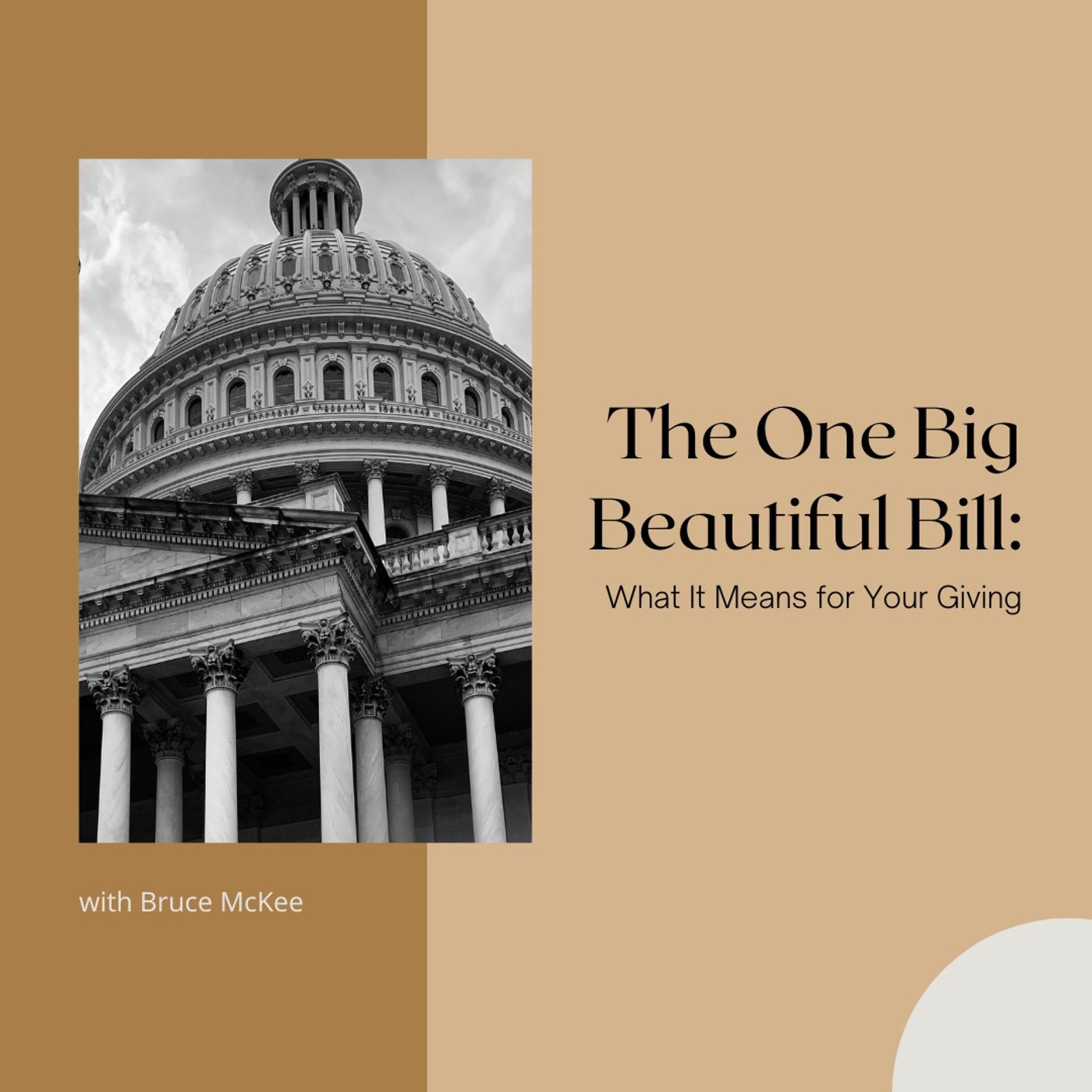
The One Big Beautiful Bill: What It Means for Your Giving with Bruce McKee
Dec 9, 2025 · 24m
Prefer sermons downloaded automatically?
About this sermon
New tax laws are on the horizon—and they could significantly influence the way you give. The recently passed One Big, Beautiful Bill Act (often shortened to the OBBBA) introduces several changes that affect charitable givers today and in the years to come.
To help unpack these shifts, we sat down with Bruce McKee, attorney and Senior Vice President of Complex Gifts at the National Christian Foundation (NCF).
What the OBBBA Actually Does
Despite its cheerful name, the OBBBA carries serious implications for donors. Bruce explains that the bill makes permanent many provisions that were originally scheduled to expire at the end of 2025 under the 2017 Tax Cuts and Jobs Act. Key extensions include:
Higher standard deductions
Higher estate tax exclusions
New deduction floors for charitable gifts
A new limit on itemized deductions
Extended business deductions
Updated rules for university endowment taxes
These changes will affect different givers differently, but nearly everyone will feel the impact of the new standard deduction.
The Standard Deduction Gets Bigger—Again
This update alone affects roughly 90% of taxpayers.
The OBBBA permanently extends the increased standard deduction and even boosts it for the 2025 tax year:
Individuals: $15,750
Married couples filing jointly: $31,500
Because the standard deduction is now higher, fewer people will itemize. And when giving is lumped under the standard deduction, charitable gifts are no longer deductible.
But there’s a powerful workaround.
If you want to maximize your tax benefits while maintaining your giving rhythms, “bunching” can help. Bunching means:
Grouping several years’ worth of charitable gifts into a single tax year
Itemizing in that year, instead of taking the standard deduction
Using a donor-advised fund (DAF)—such as an NCF Giving Fund—to distribute gifts gradually over future years
A giving fund works like a charitable checking account—a powerful tool for strategic, tax-efficient generosity. Bunching is especially impactful when paired with gifts of appreciated assets.
New Charitable Deduction Floors Coming in 2026
Beginning in 2026, charitable deductions will include a “floor”—a small portion of giving that won’t be deductible at all.
For Individuals
Only the amount of charitable giving above 0.5% of your Adjusted Gross Income (AGI) will be deductible. Here’s an example:
AGI = $200,000
0.5% floor = $1,000
Whether you give $20,000 or $40,000, the first $1,000 is not deductible.
For Corporations
A similar rule applies, but the floor is 1% of taxable income.
Why This Matters
This floor means that givers with large AGIs—especially in high-income years—should consider giving earlier, before 2026 arrives. Strategic timing will matter more than ever.
Even high-capacity donors who itemize may benefit from bunching in alternating years.
New Limits on Itemized Deductions
The OBBBA also introduces a “haircut” affecting all itemized deductions—not just charitable ones.
Because the highest tax bracket (37%) is now permanent, itemized deductions typically reduce income taxed at that rate. But beginning in 2026:
Deductions in the highest bracket will be valued at 35 cents per dollar, not 37.
It’s a relatively small shift, but it slightly increases tax liability and adds another layer of planning complexity. Once again, Bruce recommends intentionally reviewing giving strategies before the 2025 year closes.
Estate and Gift Tax Exclusions: Higher and More Stable
The OBBBA also stabilizes estate planning by raising the estate and gift tax exemption to:
$15 million per individual
$30 million for married couples
These thresholds—once set to sunset back to near half—are now permanent (as permanent as tax law can be). This gives families greater clarity as they plan inheritances and consider charitable tools like trusts or family foundations.
When people settle their estate planning, it often helps them focus their hearts on where God is calling them to give—what Ron Blue usually describes as “giving while you’re living so you’re knowing where it’s going.”
Good News for Non-Itemizers: The Above-the-Line Charitable Deduction Returns
Beginning soon, non-itemizers will be able to deduct modest charitable amounts:
$1,000 for individuals
$2,000 for married couples filing jointly
This applies to cash gifts made to churches and public charities. It’s a welcome incentive for households that rely on the standard deduction.
Navigating Change with Wisdom
The tax landscape may shift, but God’s call to generosity never does. Thoughtful planning ensures you can give joyfully, efficiently, and impactfully.
If you want to steward God's resources with greater intentionality, a Giving Fund through the National Christian Foundation can help you:
Maximize tax benefits
Simplify your giving
Support ministries you love
Invest funds for future generosity
You can open one in just a few minutes at FaithFi.com/NCF.
On Today’s Program, Rob Answers Listener Questions:
My husband and I are turning 68 and need to move from our two-story home into a one-story house. We’re considering new construction, but we’d either need a small mortgage or withdraw $50–60,000 from our 401(k). Our income is stable—he gets $3,000 from Social Security, and I make about $2,000. We manage fine month to month. Which option makes more sense?
I’m 73, single, living on Social Security with excellent credit and no debt besides a small monthly charge card. I’m looking into either a HELOC or another home-equity option so I can access some of my home’s value to help others before I pass away. What’s the best way to proceed?
Resources Mentioned:
Faithful Steward: FaithFi’s Quarterly Magazine (Become a FaithFi Partner)
The National Christian Foundation (NCF)
Movement Mortgage
Wisdom Over Wealth: 12 Lessons from Ecclesiastes on Money
Look At The Sparrows: A 21-Day Devotional on Financial Fear and Anxiety
Rich Toward God: A Study on the Parable of the Rich Fool
Find a Certified Kingdom Advisor (CKA)
FaithFi App
Remember, you can call in to ask your questions every weekday at (800) 525-7000. Faith & Finance is also available on Moody Radio Network and American Family Radio. You can also visit FaithFi.com to connect with our online community and partner with us as we help more people live as faithful stewards of God’s resources.
Hosted by Simplecast, an AdsWizz company. See pcm.adswizz.com for information about our collection and use of personal data for advertising.
More from Faith & Finance

The Genius of Generosity with Chip Ingram
Nov 27, 2026 · 24m
We often think of generosity as a sacrifice—something we give up for the benefit of someone else. But what if generosity is actually one of the wisest and most rewarding ways to live?When we live with...
The Story of Thanksgiving
Nov 26, 2026 · 24m
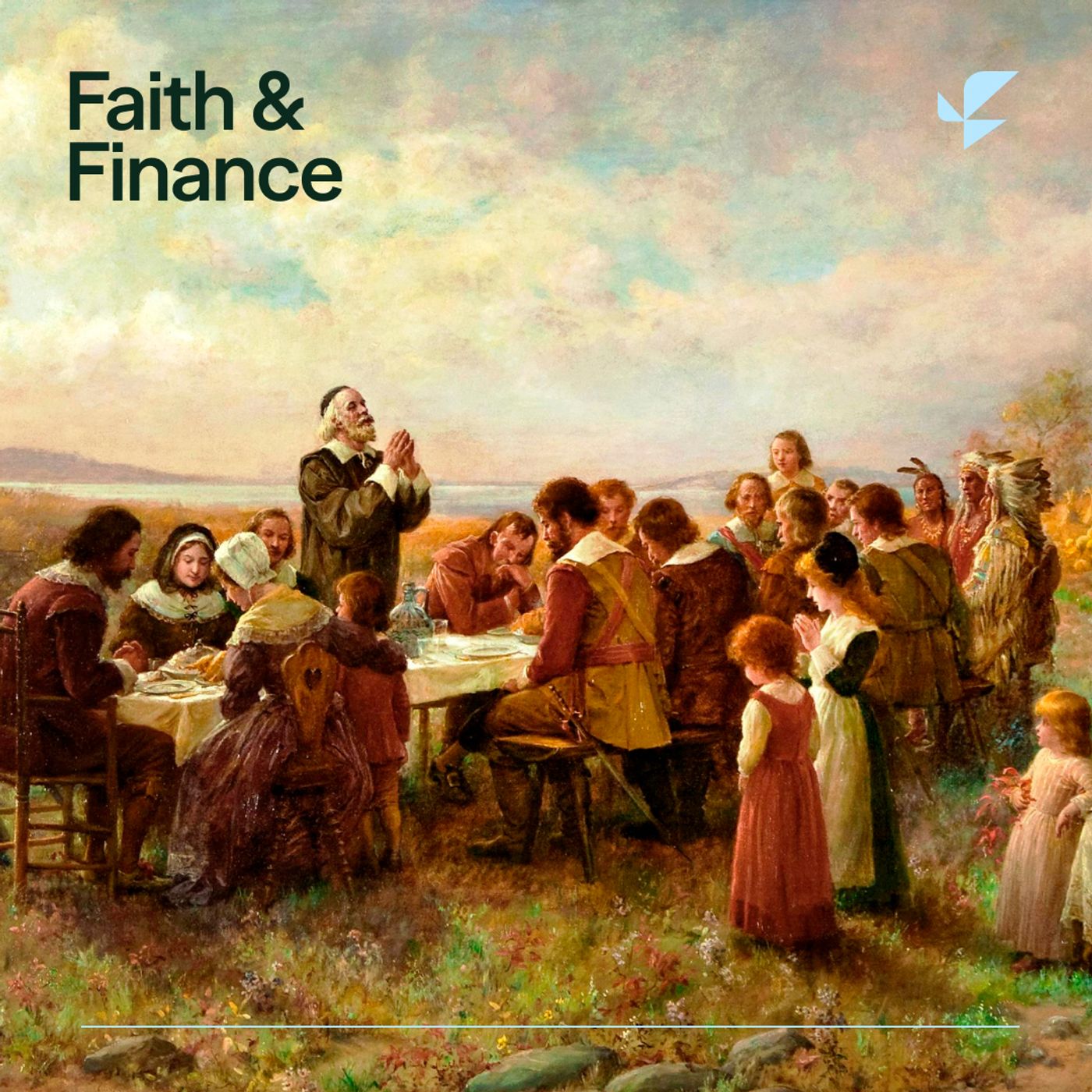
Thanksgiving is a time to gather with family and friends, count our blessings, and thank God for His faithfulness. But the story behind one of America's most cherished traditions began not with...
Passing On Relational Wealth with Sharon Epps
Nov 25, 2026 · 24m
When we think about leaving an inheritance, we often focus on financial assets—savings, investments, property, and other resources we hope to pass on to the next generation. But preparing the next...

Giving Within Your Means
Nov 24, 2026 · 24m
Scripture calls us to be generous, open-handed, and willing to sacrifice for others. But generosity should never become an excuse for neglecting the responsibilities God has already placed in our...

Love Good with Stephen Jackson
Nov 23, 2026 · 24m
Biblical stewardship reaches far beyond what we give away. It includes our work, our investments, and everything God has entrusted to us. But have you ever stopped to consider whether the money you're...

Count Your Blessings: The Power of Gratitude
Nov 20, 2026 · 24m
In 1897, hymn writer Johnson Oatman Jr. penned the words to a beloved gospel song that continues to encourage Christians more than a century later: Count Your Blessings.Throughout his lifetime, Oatman...
Take these sermons with you.
Follow Faith & Finance in the Getsermons app to get every new sermon, build playlists, and pick up right where you left off.

