

Michael J. Lilly Podcast
A Better Decoder
Jun 27, 2025 · 12m
Prefer sermons downloaded automatically?
About this sermon
Mysterious symbols, strange creatures, and terrifying judgments make Revelation seem like a code that needs to be cracked. And for decades—maybe centuries—Christians have tried to do just that. Charts, timelines, conspiracy theories, and end-times calculators have all been used in the name of "figuring it out."
But what if that's not what Revelation is for?
What if we've been reading it with the wrong lens, asking the wrong questions, and using the wrong decoder? What if the key to understanding Revelation isn't hidden in the news headlines or some modern political theory but in Scripture itself and the historical and literary world of the first-century Church?
Test Everything is a reader-supported publication. To receive new posts and support my work, consider becoming a free or paid subscriber.
Revelation Was Clear to Its First Readers
One of the most important principles of biblical interpretation is this: the Bible was written for us, but not to us. That's especially true with Revelation.
John didn't write this vision as an abstract spiritual message to be decoded by future generations. He wrote to seven churches in Asia Minor, which were living under the shadow of the Roman Empire. They were struggling with persecution, tempted by compromise, and uncertain about how to remain faithful. John knew them. He addressed them by name. And he expected them to understand what he wrote.
That alone should shape how we read this book. Too often, we come to Revelation asking the wrong kinds of questions—questions like:
* What current event does this symbol represent?
* Which nation is this prophecy about?
* When will these things happen in our time?
But those are not the questions the original audience would have asked. But we often misread Revelation (and most of Scripture, actually) because we bring our own expectations and baggage to the text. This is where the difference between exegesis and eisegesis becomes critical:
* Exegesis means drawing meaning out of the text. It asks, "What did this mean to the original audience? What does the text say, in its context?"
* Eisegesis means reading our own ideas into the text. It asks, "What does this mean to me?"—but not in a good way. It skips past the original meaning and imposes our own assumptions.
* And then there's narcigesis—a popular but dangerous trend that makes every passage about the reader. It turns Revelation into a book about our fears, our nation, and our political enemies. Instead of asking what it says about Christ and the Church, we make it about us.
But the truth is that Revelation made perfect sense to the people John wrote it to. That doesn't mean it's simple; it's a rich, layered, symbolic letter. But it means we're not meant to decode it like a secret message containing the signs that 21st-century Christians should look for to expect the Second Coming. We're meant to enter the world of the text: to understand the symbols, the Old Testament allusions, the Roman imperial context, and the call to endurance that anchored those first believers.
If we don't start there, we won't end up anywhere helpful. The right question isn't, "What does this beast symbolize in 2025?" but, "What did John's readers understand the beast to be and how does that help us remain faithful today?"
There's Nothing New in Revelation
One of the most overlooked truths about Revelation is that there is really nothing mysterious about the message. There's nothing in this book that hasn't already been taught elsewhere in Scripture. Instead, Revelation pulls back the curtain on what has always been true and paints it in bold, symbolic, and apocalyptic colors.
Every major theme in Revelation has deep roots in the rest of the Bible:
* God judges evil with justice and mercy (Genesis to the Prophets)
* God calls His people to faithfulness in the face of persecution (Daniel, Acts, the Epistles)
* Jesus reigns as the slain-yet-victorious Lamb (the Gospels and Hebrews)
* New creation follows judgment, not destruction (Isaiah 65–66, Romans 8, 2 Peter 3)
This is especially important to remember because some people treat Revelation as if it has its own separate system of theology based more on speculation than on Scripture.
But Revelation is not a theological outlier. It's the climax of the biblical story. The more familiar we are with the rest of Scripture, the less confused we'll be. Revelation doesn't break new ground; it unveils the ground we've already been walking on all along.
It's Not Chronological
One of the biggest mistakes readers make with Revelation is trying to read it as a timeline—chapter by chapter, event by event—as if it were predicting a strict, step-by-step sequence of future events. But Revelation isn't laid out like a linear narrative. It's cyclical. It shows us the same spiritual truths from different angles—through visions that overlap, echo, and intensify as the book unfolds.
This approach is called recapitulation, and it's not just a scholarly theory—it's the way apocalyptic literature works. Revelation is filled with repeating patterns:
* Judgments come in sets of seven: seals, trumpets, and bowls.
* Each cycle ends in some form of cosmic upheaval or final judgment.
* The vision resets and zooms in from a different perspective.
Trying to line these up as a single timeline leads to confusion and contradiction. For example:
* Does the world end three times?
* Are there three separate judgments of the earth?
* Is Satan bound once, twice, or not at all?
But if we read the visions as parallel cycles retelling the same story of conflict, judgment, and victory from different angles, it all begins to make sense. If we approach Revelation as a strict timeline, we'll get frustrated and lost. But if we recognize its structure as layered, symbolic, and thematic, we'll be equipped to understand the message that's been there all along: stay faithful because the Lamb wins.
Numbers Have Meaning
One of the clearest signals that Revelation is symbolic is its use of numbers. And here's the key point up front: No number in Revelation is meant to be taken literally. Not a single one of them.
The biblical world didn't use numbers the way we do. In Scripture, numbers often carry spiritual, covenantal, or symbolic weight. Revelation leans heavily on that tradition, drawing primarily from the Old Testament, where numbers were used to express divine completeness, imperfection, or covenant identity.
Here are some of the most important examples:
* 7 – Symbolizes completeness, fullness, or perfection. Think of the seven days of creation or the seven spirits of God. In Revelation, there are seven churches, seven seals, seven trumpets, and seven bowls, each representing a complete, divinely ordered reality.
* 6 – The number that falls short of 7. It represents human incompleteness, imperfection, and rebellion. That's why the number of the Beast is 666, a grotesque intensification of failure. It's not a barcode, microchip, or vaccine. It's a warning about what happens when humanity tries to be God and falls painfully short.
* 12 – The number of God's people: 12 tribes, 12 apostles, 24 elders (12 + 12), and the 144,000—which is 12 × 12 × 1,000. It's a symbolic picture of the complete people of God, sealed and secure.
* 1,000 – Used to express vastness or completeness. "A day is like a thousand years" isn't meant to mark a calendar—it's meant to show scale. When Revelation talks about a "thousand years," it's not about duration. It's about divine authority and the fullness of time.
* 3½ years / 42 months / 1,260 days – All the same length of time, and all rooted in Daniel's prophecy, symbolizing a limited time of tribulation and persecution.
If you try to take these numbers literally, you'll almost always end up in the weeds. But when you read them symbolically, as the first readers did, they unlock deep theological meaning:
* God's purposes are complete.
* Human kingdoms are flawed and doomed.
* God's people are known, sealed, and protected.
* Tribulation is real but temporary.
Understanding this will keep us from speculation and help us…
Get full access to Test Everything at testeverything.substack.com/subscribe
More from Michael J. Lilly Podcast
The Triune God and His Divine Council
Jun 11, 2026 · 15m
If you were to sit down with a modern Christian, hand them a Bible, and ask them where the story begins, almost all of them would immediately turn to Genesis 1:1. We tend to open the book, look at the...

The House Church Myth Revisited
May 30, 2026 · 24m
In their video response to my article, “The House Church Myth,” Matt Dabbs and Tom Wadsworth attempt to defend the modern “organic” house church movement. They argue that the first-century church...
A Supernatural Worldview for a Supernatural Book
May 25, 2026 · 11m
We like to think we read the Bible exactly as it was written. We open the text, read the words, and assume our modern brains are perfectly capturing the original intent of the authors. But the truth...

Preachers for Hire
May 12, 2026 · 10m
Today’s church pulpits often feel more like corporate seminar stages than sacred spaces. Many focus on polish, production, and engaging speakers. We look for someone who can keep an audience’s...

Divine Scales
May 6, 2026 · 10m
It’s incredibly common in modern church culture to hear people say that “all sin is the same to God” or “sin is just sin.” It usually comes from the good intention of emphasizing that everyone needs...
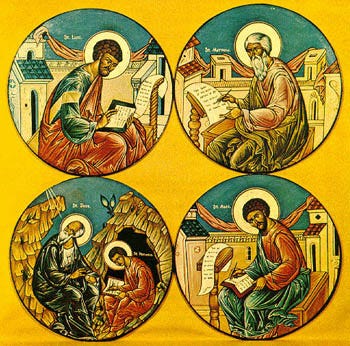
Oral Tradition and the Synoptic Problem
Apr 29, 2026 · 8m
Have you ever noticed how similar Matthew, Mark, and Luke are? They share a tremendous amount of material, often word-for-word. Scholars call this the “Synoptic Problem,” and they have debated for...
Take these sermons with you.
Follow Michael J. Lilly Podcast in the Getsermons app to get every new sermon, build playlists, and pick up right where you left off.

