

Michael J. Lilly Podcast
The Sword and the Shield
Nov 25, 2025 · 5m
Prefer sermons downloaded automatically?
About this sermon
For too long, the modern Christian experience in the public square has felt like a perpetual cross-examination. We are constantly put on the witness stand, forced to answer for the Crusades, explain the problem of evil, or defend the historical reliability of the Gospels.
We have become experts at the “back foot”—always reacting, always explaining, always defending.
While giving a defense is a biblical mandate, it is only half of the equation. In our effort to be “winsome,” we have largely abandoned a crucial tool in the Christian arsenal: Polemics. It is time to understand the difference between defending the truth and exposing error, and why we need to start doing both.
Apologetics vs. Polemics: Knowing the Difference
To understand where we have gone wrong, we must define our terms. While they are often used interchangeably, Apologetics and Polemics are two distinct mindsets
1. Apologetics (The Shield)
The word comes from the Greek apologia, meaning “a formal defense,” often used in a legal context. The scriptural mandate is found in 1 Peter 3:15:
“But in your hearts revere Christ as Lord. Always be prepared to give an answer to everyone who asks you to give the reason for the hope that you have. But do this with gentleness and respect.”
Apologetics is the shield. It is rational, protective, and explanatory. It answers the skeptic’s questions and removes intellectual barriers to faith. It is defensive by nature.
2. Polemics (The Sword)
The word comes from the Greek polemos, meaning “war.” If apologetics is defending the castle, polemics is storming the stronghold. It is the active dismantling of false teachings and cultural idols. The scriptural mandate here is found in 2 Corinthians 10:5:
“We demolish arguments and every pretension that sets itself up against the knowledge of God, and we take captive every thought to make it obedient to Christ.”
Polemics is the sword. It does not just defend the truth; it exposes the incoherence, historical fallacies, and moral failures of opposing worldviews.
The Problem with the “Back Foot”
The modern church excels at the shield but has largely dropped the sword.
Groups like Islam, Mormonism (LDS), and Jehovah’s Witnesses—along with modern atheists—have developed aggressive strategies to keep Christians on the defensive. They cherry-pick Bible verses, question the Trinity, or mock the Resurrection.
In response, we scramble to write books and record podcasts defending our position. We have allowed the enemies of the Gospel to frame the debate. We let them ask all the questions while we provide all the answers.
We must remember that for over 2,000 years, Christianity has been the anvil that has worn out many hammers. From the early Gnostics and ancient heretics to the “New Atheists” of the 21st century, the Gospel has withstood the most intense scrutiny history has to offer. It has stood strong because it is true.
Turning the Tables
Here is the uncomfortable reality we must face: We have been far too easy on false ideologies.
We treat opposing worldviews with a level of deference they do not extend to us. We hesitate to critique the Quran, the Book of Mormon, or the Watchtower Society because we fear being labeled “intolerant.” Meanwhile, these groups actively undermine the deity of Christ and the sufficiency of His work.
If we put these false ideologies under the same level of scrutiny that Christianity endures daily, they would falter immediately.
* Islam: Claims to correct the Bible, yet its textual history and the life of its founder crumble under the historical method used to test the Gospels.
* Mormonism: Asks us to trust Joseph Smith, yet the archaeological and historical record offers zero support for his claims of ancient civilizations in the Americas.
* Jehovah’s Witnesses: Claim to be the sole channel of God’s truth, yet their history is littered with failed prophecies and constantly changing doctrines.
The Path Forward
It is not unloving to expose error; it is the most loving thing we can do. If a bridge is out, you don’t gently whisper to the driver; you wave your arms and warn them of the danger.
It is time to stop apologizing for our faith and start scrutinizing the alternatives. We must move from the back foot to the front foot. We must be willing to ask the hard questions of those who attack the Cross.
In the coming weeks, I will be releasing a series of posts specifically designed to turn the scrutiny onto these competing worldviews. We will look at the clear, undeniable issues within the ideologies that seek to displace Christ.
The shield is up. Now, it’s time to pick up the sword.
Get full access to Test Everything at testeverything.substack.com/subscribe
More from Michael J. Lilly Podcast
The Triune God and His Divine Council
Jun 11, 2026 · 15m
If you were to sit down with a modern Christian, hand them a Bible, and ask them where the story begins, almost all of them would immediately turn to Genesis 1:1. We tend to open the book, look at the...
The House Church Myth Revisited
May 30, 2026 · 24m
In their video response to my article, “The House Church Myth,” Matt Dabbs and Tom Wadsworth attempt to defend the modern “organic” house church movement. They argue that the first-century church...
A Supernatural Worldview for a Supernatural Book
May 25, 2026 · 11m
We like to think we read the Bible exactly as it was written. We open the text, read the words, and assume our modern brains are perfectly capturing the original intent of the authors. But the truth...

Preachers for Hire
May 12, 2026 · 10m
Today’s church pulpits often feel more like corporate seminar stages than sacred spaces. Many focus on polish, production, and engaging speakers. We look for someone who can keep an audience’s...

Divine Scales
May 6, 2026 · 10m
It’s incredibly common in modern church culture to hear people say that “all sin is the same to God” or “sin is just sin.” It usually comes from the good intention of emphasizing that everyone needs...
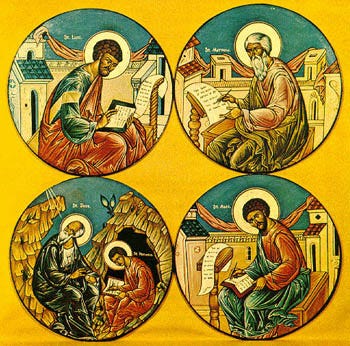
Oral Tradition and the Synoptic Problem
Apr 29, 2026 · 8m
Have you ever noticed how similar Matthew, Mark, and Luke are? They share a tremendous amount of material, often word-for-word. Scholars call this the “Synoptic Problem,” and they have debated for...
Take these sermons with you.
Follow Michael J. Lilly Podcast in the Getsermons app to get every new sermon, build playlists, and pick up right where you left off.

