

Reflections on the Psalms Podcast
Psalm 1: The Way Back to Eden
Oct 1, 2026 · 4m
Prefer sermons downloaded automatically?
About this sermon
This is Reflections on the Psalms. Today we’re at the very beginning of the Book of Psalms.
Charles Spurgeon says in The Treasury of David:
“This psalm may be regarded as the preface psalm, having in it a notification of the contents of the entire book. It is the psalmist’s desire to teach us the way to blessedness, and to warn us of the sure destruction of sinners. This, then, is the matter of the first psalm, which may be looked upon, in some respects, as the text upon which the whole of the Psalms make up a divine sermon.”
It starts with the word “blessed.” The Hebrew expression is ashrei. This is what we all want. We want to have God’s blessing. So the very beginning of the Psalter begins with that word: “Blessed.”
Christopher Ash points out connections between Psalms 1 and 2. Neither has a superscription. Psalm 1 begins, “Blessed is the man,” and Psalm 2 ends, “Blessed are all who take refuge in him.” Both also speak, near their conclusions, of a way that perishes. These two psalms belong together as an opening to the Psalter.
Now look at the opening lines:
“Blessed is the man who walks not in the counsel of the wicked, nor stands in the way of sinners, nor sits in the seat of scoffers; but his delight is in the law of the LORD, and on his law he meditates day and night.”
Here you see walking, standing, and sitting. If you go to Deuteronomy chapter 6, to the Shema, it says:
“You shall teach them diligently to your children, and shall talk of them when you sit in your house, and when you walk by the way, and when you lie down, and when you rise.”
There is a poetic similarity between the Shema and this psalm. You have the language of everyday action.
You don’t see the word “faith” here. Hebrew has words such as batach, meaning “trust.” But many times faith is described by what it does: walking, standing, sitting, talking. It expresses the life of someone who is blessed.
Your actions will follow whom you trust. If you trust in the Lord, your life will have a daily liturgy of obedience. If you trust in an idol, your life will have a daily liturgy of disobedience and lawlessness.
And then we get to the next section:
“He is like a tree planted by streams of water that yields its fruit in its season, and its leaf does not wither.”
Trees show up on Day 3. On Day 4, you get the ordering of days and nights and seasons. On Day 5, you get the creatures of the waters and the birds, with the blessing: “Be fruitful and multiply.” On Day 6, you get the land animals and mankind, and mankind receives that same blessing.
In a sense, verse 3 is a picture of the garden. Paradise. We lost Paradise, and at the very beginning of the Psalms, we’re looking at Paradise again. This psalm is going to teach us how to enter into Eden. But not just Eden. A perfected Eden. A greater Eden.
“The wicked are not so, but are like chaff that the wind drives away. Therefore the wicked will not stand in the judgment, nor sinners in the congregation of the righteous.”
The righteous stand. The wicked will not stand in the judgment or have a place in the congregation of the righteous.
“For the LORD knows the way of the righteous, but the way of the wicked will perish.”
If you look at the days of creation, as you go forward, you get fruitfulness and fullness and filling. Life, more life, and blessing. If you go backwards, you’re heading back toward formlessness and chaos. Wickedness produces deadness, chaff, and an inability to stand.
There are two ways. The way of life is obedience to God’s law. That is what life looks like. If you have life, you obey his law. Then you have the way of death: disobedience. When you follow the flesh, when you sin, your life becomes chaotic and unfruitful.
At the very beginning of the Psalter, we have a glorious promise of blessedness and a warning: if you do not have the fruits of righteousness, you do not have the faith that saves.
Fruit is the evidence of living faith, not the means of gaining life. The fruit doesn’t give the tree life. It shows that the tree is alive.
This passage doesn’t use the word “faith,” but it describes faith in that poetic, Hebraic way, explaining faith by what faith does.
And that is the reflection for today.
This is a public episode. If you would like to discuss this with other subscribers or get access to bonus episodes, visit william945.substack.com
More from Reflections on the Psalms Podcast
Today, If You Hear His Voice
Nov 19, 2026 · 8m
Psalm 95: Today, If You Hear His VoicePsalm 95 is actually part of the daily prayers in the Book of Common Prayer. It is known as the Venite and is repeated in Anglican churches throughout the...
The Blessed Man and the Shema
Nov 2, 2026 · 3m
One of the things I’ve noticed is the similarities between Psalm 1 and the Shema, which was the great confession of ancient Israel and remains part of the daily prayers of Jews even today.When Jesus...
Glorious Things of Thee Are Spoken
Oct 17, 2026 · 5m
Psalm 87: Glorious Things of Thee Are SpokenThe City of God and the Conversion of the NationsThis is Reflections on the Psalms for October 17, 2026.When we come to Psalm 87, we come to what is...
Psalm 63: Learning to Pray with the Whole Body
Oct 14, 2026 · 6m
Psalm 63: Learning to Pray with the Whole BodyA Psalm of David, when he was in the wilderness of Judah.This psalm is one that I have actually attempted to memorize in a rapid way. I tried to...
Tears in a Bottle
Oct 11, 2026 · 3m
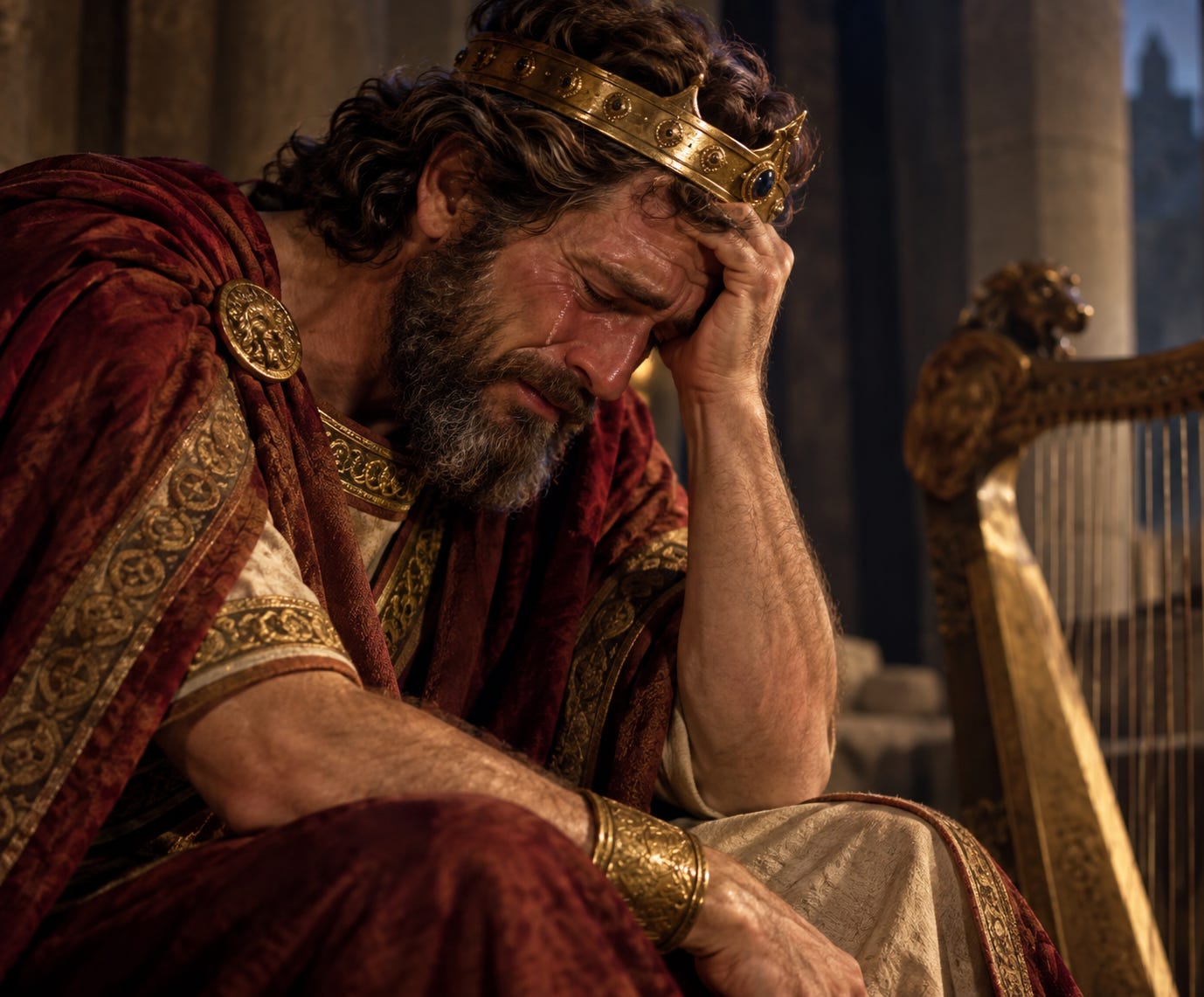
In Psalm 56, David asks God to put his tears in his bottle. David was suffering, even to the point of tears. His suffering was real in this world, and his tears were remembered by God.When we look...

Sometimes You Need a Javelin
Oct 7, 2026 · 4m
Today’s reflection on the Psalms, for the seventh of October, comes from Psalm 35:“Contend, O LORD, with those who contend with me; fight against those who fight against me! Take hold of shield and...
Take these sermons with you.
Follow Reflections on the Psalms Podcast in the Getsermons app to get every new sermon, build playlists, and pick up right where you left off.

