
Translating the Tradition
Our Hero, Mary, the Theotokos
Nov 23, 2026 · 16m
Prefer sermons downloaded automatically?
About this sermon
We need heroes.
One of the tragedies of our modern age is that we have this obsession with tearing down heroes, or with presenting anti-heroes, or having heroes that have fallen. That seems to be one of the major foci in entertainment today. Maybe we’re moving back toward some of the good old days when we had, I don’t know, The Lord of the Rings, with Aragorn and Frodo and Sam. Maybe. I hope.
But we need heroes. We need them because we need to know that we can be more than we are now.
Now, there are heroes that are maybe more useful and better, and heroes that are maybe less so. I did enjoy the initial round of superhero movies. It’s nice to see people actually using their talents for good. But it gets to be a bit much of a muchness after a while. The hero is the one who has the most power and can beat everybody up, and so you need somebody who’s bigger and better and badder to go up against, because otherwise you don’t get to show off your heroism.
Whereas I think a more valuable kind of hero, and in fact perhaps the greatest heroes in all of English literature, are heroes like Frodo and Sam. They’re ordinary hobbits, people like you and me, thrown into circumstances that are beyond their ability to control, and in the midst of that they just soldier on, doing the best they can to do the next right thing.
So we need heroes, and this goes way back to the earliest times. More or less concomitant with the appearance of written language, you have stories. What do we write down? Stories. What are the stories about? They’re about heroes. And in the Church, we have a particularly important and lofty and holy hero, whom we are celebrating today: the Mother of God.
As I said, there’s a lot more to heroism than just beating up your enemies and having more power. So when we tell stories about her, the stories are, well, maybe a little bit different.
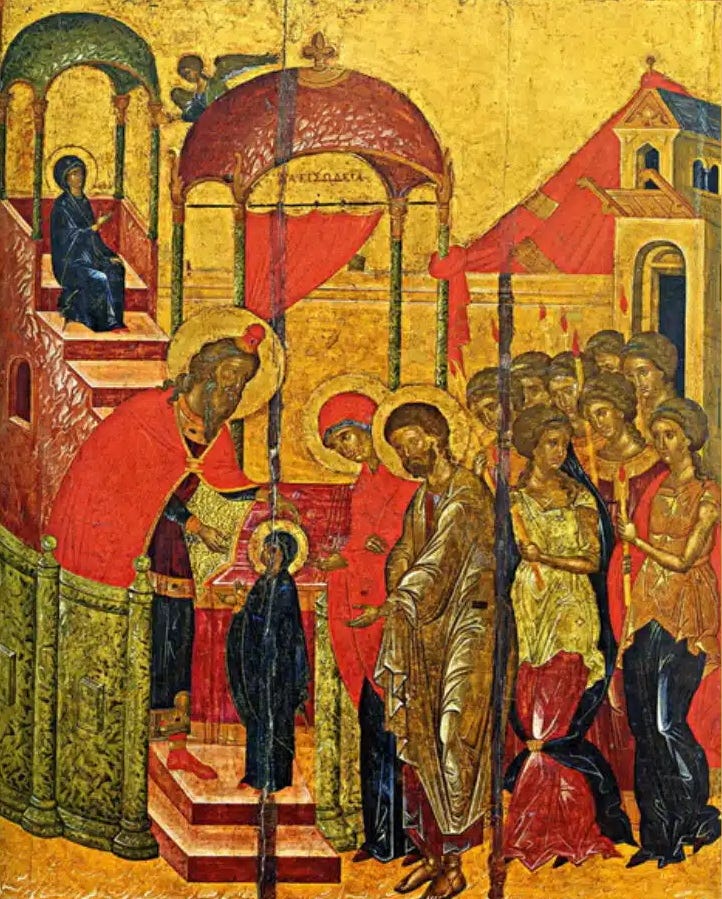
The story goes that her father and mother, Joachim and Anna, were barren, and they prayed to the Lord for a child, and, kind of like Hannah with Samuel, pledged that if they had a child, they would give the child back to the Lord. And so they had a child, Mary, and when she was three years old, the story goes, they brought her into the temple. And she was faced, this little three-year-old girl, with a staircase. Maybe not the biggest challenge for you and me, or anybody of full stature and in the best of health. But for her, those fifteen steps up were just too much. But they placed her, the story goes, on the first step, and by the grace of God, and by his power working in her, she ran up the steps. Then, the story goes, she ran right into the Holy of Holies.
I can imagine that, because I’ve had little kids who are just learning to walk and don’t know where to go and where not to go. And there are the Royal Doors, and everybody knows not to go through there, but they don’t. So they just run through. “Whoa, whoa, wait a sec!” And the high priest goes in. That’s my envisioning of what happened. Maybe not exactly what the Protoevangelium of James says, but I think if it happened, that might be how it happened.
So one of the things about heroes and heroism is that there are times when it’s just too much for us. There’s too much to do. We’re overwhelmed. The opposition is just way beyond what we’re capable of, even if it’s just fifteen stairs. And at that moment we need the grace of God.
This again is why I think Frodo and Sam are some of the best heroes in all of English literature: there are all sorts of points in their adventure where they’re just overwhelmed. It’s just too much. And then something happens. Tolkien is very careful, for a modern audience, not to show the hand that is actually behind all of this, but there’s just something that happens that is luck or whatever, or, as Tolkien liked to put it, eucatastrophe, a good catastrophe. And what they need to go on and carry on is given to them.
I think that is actually what we find if we are doing our best to do the next right thing. There are times when it’s just too much. We can’t do it. We can’t manage it. And then all of a sudden something happens, and we’re able to carry on. Someone helps, or the problem turns out not to be as big as we thought it was, or circumstance — we know the hand behind that. It might not be clear from the story, but we know what’s behind the story, who’s behind the story.
The next thing that we celebrate about Mary is, of course, her response to the Annunciation. She’s a young woman espoused to Joseph, an older man who’s going to look after her, and an angel appears to her and says, “Hail Mary, full of grace, the Lord is with you; blessed are you among women,” and tells her that she is going to bear the Messiah, the one whom everybody has been waiting for, whom all her people have been waiting for, generation upon generation. She’s the one who’s going to be the mother of the Messiah. But she’s not ignorant of how things work, and so she says, “How can this be, since I have never known a man?” And the angel explains to her that the Holy Spirit will come upon her, the power of the Most High will overshadow her, and that which is conceived in her womb will be conceived by the Holy Spirit. And then she says, “Behold the handmaiden of the Lord; let it be to me as you have said.”
We have to stop and think for a moment about what’s behind that, on two levels.
One, just on an everyday, basic social level: in a society where an unwed girl is found to be with child, this is terrible, challenging, difficult, scandalous. This will not go over well with all of her friends and family and relations and all the people who don’t know her, especially given her reputation as a really holy person. This is not a trivial thing to face.
But there’s another thing at play here, which we’ve already seen. She knows that when things are too hard for her, God will help her. She has the experience of that. And having had that experience, and having also chosen over and over and over again, with her life, to simply be God’s, to be the handmaiden of the Lord, it is entirely natural for her to respond the way she did: “Behold, the handmaiden of the Lord; may it be to me as you have said.”
Then, of course, for any hero, you have the end. This is actually a little challenging for the male warrior heroes, who are supposed to... they’re known for fighting, and now they can’t fight anymore. You do have Beowulf, where he ends up fighting and dying. So, okay, that’s a nice, glorious way to go out if you’re a hero like that. But we’re not all that kind of hero. And we do, God willing, by the grace of God, get old and have to face the rest of life. There are these moments in life that are wildly exciting and difficult and challenging, and then there’s the rest of life. And we have to continue and persevere in that as well.
And what we know about Mary is that that’s what she did. Even as she saw her son, her only son, nailed to the cross, unjustly tortured and put to death, she continued to hope in God. And after the resurrection, when all of her world had been turned upside down and inside out — and with the revelation of who the Messiah was, that he was not simply for her people but for the whole world, and that this salvation that was coming from the Lord was not a political salvation, or a material salvation, or a military salvation, but a spiritual one, setting us free from the power of sin and death — what did she do? She persevered in that. And we see her in the Church, in the midst of the people of God, praying for everyone. Praying for everyone and for their salvation.
That’s how we know her. And we single her out and look to her because she represents all that we are called to be. We’re not called to save the universe from yet another, even greater calamity because we need a bigger, more powerful enemy. No, no. We’re called to work out our salvation in fear and trembling. We’re called to help our neighbour as we see them fall or stumble or in need. We’re called to love.
And the a…
This is a public episode. If you would like to discuss this with other subscribers or get access to bonus episodes, visit translatingthetradition.substack.com
More from Translating the Tradition
Belief in Angels
Nov 9, 2026 · 31m
Yesterday I almost responded to one of those trend chains on Substack that I saw in Lucas’ feed. I rather liked the chain, and I even started drafting my reply. It was a chain about what you find...
The Diamond Rule: A Minecraft Story
Oct 5, 2026 · 23m
In today’s Gospel reading, we have a principle, a command that we all know, and we all know it super well: “Do as you would be done by.” The Golden Rule, right? And so I want to use the classic...
Mawidge and True Love
Oct 3, 2026 · 8m
In honour of my son Simon’s beautiful post “The Mistake of True Love”, which references another one of my recent wedding homilies, I’m re-issuing this, perhaps my all-time favourite wedding homily,...
Spiritual Success
Aug 24, 2026 · 20m
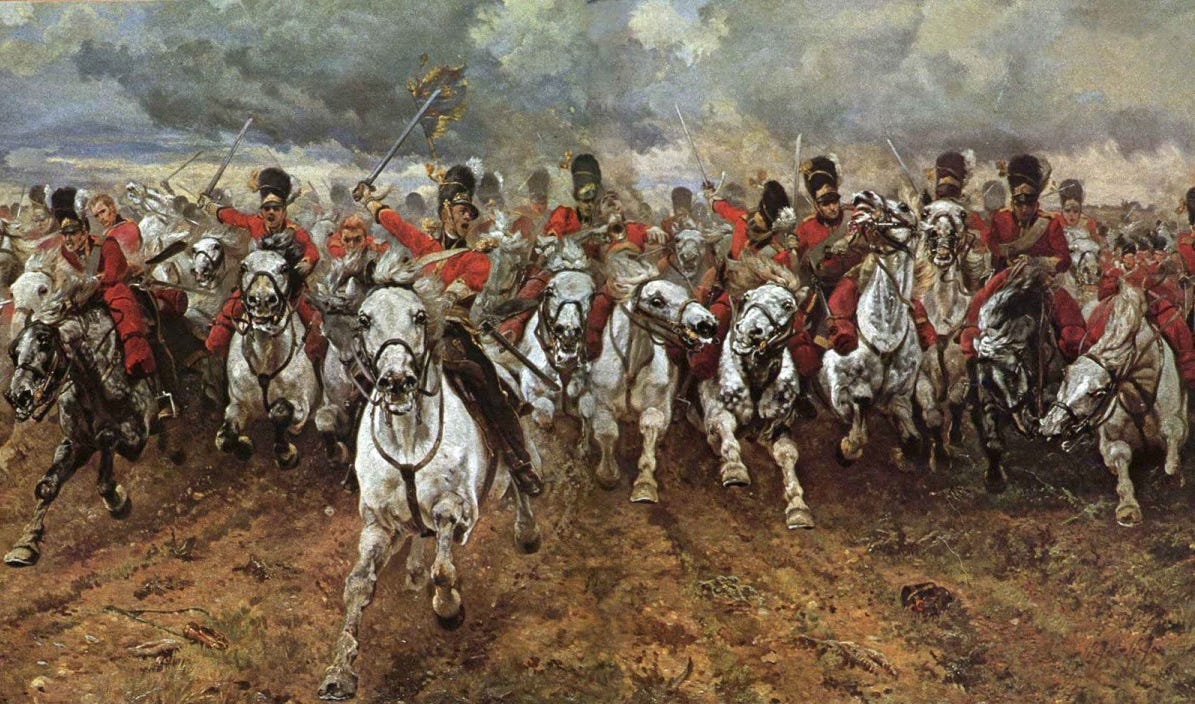
We are given, in the modern world, a great many different definitions of success. We might define success as getting straight A’s in high school and university. Or we might define success as getting a...
It’s Not about the Theology
Aug 24, 2026 · 24m
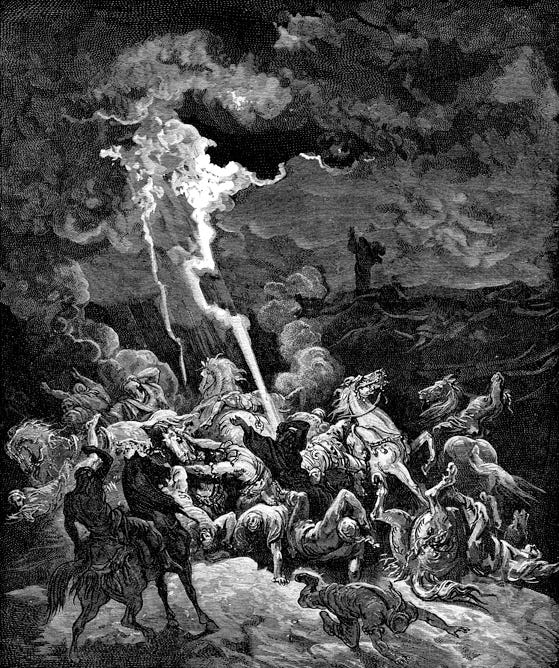
I want to do things a little differently today. Instead of a three-point sermon, I have three mini-sermons. They’re not exactly connected to each other, except by the day. But I want to preface my...
The Death-to-Self of the Theotokos
Aug 24, 2026 · 13m
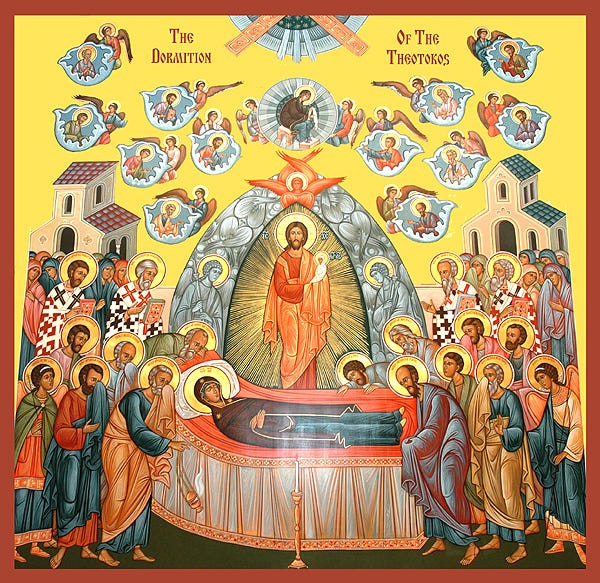
So we’re all gathered here for the great feast of the Dormition, which of course commemorates the falling asleep of the Mother of God. And I want to begin by looking today at the epistle reading...
Take these sermons with you.
Follow Translating the Tradition in the Getsermons app to get every new sermon, build playlists, and pick up right where you left off.

