

Translating the Tradition
Spiritual Success
Aug 24, 2026 · 20m
Prefer sermons downloaded automatically?
About this sermon
We are given, in the modern world, a great many different definitions of success. We might define success as getting straight A’s in high school and university. Or we might define success as getting a really good job by the age of 25. Or we might define success as having so many YouTube followers by this point in your YouTube career. Or whatever — we have a lot of different ones. They all tend to revolve around: how much, or how many?
In the Jewish world, in the ancient days, in the days of our Lord, there was a fairly different definition of success, but not completely different. And the rich young ruler here who comes to Jesus — he’s pretty much the definition, the Jewish definition, of success. He keeps the commandments faithfully. So he’s clearly pious. He clearly cares about God and about his neighbours. He’s keeping the law. And it’s also really clear that God has blessed him: he’s rich, he’s got lots of stuff. And in the Jewish understanding, if you want to see whether or not somebody has God’s favour, well, look how many sheep they have. Abraham had a lot of sheep, right?
So here this young man comes to Jesus, and he’s pretty successful by the standards of his day. He comes up to Jesus and says to him, “Good teacher, what must I do to have eternal life?” So he recognizes that even in the midst of his success, even in the midst of his fairly good relationship with God and with the people around him, he’s missing something.
And Jesus’ answer is really interesting. It doesn’t actually begin by answering the question. He says, “Why do you call me good? No one is good except God.” And then he goes on to say, well, “If you want to enter into eternal life, keep the commandments.” And so the young man says, well, there are a lot of commandments — yes, you’ve got the ten, but some scholars have broken it down to over 600 different commandments. So he asks the natural question: which ones? And Jesus goes on to list the six that have to do with his relationship with those around him — that is to say, with his relationship with his fellow man. And the young man says, “Well, I’ve kept all these from my youth — I’m still missing something, what am I missing?” And so Jesus tells him exactly what he’s missing: “If you want to be perfect, go sell everything that you have, give it to the poor, and come follow me.”
So this is a really interesting criterion for what would be, of course, ultimate success within the Jewish or Christian understanding. Sell everything that you have. (Now, admittedly, this is for this particular guy — it’s not necessarily telling all of us to sell everything that we have. Hope not.) But then — and this is the clincher — come and follow me.
The young man went away sorrowful, because he has a lot of stuff. And it says in one of the Gospel accounts of this that Jesus looked at him and he loved him. And he certainly sounds kind of sad as the young man is going away. He turns to his disciples and says, “Truly I say to you, it is hard for a rich man to enter the kingdom of heaven. And again I say to you, it is easier for a camel to go through the eye of a needle than for a rich man to enter the kingdom of God.”
And when his disciples heard it, they were — well, it says greatly astonished — but I think they were deeply disturbed. This guy’s the definition of success. He’s kept the law. He’s got money, he’s been blessed by God. Who then can be saved? If it’s hard for this guy, it’s got to be even harder for us. And Jesus simply looks at them and says, “With men this is impossible, but with God all things are possible.”
I want to go on to the second gospel reading in just a minute, but let’s stop for a minute and unpack a couple of things here.
First of all, as I said, when the young man asks which commandments, Jesus tells him the six that have to do with our relationship with human beings, with those around us — six of the ten. The other four are about God: you shall have no other god before me, you shall not worship a graven image, and so on… remember the Sabbath day and keep it holy. But the six he lists here are: you shall not murder, you shall not commit adultery, you shall not steal, you shall not bear false witness, honour your father and your mother. And, interestingly, the Ten Commandments’ last one — you shall not covet — he sums up as, “you shall love your neighbour as yourself.” I only just noticed that this morning, and it struck me: that’s an interesting gloss. What is he doing here? What does it mean to covet?
Maybe for this young man, who has lots of stuff, coveting isn’t really a problem in his mind — because he’s got everything that he wants, everything that he needs, well, except eternal life. And so Jesus translates it for him, and for us: love your neighbour as yourself. Because when you think about it, coveting is really looking at our neighbour and saying, “Oh, they have that — I want that. Why don’t I have that? It’s really not fair, and I kind of wish they didn’t have that, so I wouldn’t feel uncomfortable not having it.” What is that? It’s a lack of love for your neighbour. If you actually loved your neighbour and saw that he has something good, you’d say, “Wow, that’s great, that’s awesome, I’m so glad you have that cool car,” or whatever.
So Jesus is, as always, talking very clearly and specifically to the person in front of him. He knows this young man; he knows exactly what he needs. That’s also why, at the very beginning, he asks, “Why do you call me good? There’s no one good except God.” Because he wants to get him thinking. If Jesus really is good — if he’s really coming to him for this authoritative pronouncement on what he needs to inherit eternal life, and if he has seen Jesus as he must have by this point, and heard about all that Jesus has done — maybe he actually has some insight, maybe he can actually think about who Jesus is. He’s just called him good. What does he really mean by that?
And so when Jesus tells him at the end of this discussion, “Sell everything that you have, give it to the poor, and come follow me,” what he’s asking for is the recognition, the acknowledgement, the understanding of who Jesus really is — what allegiance he should really give to Jesus.
All right, the second Gospel reading. This one is given to us because today is the leave-taking of the Great Feast of the Dormition of the Theotokos. And Jesus is entering into the house of Mary and Martha. Now, this is, of course, not Mary his mother — it’s Mary of Bethany. But we like puns in the church, and we like these fairly clear parallels — if you remember, we’ll get to this…
So he goes to the house of Mary and Martha, the sisters of Lazarus, whom he later raises from the dead, and they welcome him into their home. Martha gets busy — she’s bustling around, making sure everything’s clean and tidy, or maybe it’s clean and tidy already, but needs a little more, adjusting the vase, making sure the flowers in it are fresh, and making sure all the food they’re going to eat is prepared and really good. And as she’s doing this, she’s getting more and more annoyed, because every time she thinks, “Wow, there’s so much to do,” she looks over at her sister Mary, and Mary’s just sitting there, at Jesus’ feet, listening to him talk. It’s like, “I would like to do that too — I’d really like to just sit at Jesus’ feet and listen, but I have all these things I need to do, and you’re not helping me with any of them.”
Finally this frustration boils over, and she comes to Jesus and says, “Lord, don’t you care that my sister has left me to serve alone? Tell her to come and help me.” Jesus answers her and says, “Martha, Martha, you are worried and troubled about a great many things, but really only one thing is needed — and Mary has chosen that good part, which will not be taken away from her.”
What part? Well, she’s sitting at the feet of him who is the Word of God, listening to the words coming out of his mouth. She’s chosen, maybe a little more directly than Mar…
This is a public episode. If you would like to discuss this with other subscribers or get access to bonus episodes, visit translatingthetradition.substack.com
More from Translating the Tradition
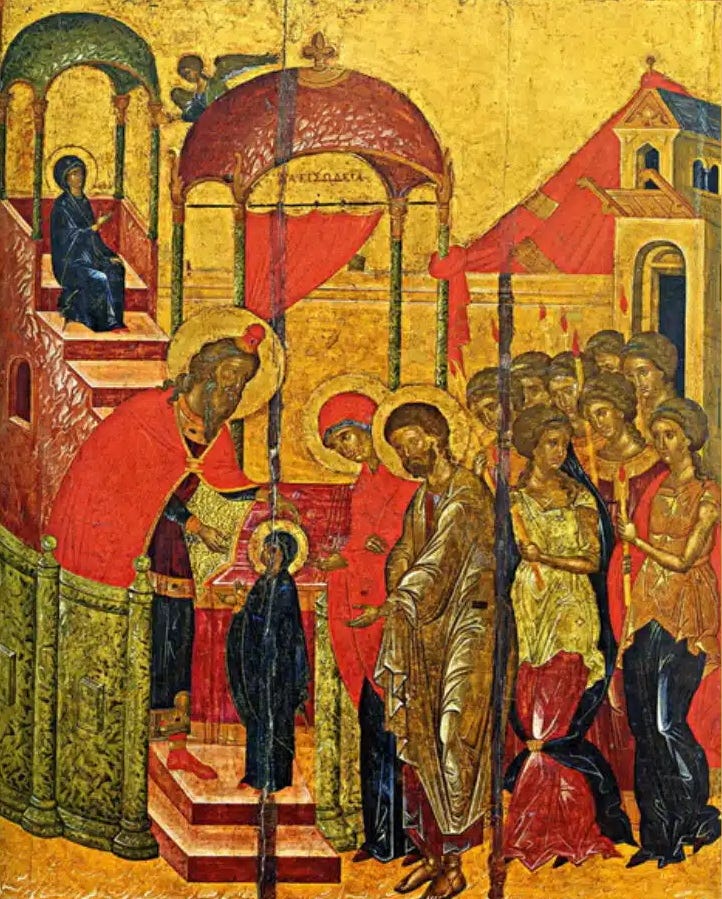
Our Hero, Mary, the Theotokos
Nov 23, 2026 · 16m
We need heroes.One of the tragedies of our modern age is that we have this obsession with tearing down heroes, or with presenting anti-heroes, or having heroes that have fallen. That seems to be one...
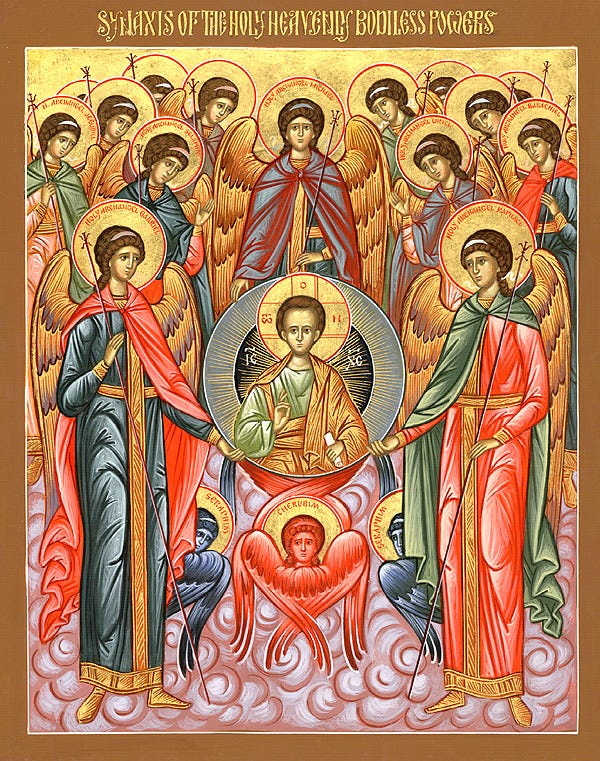
Belief in Angels
Nov 9, 2026 · 31m
Yesterday I almost responded to one of those trend chains on Substack that I saw in Lucas’ feed. I rather liked the chain, and I even started drafting my reply. It was a chain about what you find...

The Diamond Rule: A Minecraft Story
Oct 5, 2026 · 23m
In today’s Gospel reading, we have a principle, a command that we all know, and we all know it super well: “Do as you would be done by.” The Golden Rule, right? And so I want to use the classic...

Mawidge and True Love
Oct 3, 2026 · 8m
In honour of my son Simon’s beautiful post “The Mistake of True Love”, which references another one of my recent wedding homilies, I’m re-issuing this, perhaps my all-time favourite wedding homily,...
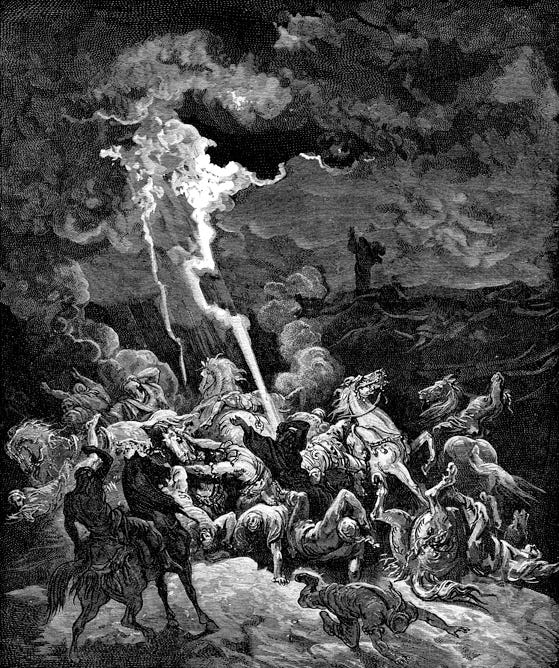
It’s Not about the Theology
Aug 24, 2026 · 24m
I want to do things a little differently today. Instead of a three-point sermon, I have three mini-sermons. They’re not exactly connected to each other, except by the day. But I want to preface my...
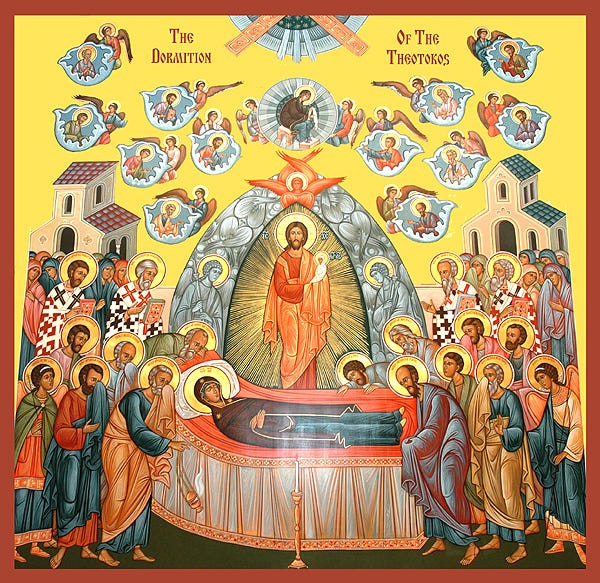
The Death-to-Self of the Theotokos
Aug 24, 2026 · 13m
So we’re all gathered here for the great feast of the Dormition, which of course commemorates the falling asleep of the Mother of God. And I want to begin by looking today at the epistle reading...
Take these sermons with you.
Follow Translating the Tradition in the Getsermons app to get every new sermon, build playlists, and pick up right where you left off.

