
The Second Look
Success Doesn’t Prove You’re Right | TSL EP # 16
Oct 6, 2026 · 12m
Prefer sermons downloaded automatically?
About this sermon
Organizations are good at reviewing their failures. A missed target triggers a meeting, a post-mortem, a new plan. A hit target triggers a repeat. This episode argues that the second reflex is the riskier of the two. A decision that works also produces the proof for making it again. That proof says nothing about whether it moved anyone closer to what they wanted in the first place.
The case is built from two very different scales. At one end is the Cuban Missile Crisis, where an airstrike could have destroyed every missile it targeted and still started a nuclear war. At the other end are two ordinary office stories, told by a sales director about his own field. An end-of-quarter discount works so well that customers learn to wait for the next one. A manager’s approval rule really does cut errors, and it quietly trains a team to stop deciding for itself. Nobody in either story is foolish or dishonest, and the essay insists on that. The pattern needs no villain.
It does not argue against discounts or supervision. It concedes that every real decision is a trade-off and that some short-term fixes deserve priority. Then it draws the line between a cost someone owns and a cost nobody is watching. It closes on one practical habit: schedule the review of your successes, with measures beyond the original target, before the next deadline makes them harder to question.
What’s inside: an airstrike that could succeed while the larger goal failed; why a discount can move demand without creating any; how a working promotion picks up defenders; the two questions a company keeps answering as one; a manager who resents the dependence he built; how the crisis actually ended, including the part kept secret; why the essay calls diplomacy a tactic; trade-offs, owned and unowned; and how to put a successful decision under review without turning it into a witch hunt.
Written and read by Kiel F. Harvey. Originally published October 2, 2026. Running time 12:37.
In this episode
* 0:00 Billboard and intro
* 0:56 October 1962, and the case for an airstrike
* 1:25 Berlin, an uncertain strike, and a mission that could succeed while the country lost
* 2:09 The thesis, stated early
* 2:14 A disappointing quarter, a deep discount, and a number hit
* 2:59 The quarter after: early buyers and customers who wait
* 3:22 Moving demand instead of creating it
* 3:47 Why the pattern needs no villain
* 4:11 How a promotion that works picks up defenders
* 4:32 Two questions that get answered as one
* 5:15 The manager who approves everything
* 6:03 The dependence he now resents, at work, at home, and at church
* 6:29 Why removing oversight overnight is not the fix
* 6:49 Back to Cuba: the quarantine and a downed pilot
* 7:32 A private meeting, and the missiles in Turkey
* 7:54 What the crisis does and does not prove, and tactic versus strategy
* 8:37 Granting the other side: every decision is a trade-off
* 9:12 An owned cost versus a recurring rescue
* 9:47 Two questions for the planning meeting
* 10:14 Putting the review on the calendar, and what to measure
* 10:44 Pick one success and trace what followed
* 11:14 When the review confirms the tactic
* 11:37 Wanting the win and the business that has to come after it
* 11:59 The closing test
* 12:10 Outro
The argument, in short
Every decision gets judged on two questions. Did it hit its target? Did it move the objective the target was supposed to serve? Most review processes only ask the first, and most of the time that works, because the answers agree. The essay is about the cases where they come apart.
Success protects those cases. A failed tactic forces a second look. A tactic that works produces real numbers, and real numbers produce defenders, so questioning the next round means arguing against the evidence. The costs tend to land where the original report never looks: next quarter, another department, a team that has stopped building judgment. Nobody has to hide anything for that to happen. The measurement just ends too early.
The Cuba bookends supply the vocabulary. A tactic finishes a task. A strategy keeps the end in view and plans for the other side’s response. By that test, a successful strike, a signed agreement and a saved quarter are all tactics. Each one still needs a plan for what follows.
The essay is careful not to turn this into a case against acting. It grants that trade-offs are real and that short-term fixes are sometimes right. What it asks for is ownership: name the cost before you accept it, and set a date to check on it.
If you take one thing: a result that hits its target tells you the tactic worked. It does not tell you the goal got closer, and only a scheduled review will answer that.
Referenced in this episode
* The airstrike option, October 1962. The essay says military advisers could not promise a strike would get every missile. The record backs it up. Kennedy met with the commander who would have led the strike, Gen. Walter Sweeney of Tactical Air Command. Sweeney said the strike would be “successful,” but that even under ideal conditions it was unlikely to destroy all of the known missiles (Foreign Relations of the United States, Vol. XI, doc. 36). That is the essay’s distinction in miniature: a mission rated a success that still leaves the threat standing.
* What nobody in the room knew. Soviet forces in Cuba also had short-range tactical nuclear weapons, Luna rockets and nuclear-armed cruise missiles. U.S. policymakers only learned in 1992 that warheads for the Lunas were already on the island that October (National Security Archive). This makes the essay’s point stronger than the essay does. A strike and invasion that met every military objective would have met an enemy prepared to use nuclear weapons on the beach.
* Maj. Rudolf Anderson Jr. The U-2 pilot shot down over Cuba on October 27. He was the only American killed by hostile fire in the crisis. He was posthumously awarded the first Air Force Cross (Air & Space Forces Magazine).
* The Robert Kennedy and Anatoly Dobrynin meeting, and the Jupiters. The essay calls the Turkey assurance private. It stayed private for decades. Kennedy’s aides gave a “plausible and accurate, if incomplete” explanation when the missiles came out of Turkey the following spring. Theodore Sorensen admitted in 1989 that he had edited the deal out of Robert Kennedy’s memoir (National Security Archive). This fits the essay’s thesis well. For a generation, the public version of the crisis was a story of firmness alone. It was a success story with the trade-off removed, and it taught the lesson the essay warns about.
* What it costs to unwind a discount habit. The essay’s discount story is hypothetical, and a national retailer has run it in reverse. In 2012 J.C. Penney replaced its constant coupons and sales with everyday “Fair and Square” pricing. Sales fell nearly 25 percent in a year, the CEO was out after 17 months, and the coupons came back. One executive said the company had not realized how deep some customers were into coupons (KVIA). The lesson cuts both ways. A trained expectation is real, and so is the bill for breaking it, which is the essay’s case for counting costs before the habit forms.
* A name for the pattern. The essay never names it, but economists know a version of it as Goodhart’s law. It is usually paraphrased as: when a measure becomes a target, it stops being a good measure. Hitting the number and serving the purpose behind the number are separate achievements, and the essay’s review habit exists to check the second.
Read the original
The written version of this essay is here: Success Doesn’t Prove You’re Right
New essays every week at Upon Further Examination. Free, and it stays free.
RockReader
If you’re like me, you’ve been told a million times you should read your Bible. That lands about the same as “you should go to the gym.” And here’s what I’ve noticed about both. I’m far more consistent when a friend is going through it with me.
That’s what I built RockReader for. You pick a reading plan, connect with a few people you trust, and journal through it together, a …
Get full access to Upon Further Examination at kielharvey.substack.com/subscribe
More from The Second Look
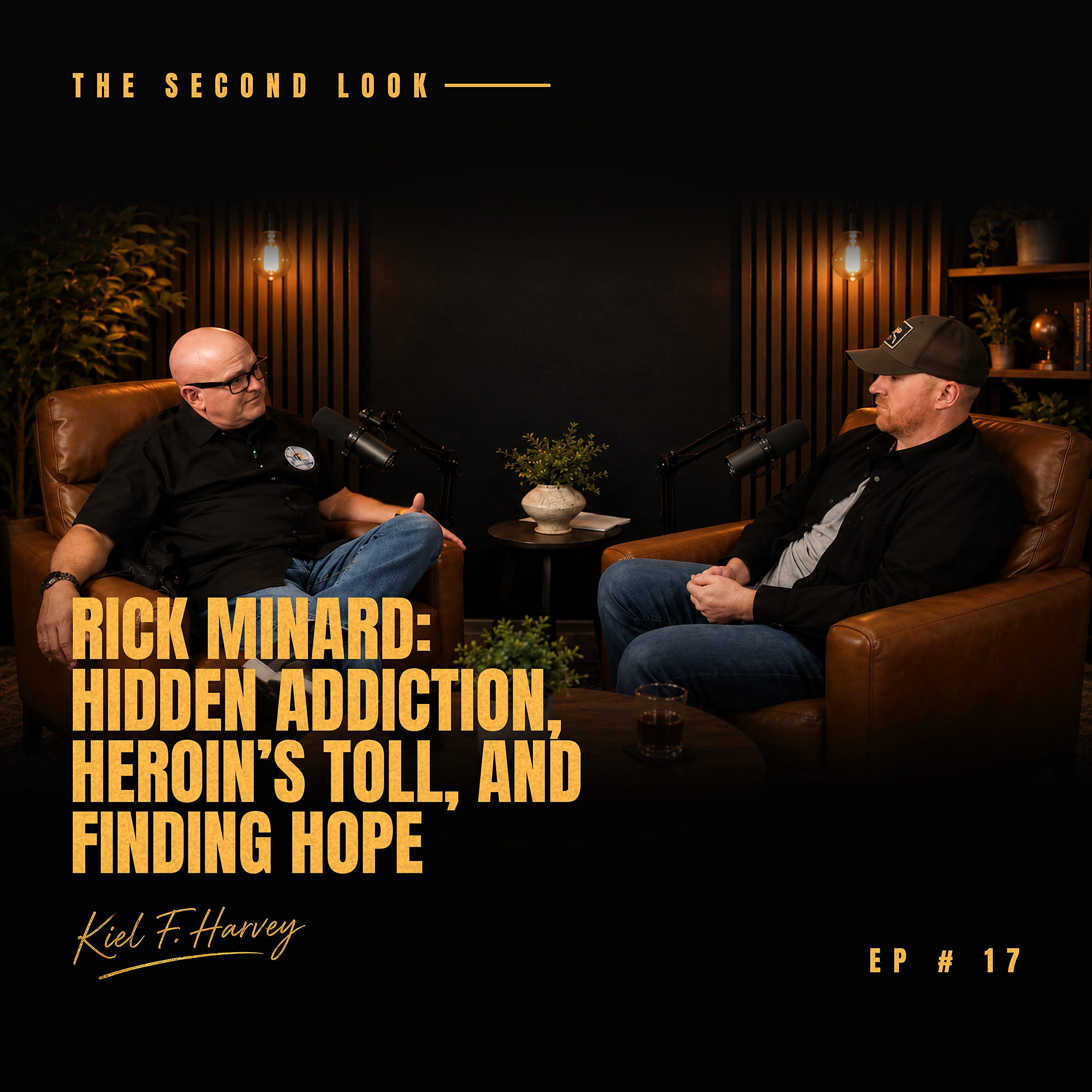
Hidden Addiction, Heroin’s Toll, And Finding Hope | TSL EP #17
Oct 9, 2026 · 1h 57m
Most conversations about addiction start with the drug. This one starts with a secret. For years Rick Minard served in church, led a home group, and watched God use him, while hiding a pornography...
Sucking At Stuff | TSL EP #15
Sep 14, 2026 · 9m
Most people who want to get good at something late have already heard the argument against trying, usually in their own voice. Too old, too far behind, too much momentum in the wrong direction. The...
When Getting Help Becomes a Full-Time Job | TSL EP # 14
Sep 7, 2026 · 13m
DescriptionAn institution can hold enormous expertise and still fail the person standing in front of it, and the failure will not look like incompetence. It looks like a series of appointments that...
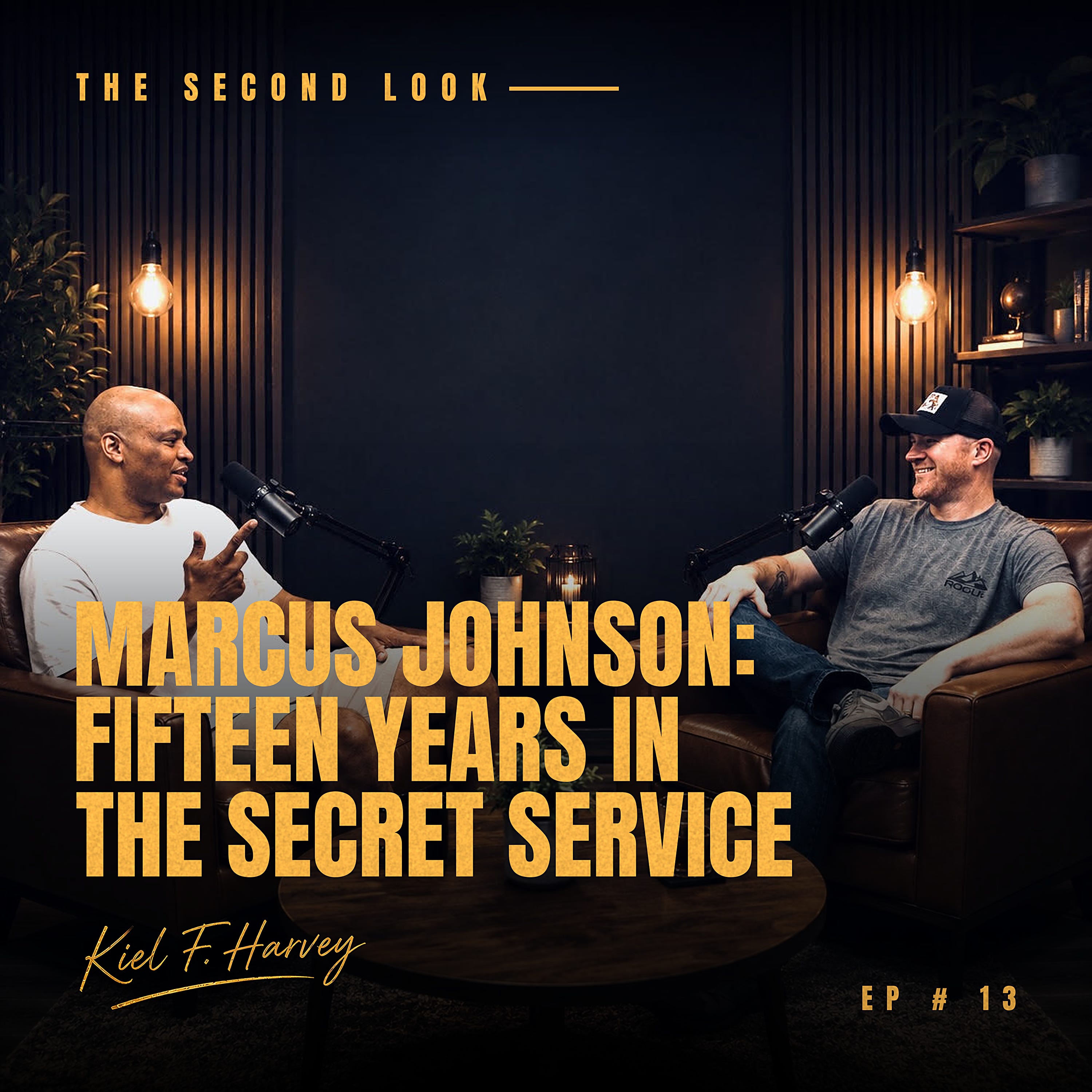
Buying Cocaine Undercover, Protecting Presidents, and the Cost of Duty- Marcus Johnson Interview | The Second Look Ep# 13
Sep 2, 2026 · 2h 16m
DescriptionAlmost everything the country believes about the Secret Service was assembled from two sources. One is a movie. The other is a piece of footage where something went badly wrong. Neither one...
Losing Your Way By Accident | TSL EP # 12
Aug 31, 2026 · 10m
DescriptionMost people who stop living by a conviction never decide to. There is no argument, no crisis of belief, no moment where the thing gets examined and set down. You would still defend it out...
Shiny, Heroic, Leader? | TSL EP# 11
Aug 24, 2026 · 14m
DescriptionNearly everything written about leadership converges on the same list. Character, competence, charisma, communication, care, integrity. This episode does not argue that any of those are...
Take these sermons with you.
Follow The Second Look in the Getsermons app to get every new sermon, build playlists, and pick up right where you left off.

