
The Second Look
Sucking At Stuff | TSL EP #15
Sep 14, 2026 · 9m
Prefer sermons downloaded automatically?
About this sermon
Most people who want to get good at something late have already heard the argument against trying, usually in their own voice. Too old, too far behind, too much momentum in the wrong direction. The argument rarely sounds like quitting. It sounds like realism, and some days it sounds like peace.
This episode gives that voice the floor first. It opens as a tribute: a deadpan day in the life of a man who has stopped trying at work and at home and treats it as an accomplishment. Then it stops, asks what exactly bothered you about him, and admits that almost none of it happened. The bit is there because the story is familiar anyway, not as behavior, but as the explanation people give themselves for why change is off the table.
From there it gives a social media trend a charitable reading before showing where it goes wrong, grants the bleak premise that an unchanged life has a fixed destination, and turns on a junior high report card and a line his mother credited to Dr. Phil. It closes on a disclosure rather than a pep talk. The author is bad at too many things he wants to be good at, and he needs the argument to be true.
What’s inside: a tribute to mediocrity delivered with a straight face; which parts are fiction and which are left to your imagination; a trend that recasts not thinking as a virtue, and the fair point buried inside it; why momentum is a real argument; a report card with none of the first three letters on it; what a parent’s words can do years after they seem to fail; the two things that had to be accepted before anything changed; why being bad at something is honest; starting late, in public; and what being bad at something does and does not tell you.
Written and read by Kiel F. Harvey. Originally published September 11, 2026. Running time 9:49.
In this episode
* 0:00 Billboard and intro
* 1:02 A tribute to being incapable, and the advice not to fight it
* 1:50 The flicker of ambition, and the case for letting it go quiet
* 2:07 Too old, too young, too whatever
* 2:21 Mid as a destination, and meaning as an opiate
* 2:47 The man who grinds all night, and the medal he is owed
* 3:01 A full day of committed mediocrity, hour by hour
* 3:45 The cubicle check-in, and the Candy Crush game it interrupted
* 3:56 A friend’s book, and the dust collecting on it
* 4:08 Mid-maxxing takes more effort than it looks
* 4:12 A night of candy, Mountain Dew and Call of Duty
* 4:42 Good night from a man with no ambition and some heartburn
* 4:54 Pause
* 4:57 What bothered you about that, and how much of it was true
* 5:14 A social media trend, its charitable reading, and where it goes wrong
* 5:54 The story people tell themselves without being asked
* 6:21 Granting the premise: an unchanged life has a fixed destination
* 6:32 A report card, and a line credited to Dr. Phil
* 6:52 The line itself, and why it stuck without changing anything
* 7:15 The two things that had to be accepted first
* 7:40 Why being bad at something is honest
* 7:47 Never aspiring to it, and assuming it was not meant to be
* 8:04 Sucking, renamed
* 8:08 Starting late, and starting in public
* 8:27 The selfish reason the argument has to be true
* 8:51 Identity against location
* 9:02 Outro
The argument, in short
The usual case against learning something late is not laziness. It is arithmetic. The years behind you have built momentum, the distance ahead looks long, and the sensible-sounding conclusion is that some things were never meant for you. The essay grants more of that case than most encouragement does. If nothing changes, it agrees, the outcome is already settled.
Where it parts ways is on what being bad at something means. The mock tribute works because it treats low skill as a trait, something a person is. The second half treats it as a position, somewhere a person is. Once it is a position, it stops being a verdict and becomes information: the starting point everyone shares, including everyone who later got good.
The piece is careful about two things. It does not sneer at the impulse behind the trend it criticizes; it concedes that acting without overthinking has a point before objecting to the version that turns not thinking into a virtue. And it does not pretend the author has arrived. The case is made by someone still in the middle of it, which is why the time argument cuts both ways. The years pass whether or not the effort goes in.
If you take one thing: being bad at something is a report on where you are, not a ruling on who you are, and everyone who is good at something started there.
Referenced in this episode
* The line credited to Dr. Phil. The line his mother quoted circulates in several versions, and none traces cleanly to Phil McGraw. A close variant, “What you are to be, you are now becoming,” is often attributed online to the psychologist Carl Rogers, also without a firm source. The essay says she “attributed” it to Dr. Phil, which is the accurate way to put it. McGraw was a regular guest on The Oprah Winfrey Show from 1998, four years before his own show launched, so a late-1990s report card fits.
Read the original
The written version of this essay is here: Sucking at Stuff
New essays every week at Upon Further Examination. Free, and it stays free.
RockReader
If you’re like me, you’ve been told a million times you should read your Bible. That lands about the same as “you should go to the gym.” And here’s what I’ve noticed about both. I’m far more consistent when a friend is going through it with me.
That’s what I built RockReader for. You pick a reading plan, connect with a few people you trust, and journal through it together, a day at a time. It’s private by default, so nothing you write is seen unless you decide to share it. Completely free. No subscription, no in-app purchases.
rockreader.com, or search RockReader in the Google Play store. Grab a friend and dig into the word together.
From the Source
If you’re just getting started reading the Bible, or you’ve been a Christian a long time and your Bible has gotten dustier than you’d like, I wrote a study workbook for you. From the Source teaches a four-step method for reading and studying Scripture so you can understand it for yourself, at your own pace.
Available at kielharveybooks.com and on Amazon.
Everything on Upon Further Examination is free and stays free. If you want to support the work, buy From the Source. What it earns pays for RockReader and for the hours these essays take.
Listen and subscribe
* Apple Podcasts
* Spotify
* YouTube
* The Second Look show page
About
Upon Further Examination is a Substack about business, leadership, work, and life as they are actually lived, not as they are supposed to sound. Most of life runs on first impressions. This is the second look.
Kiel F. Harvey writes it, reads it, and built RockReader
Get full access to Upon Further Examination at kielharvey.substack.com/subscribe
More from The Second Look
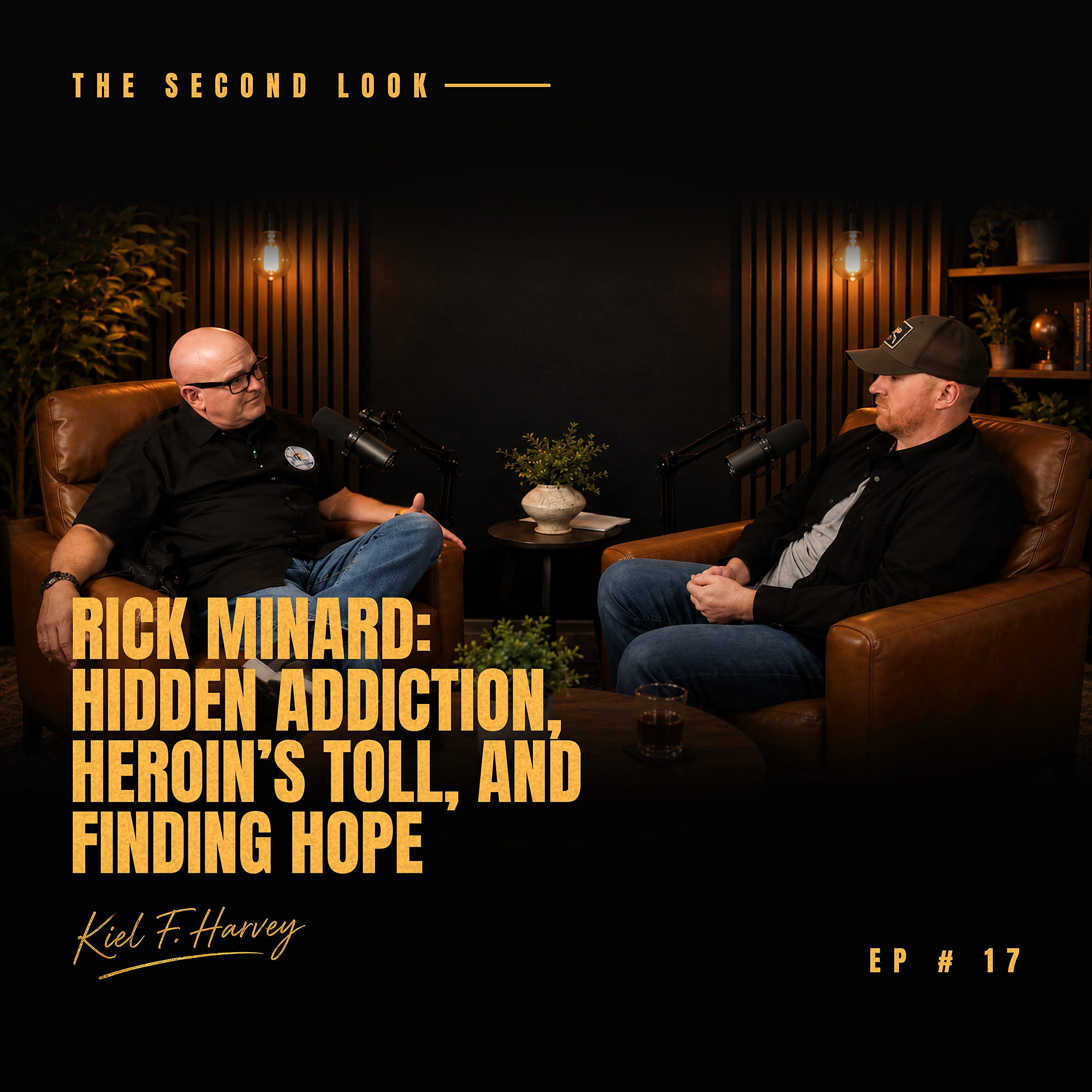
Hidden Addiction, Heroin’s Toll, And Finding Hope | TSL EP #17
Oct 9, 2026 · 1h 57m
Most conversations about addiction start with the drug. This one starts with a secret. For years Rick Minard served in church, led a home group, and watched God use him, while hiding a pornography...
Success Doesn’t Prove You’re Right | TSL EP # 16
Oct 6, 2026 · 12m
Organizations are good at reviewing their failures. A missed target triggers a meeting, a post-mortem, a new plan. A hit target triggers a repeat. This episode argues that the second reflex is the...
When Getting Help Becomes a Full-Time Job | TSL EP # 14
Sep 7, 2026 · 13m
DescriptionAn institution can hold enormous expertise and still fail the person standing in front of it, and the failure will not look like incompetence. It looks like a series of appointments that...
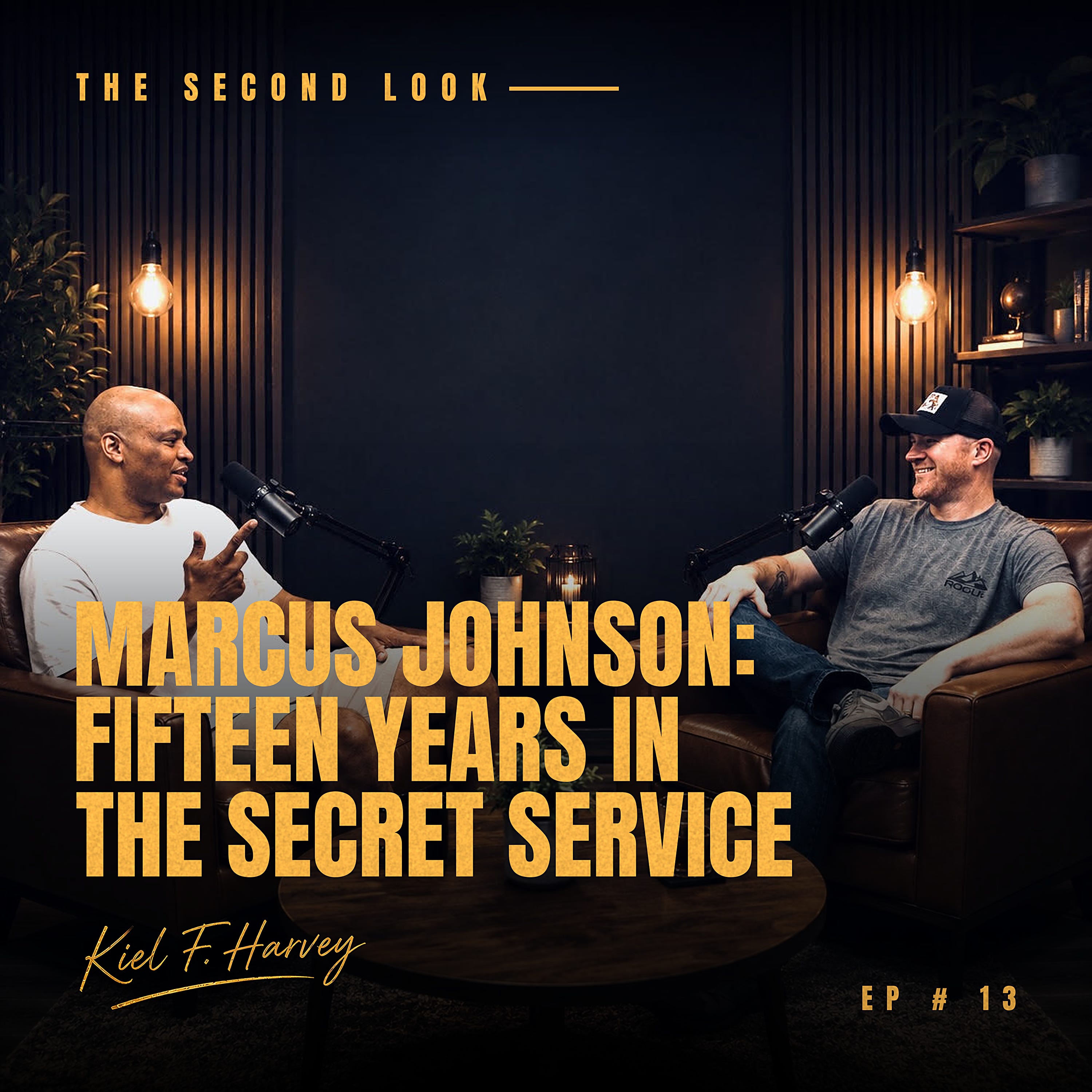
Buying Cocaine Undercover, Protecting Presidents, and the Cost of Duty- Marcus Johnson Interview | The Second Look Ep# 13
Sep 2, 2026 · 2h 16m
DescriptionAlmost everything the country believes about the Secret Service was assembled from two sources. One is a movie. The other is a piece of footage where something went badly wrong. Neither one...
Losing Your Way By Accident | TSL EP # 12
Aug 31, 2026 · 10m
DescriptionMost people who stop living by a conviction never decide to. There is no argument, no crisis of belief, no moment where the thing gets examined and set down. You would still defend it out...
Shiny, Heroic, Leader? | TSL EP# 11
Aug 24, 2026 · 14m
DescriptionNearly everything written about leadership converges on the same list. Character, competence, charisma, communication, care, integrity. This episode does not argue that any of those are...
Take these sermons with you.
Follow The Second Look in the Getsermons app to get every new sermon, build playlists, and pick up right where you left off.

