
Through the Lens of Eternity Podcast
Three Days of Water
Oct 28, 2026 · 13m
Prefer sermons downloaded automatically?
About this sermon
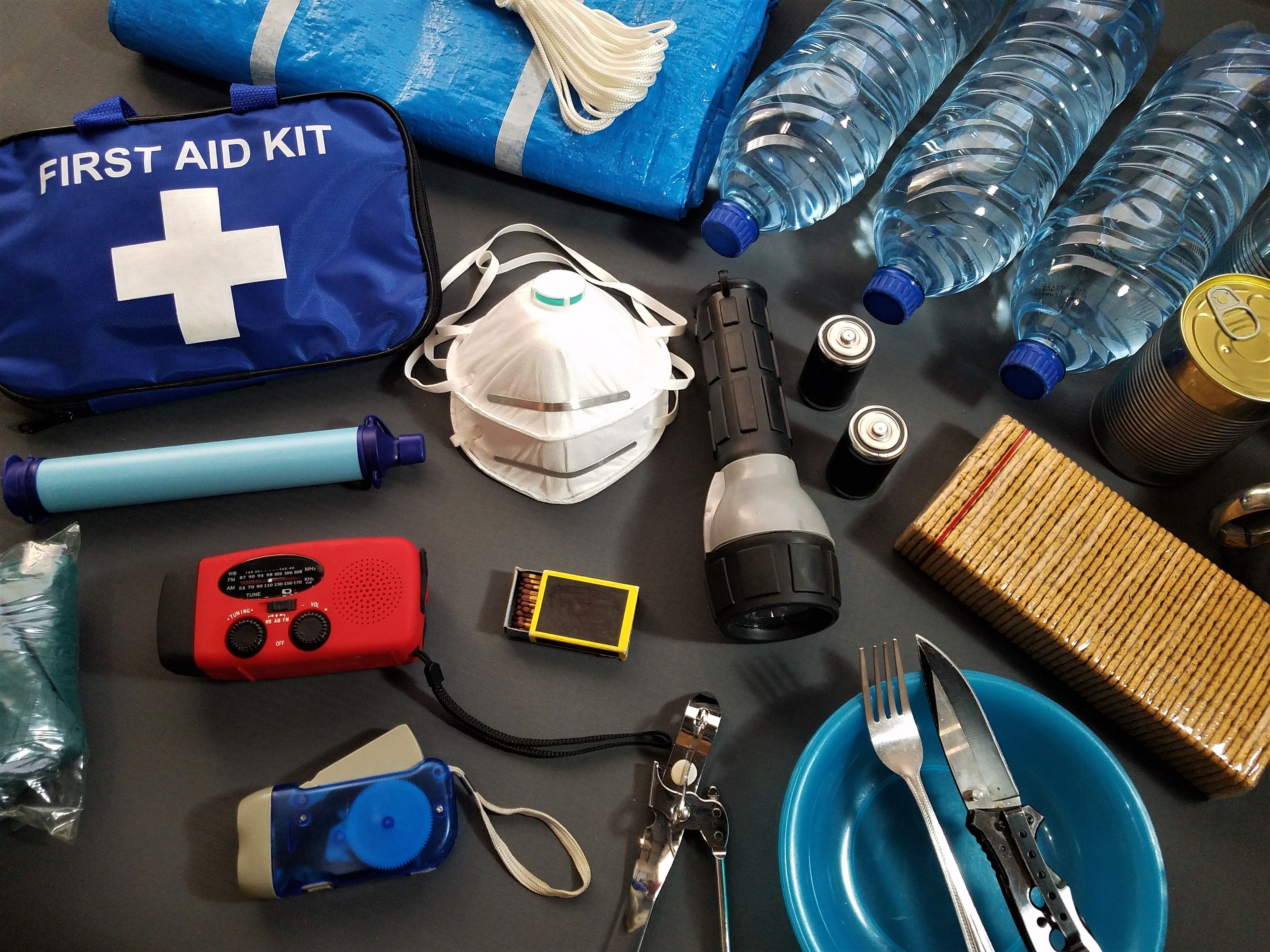
Last Thursday the Defence Secretary Wes Streeting went on Question Time and asked the whole country to put an emergency kit together. Three days of bottled water, tinned food, a wind up torch, a wind-up radio, some blankets, and a bit of cash tucked in a drawer in case the card machines stop working. By Monday, Ocado had run out of several brands of bottled water, wind-up radios were selling out after orders jumped fivefold, and searches for “survival pack” had gone through the roof.
I wonder how many of us felt two things when we heard it. A flicker of fear, wondering whether something is coming that we’re not being told about. And a flicker of cynicism, wondering whether this is just another politician trying to frighten us into agreeing with him. I’ve been thinking about both over the last few days, because I think they’re both understandable, and I don’t think either of them is where a follower of Jesus is meant to live.
Is the threat real?
Let’s start with the facts, because fear and cynicism both feed on not having them. Back in April, after the stabbing in Golders Green, the national terrorism threat level was raised to severe, which means an attack is judged highly likely. That decision isn’t made by ministers, by the way. It’s made by the Joint Terrorism Analysis Centre, a body of analysts whose job is to call it as they see it, and they said the threat had been rising for some time. In March a drone struck the RAF base in Cyprus.
Just before Wes Streeting spoke, there were reports of Russian-deployed fishing trawlers mapping the undersea cables that carry almost all of our internet traffic. And in the summer, the government added new cyber-attack scenarios to the National Risk Register, including attacks on water and police systems.
It’s also worth knowing that the advice itself isn’t new. A Conservative minister, Oliver Dowden, told us to keep three days of food and water back in 2024, and the European Union gave its citizens the same advice last year. Different political parties, different countries, same conclusion. So whatever you make of the headline about a thousand days until 2030, this isn’t one minister inventing a crisis.
At the same time, it would be naive to pretend it isn’t political. Defence spending is a battleground right now, and the Conservatives have been busy announcing missile shields of their own.
So are they scaremongering? Not really. The dangers are real, and they don’t belong to any one party. But that doesn’t mean politicians aren’t using them. A real threat can still be spun and talked up to suit someone’s agenda. Both can be true at once. Wisdom means taking the danger seriously without swallowing every headline.
Can we trust them?
I think the harder question is. Even if the threat is real, can we trust the people telling us about it? Every year Ipsos asks the British public which professions they trust to tell the truth, and in the most recent survey just nine per cent said they trust politicians. Nine in a hundred. That ties the lowest score since the survey began in 1983.
Interestingly politicians weren’t actually bottom of the list. Social media influencers were, at six per cent, which is the lowest score any profession has ever had. And yet that’s exactly where so many of us go when we stop believing the official line. Losing trust in one voice doesn’t automatically make the next voice more trustworthy.
So should they tell us? I think they should. It treats us as adults, and a country where households are ready for three hard days is a stronger country than one where nobody saw it coming. But the empty shelves at Ocado show that how you say it matters almost as much as what you say. Telling people calmly, and telling them often, builds steadiness. Telling them suddenly breeds panic.
When the prayer room and the Defence Secretary agree
Interestingly back in March, Pete Greig, the founder of 24-7 Prayer, was worshipping with a group of leaders in South Africa when he sensed the Lord saying three words: prepare for war. He didn’t name an enemy or a date or say what form it would take. The emphasis was simply on getting ready. Then in early September, Steve and Esther Uppal from All Nations Church in Wolverhampton released a video saying they had sensed all year that the church in the West was sleepwalking, and that a season of real disruption might be coming. Steve was honest that they don’t know what will cause it. It might be another nation, it might be something else entirely.
Neither of them would call themselves a prophet.. They’re pastors and leaders who sensed something while praying, shared it carefully, and invited the rest of us to weigh it.
Those are bold things to say in public. Telling the church to prepare for war, or warning that major disruption is coming, gets people’s attention, and it can easily be misheard, misquoted or turned into something it was never meant to be. You learn a lot about a messenger by what they do once the message gets out. Pete put out a statement saying that, contrary to some of the coverage, he isn’t prophesying war at all. He’s calling Christians to pray urgently against war and for peace, while recognising that world leaders who know far more than he does are warning of escalation. And he asked people to listen to what he actually said rather than the commentary about it. Steve, for his part, admitted in an interview that he has to watch his own heart in all this. These aren’t men selling fear.
So what do we do when church leaders and a government minister are saying something similar? Paul gave the Thessalonians a beautifully balanced instruction. Don’t treat prophecy with contempt, but test everything, and hold on to what is good.
It’s about how a church responds when someone believes God has put a message on their heart. It rules out both of the easy responses. We don’t dismiss it because it sounds dramatic, and we don’t swallow it because it sounds spiritual. We weigh it, we pray about it, and we keep what’s good. And it rules out the internet’s favourite habit too, which is reacting to the reaction instead of going back to the source.
We’ve been here before
The good news is that the people of God have been here many times, and the Bible doesn’t leave us guessing about how to respond.
In 2 Kings 18 and 19. The Assyrian army is camped outside Jerusalem, and this is no empty threat. Assyria has already swallowed up the northern kingdom. Their spokesman stands outside the walls and deliberately shouts in Hebrew, the people’s own language, so everyone on the wall can hear. His whole speech is designed to destroy trust. Don’t let Hezekiah deceive you. Don’t let him make you trust in the Lord. Who has ever been saved from us?
Hezekiah doesn’t argue back, and he doesn’t pretend the army isn’t there. He takes the threatening letter into the temple and spreads it out before the Lord. Then he sends for the prophet Isaiah, and the word that comes back is simple: don’t be afraid of what you’ve heard.
There were two voices outside those walls. One was designed to frighten and divide, the other to steady and turn hearts back to God. The question for Jerusalem wasn’t only whether the threat was real. It was whose voice would get the final word.
Then there’s a moment in Acts 11. A prophet called Agabus stands up in Antioch and predicts a severe famine across the whole Roman world, and Luke tells us it came to pass under Claudius. So there’s a warning, delivered by a trusted voice, about real hardship coming. And what does the church do? They don’t stockpile. They don’t panic. Each of the disciples, according to what they had, decided to send help to the believers in Judea. A warning about scarcity became an outpouring of generosity. That’s the gospel turning fear inside out. We could go on. Joseph spent seven good years storing grain because he’d been warned, and Proverbs tells us the prudent see danger coming and take refuge, so getting ready isn’t a lack of faith. When Nehemiah’s builders were th…
This is a public episode. If you would like to discuss this with other subscribers or get access to bonus episodes, visit benorris1977.substack.com
More from Through the Lens of Eternity Podcast

Grace Is Not an Alibi
Nov 11, 2026 · 10m
Content note: this episode discusses rape and sexual assault. If you have been affected, support details are in the show notes. In England and Wales, the 24/7 Rape & Sexual Abuse Support Line is...

Where’s the Umbrella?
Nov 4, 2026 · 8m
There’s a particular kind of helplessness that comes with being rained on in a good suit, and on Sunday it happened to the King. Charles and Camilla were at the Sir Vivian Richards Stadium in Antigua,...

They Didn’t Know Why They Came
Oct 21, 2026 · 11m
A teenager in a Paris suburb stands in front of a camera and describes his school. The roof lets the rain in, there’s no heating and the desks are broken. He’s just telling the world what it’s like to...

The Price of Stew
Oct 14, 2026 · 12m
If you’ve stood at a petrol station forecourt recently with a diesel nozzle in your hand, you’ll know the feeling. You squeeze the trigger, you watch the numbers on the display turn over, and...

Who Keeps the Watch?
Oct 7, 2026 · 8m
Most of us have seen the footage. A night sky over Israel, streaks of light rising from the ground to meet other streaks of light coming in, and then those small bursts high overhead as one missile...

Out of Sight
Sep 30, 2026 · 10m
Sometime earlier this year, the King tried to check on an old friend. It wasn’t a formal enquiry or a matter of state, just one man wondering how another was getting on. Yet he couldn’t get through to...
Take these sermons with you.
Follow Through the Lens of Eternity Podcast in the Getsermons app to get every new sermon, build playlists, and pick up right where you left off.

