

Through the Lens of Eternity Podcast
When One Part Suffers
Jul 8, 2026 · 12m
Prefer sermons downloaded automatically?
About this sermon
Welcome to Through The Lens Of Eternity
A couple of weeks ago I had surgery on my wrist, and I’ve been forced to slow right down ever since. Not fully out of action — I can still potter about and do the odd thing — but nowhere near my usual pace, and likely not for another three or four weeks yet. And I want to be honest with you about something, because I think it’s more useful than pretending I’ve sailed through it with serene, spiritual calm.
The first thing that undid me wasn’t the pain. It was the small stuff. There was a morning early on when I reached for my phone the way you do without even thinking — first thing, still half asleep — and I simply couldn’t hold it. Couldn’t grip it, couldn’t scroll, couldn’t fire off the messages I’d normally have dealt with before my feet even hit the floor. And I lay there for a moment, faintly ridiculous, staring at this little slab of glass that I use to feel connected and productive and on top of everything, and I couldn’t so much as pick it up.
It sounds like nothing. But if you’re the sort of person who likes to get things done — and I very much am — you’ll know that it isn’t nothing at all. Because it wasn’t really about the phone. It was about the fact that, for the first time in a long time, I couldn’t do it myself. Whatever “it” happened to be. Opening a jar. Carrying the shopping. Driving somewhere I needed to be. Suddenly I was the one asking. The one waiting. The one depending on other people to do the things my own two hands had always quietly taken care of.
And I found that far harder to accept than the surgery itself.
Rest has always been a struggle for me. If I’m honest, I’ve worn my busyness a little like a badge — the person who’s always doing, always reachable, always the one who helps rather than the one who needs. And God, in his kindness and his sense of humour, has taken one wrist and used it to dismantle all of that in a fortnight. I’ve been forced to stop. Forced to receive. Forced to let people carry things for me. And it’s taught me something I thought I already understood, but clearly didn’t — not really, not in my bones — about what the church is actually for.
You’ll know the picture. Paul reaches for it again and again, but nowhere more fully than in 1 Corinthians 12. The church, he says, is a body. Not a collection of individuals who happen to share a car park on a Sunday, but one body with many members — hands and feet and eyes and ears — each one needed, none of them able to go it alone. “The eye cannot say to the hand, I have no need of you.” We tend to hear that as a gentle reminder to value everyone’s gifts, and it is that. But read on, because Paul says something we usually skip straight past.
He says the parts of the body that seem weaker are actually indispensable. That the parts we think less honourable, we clothe with greater honour. That God has arranged the body so that there’s no division in it, but that the members should have the same care for one another. And then comes the line that stopped me this week: “If one member suffers, all suffer together.”
We usually talk about the body of Christ as the place where strong people bring their gifts. Where the capable turn up and serve and get things done. But that’s not actually why it was designed. A hand doesn’t need the rest of the body when it’s working perfectly well. It needs it when it’s broken. The whole point of a body — the reason God knitted us together into one — is so that when one part is weak, the others move in around it and hold it up. Which means my wrist, out of action for a few months, isn’t some malfunction in the plan. It’s the very thing the plan was made for. I’m not a problem the body has to work around at the moment. In a strange way, I’m the reason it exists.
And if that still feels like a hard word for those of us who’d rather be the ones doing the lifting, let me point you to something that helped me enormously. Because the great figures of Scripture — the leaders, the deliverers, the giants of the faith — were carried too.
Think of Moses. There’s that extraordinary scene in Exodus 17, where Israel is at war and the battle turns on whether Moses can keep his arms raised. And he can’t. He’s the leader, the man who stood before Pharaoh, the one who parted a sea — and his own arms give out. He hasn’t the strength to hold them up. So Aaron and Hur come alongside him, they sit him down on a stone, and they hold his hands up for him, one on each side, until the sun goes down. The victory doesn’t come because Moses is strong enough. It comes because two others held him when he wasn’t.
Or think of Paul himself, the man who wrote all this about the body. This is not a weak or dependent character by nature — but read his letters and you’ll find him constantly leaning on others. He needs Luke, his physician, at his side. He writes to Timothy from prison and asks him to bring the cloak he left behind, because even an apostle gets cold and can’t fetch his own coat. He depends on churches to send him help. The great teacher of interdependence lived it because he had to.
And here’s the one that undoes any pride left standing: even Jesus received. On the road to the cross, when the weight was too much, it was Simon of Cyrene who was made to carry it. Luke tells us there were women who travelled with him and supported his ministry out of their own means — that the Son of God, in his earthly life, was funded and fed and cared for by others. If the Lord himself allowed himself to be served, to be carried, to be provided for, then who exactly do I think I am, insisting I must never need anything from anyone?
Dependence isn’t a fall from spiritual maturity. It turns out to be the shape that even the strongest, godliest lives have always taken.
Now I want to press into the uncomfortable part, because I suspect I’m not the only one who needs it. For those of us who like to be useful, being weak isn’t merely inconvenient. It’s identity-threatening. Because so much of our sense of worth has been built on being the one who helps, the one who copes, the one who doesn’t need. Take that away, and you find out what’s underneath.
Paul knew this territory intimately. He writes in 2 Corinthians 12 about a thorn in his flesh — some weakness we’re never told the details of — that he begged God three times to remove. And God’s answer was not to take it away. God’s answer was, “My grace is sufficient for you, for my strength is made perfect in weakness.” And Paul, remarkably, gets to the point where he can say he will boast in his weaknesses, that he’s content with them, because when he is weak, then he is strong.
Real enforced rest, holds up a mirror. It asks you a question you can’t dodge: do you actually believe you’re loved for who you are, or only for what you produce? When the doing stops, and you’re lying there unable to hold your own phone, what’s left? Are you still you? Is God still pleased with you when you’re contributing nothing, achieving nothing, ticking nothing off? Let the weakness do you a favour. Let it show you where your worth is really anchored.
Looking outward for a moment, I think it says something about the country we live in. We British have made an art form of the stiff upper lip. We prize self-sufficiency. “I don’t want to be a burden” is practically a national motto — and we say it as though it were a virtue, when so often it’s a quiet refusal to let anyone close enough to help. We have built a culture where people would rather struggle alone than admit they’re struggling at all.
And look what it’s given us. An epidemic of loneliness. Neighbours who don’t know one another’s names. People carrying heavy things in complete isolation, because to ask would be to admit weakness, and admitting weakness is the one thing we’ve trained ourselves never to do. The body of Christ stands as a contradiction to all of it. It says that needing one another is not a failure of character — it’s the design. That we were never meant t…
This is a public episode. If you would like to discuss this with other subscribers or get access to bonus episodes, visit benorris1977.substack.com
More from Through the Lens of Eternity Podcast

Grace Is Not an Alibi
Nov 11, 2026 · 10m
Content note: this episode discusses rape and sexual assault. If you have been affected, support details are in the show notes. In England and Wales, the 24/7 Rape & Sexual Abuse Support Line is...

Where’s the Umbrella?
Nov 4, 2026 · 8m
There’s a particular kind of helplessness that comes with being rained on in a good suit, and on Sunday it happened to the King. Charles and Camilla were at the Sir Vivian Richards Stadium in Antigua,...
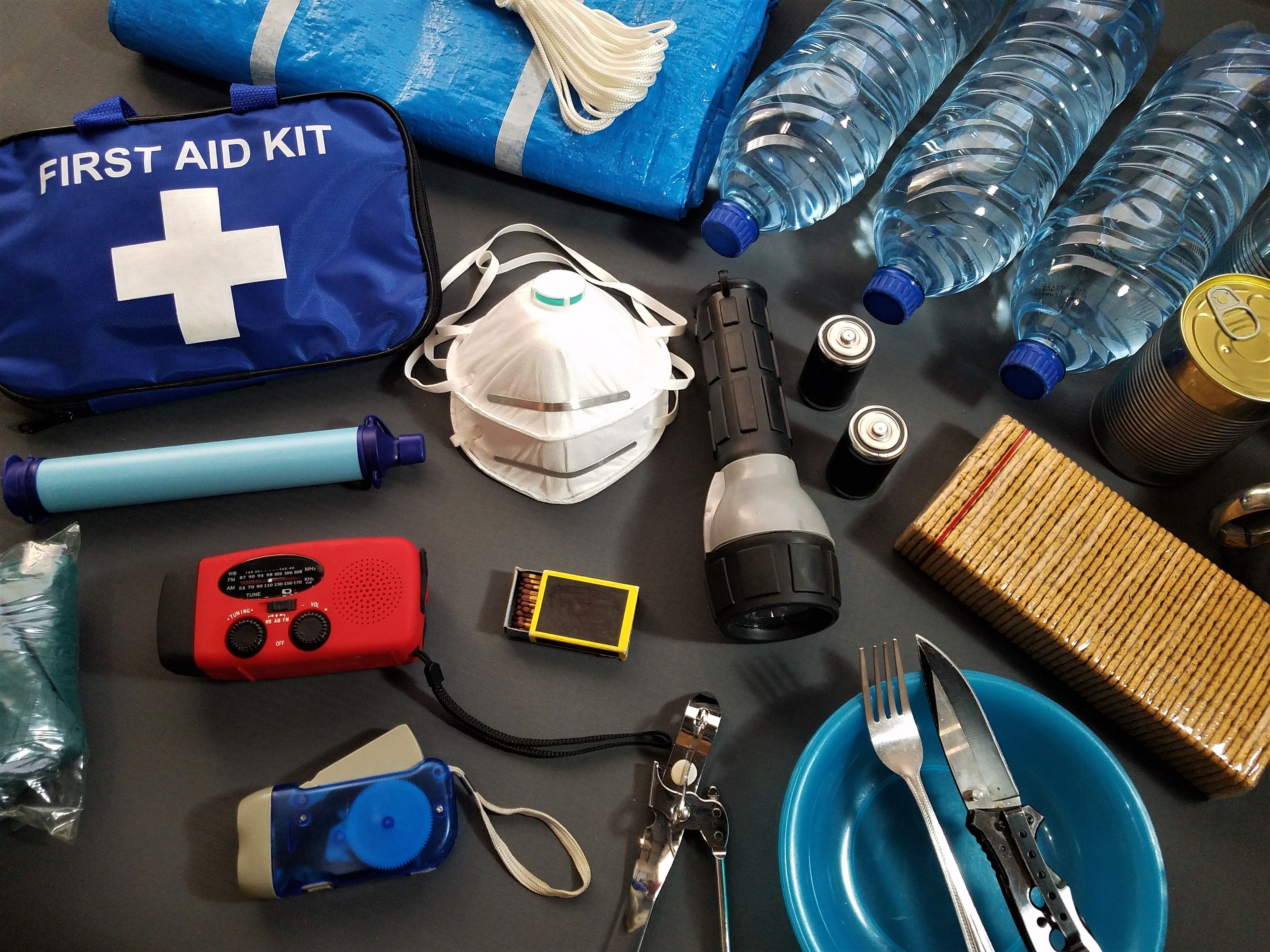
Three Days of Water
Oct 28, 2026 · 13m
Last Thursday the Defence Secretary Wes Streeting went on Question Time and asked the whole country to put an emergency kit together. Three days of bottled water, tinned food, a wind up torch, a...

They Didn’t Know Why They Came
Oct 21, 2026 · 11m
A teenager in a Paris suburb stands in front of a camera and describes his school. The roof lets the rain in, there’s no heating and the desks are broken. He’s just telling the world what it’s like to...

The Price of Stew
Oct 14, 2026 · 12m
If you’ve stood at a petrol station forecourt recently with a diesel nozzle in your hand, you’ll know the feeling. You squeeze the trigger, you watch the numbers on the display turn over, and...

Who Keeps the Watch?
Oct 7, 2026 · 8m
Most of us have seen the footage. A night sky over Israel, streaks of light rising from the ground to meet other streaks of light coming in, and then those small bursts high overhead as one missile...
Take these sermons with you.
Follow Through the Lens of Eternity Podcast in the Getsermons app to get every new sermon, build playlists, and pick up right where you left off.

