
Paratus
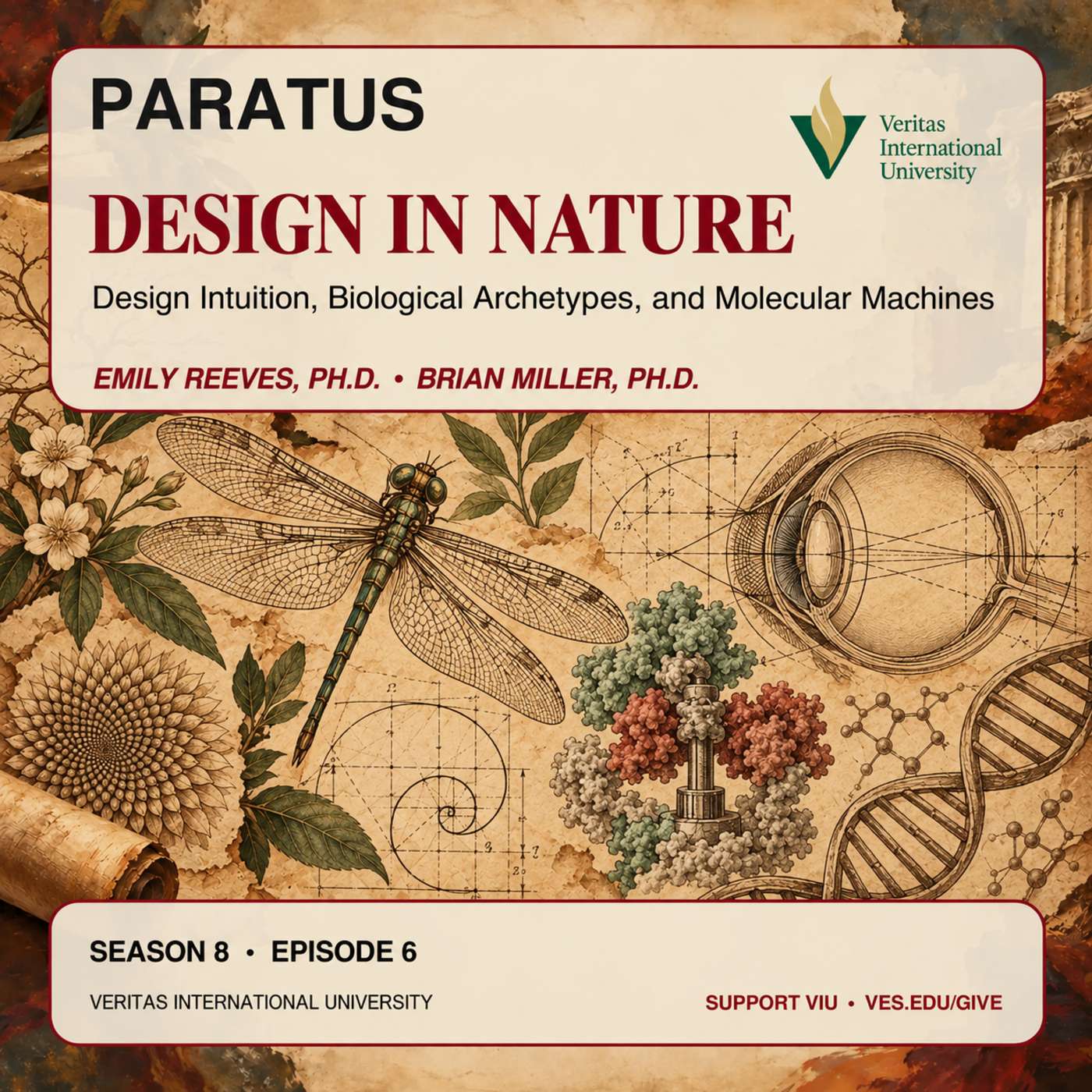
Design in Nature: Does Biology Reveal Intelligent Design? | Emily Reeves & Brian Miller
Oct 17, 2026 · 54m
Prefer sermons downloaded automatically?
About this sermon
Does nature merely look designed, or does biology provide testable evidence of intelligent purpose?
Host Luke Betzner welcomes biochemist Emily Reeves, Ph.D., and physicist Brian Miller, Ph.D., of Discovery Institute’s Center for Science and Culture for a wide-ranging discussion of design in nature.
Reeves and Miller explain why human beings reliably recognize design, how scientific testing can distinguish purposeful organization from accidental patterns, and why natural selection may describe the filtering and optimization of existing biological variation without explaining the origin of organisms’ integrated architecture. They examine biological archetypes, constrained variation, molecular machines, protein-sequence rarity, and the engineering principles found in vision, hearing, and cellular systems.
In this episode:
Why design intuition deserves serious scientific consideration
How lived experience and the scientific method work together
Why some scientists resist design explanations
The difference between the survival of the fittest and the arrival of the fittest
Natural selection as a population-level filtering mechanism
Biological archetypes and constrained variation
Why similarity does not necessarily establish common ancestry
The probability problem confronting unguided protein formation
Molecular machines and mitochondrial Complex I
The integrated engineering of human vision and hearing
Chapters:
00:00 Paratus and Veritas International University
00:27 Introducing Emily Reeves and Brian Miller
01:16 The guests’ scientific backgrounds
03:05 Why design intuition should be taken seriously
07:11 Cookies, know-how, and recognizing intelligent activity
10:30 Why people resist evidence of design
13:43 From designed artifacts to living systems
16:48 What natural selection can and cannot explain
21:38 Adaptation, variation, and biological architecture
27:09 Archetypes and the limits of evolutionary change
33:38 Empirical and theoretical evidence for fixed patterns
38:29 Protein rarity and the probability problem
42:26 Molecular machines and mitochondrial Complex I
46:39 The extraordinary engineering of vision and hearing
51:20 Recommended websites, books, and research
53:51 Support Paratus and preview the next episode
About the guests:
Emily Reeves, Ph.D., is a research scientist with Discovery Institute’s Center for Science and Culture. Her background is in biochemistry, systems biology, and the application of engineering methodologies to biological research.
Brian Miller, Ph.D., is Senior Fellow and Research Coordinator for Discovery Institute’s Center for Science and Culture. He earned his doctorate in complex systems physics from Duke University and studies subjects including the origin of life, protein rarity, thermodynamics, and engineering principles in biology. Brian Miller’s Discovery Institute profile
Resources mentioned:
IntelligentDesign.org
Science and Culture Today
Douglas Axe, Undeniable
Steve Laufmann and Howard Glicksman, Your Designed Body
Steve Laufmann and Howard Glicksman, Your Amazing Body
Stuart Burgess, Ultimate Engineering
“The Broad Utility of the Theory of Intelligent Design to Guide Scientific Research” by Casey Luskin, Emily Reeves, Brian Miller, and Jonathan McLatchie
This discussion continues Season 8 of Paratus, examining science and the Christian faith through The Comprehensive Guide to Science and Faith, edited by William A. Dembski, Casey Luskin, and Joseph M. Holden.
Support the outreach of Veritas International University: Give to VIU. Your tax-deductible support helps listeners think deeply, stand firmly, and live purposefully.
Learn more about Veritas International University at ves.edu.
More from Paratus
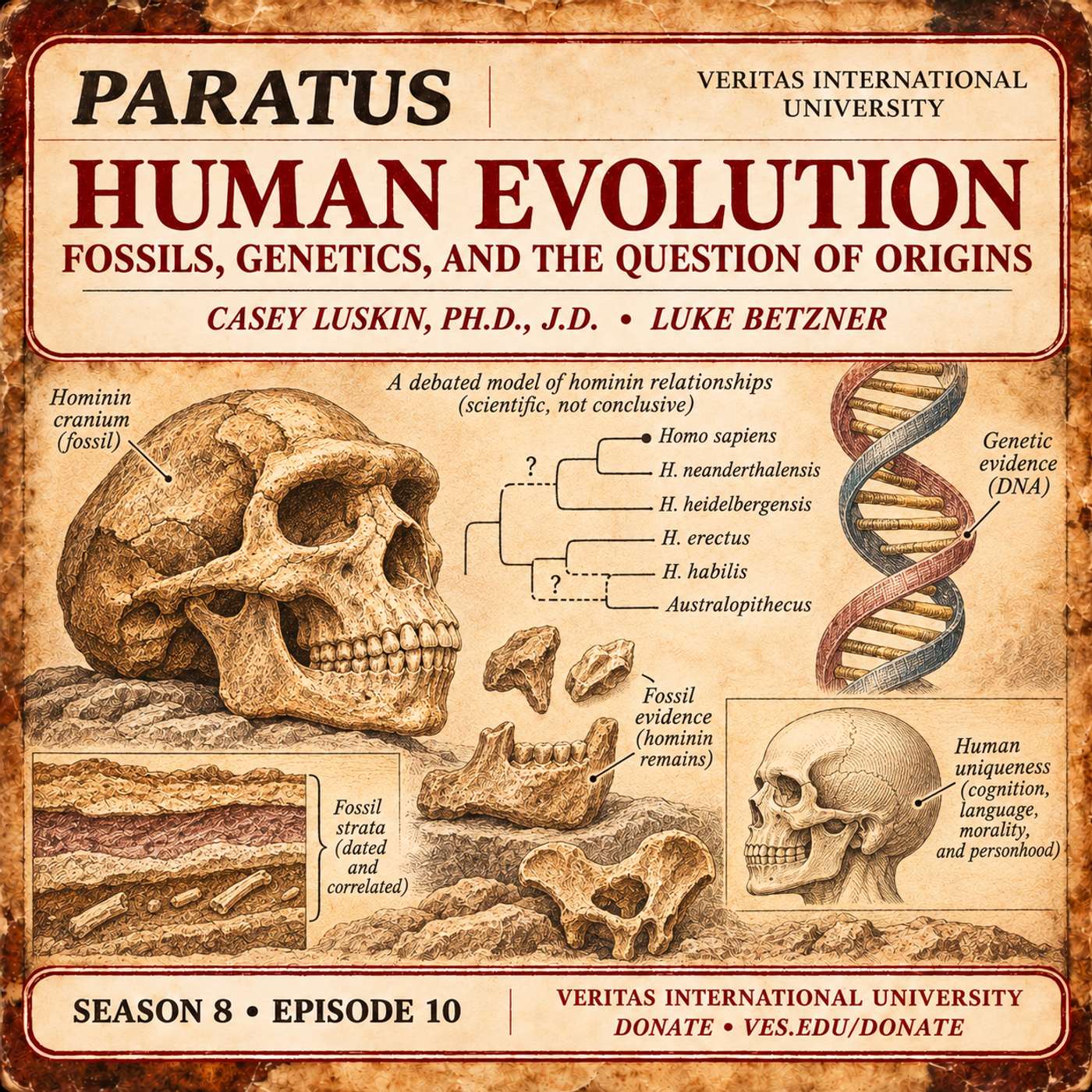
Human Evolution: Fossils, Genetics, and the Question of Origins | Casey Luskin, Ph.D., J.D.
Dr. Casey Luskin, Luke Betzner · Nov 14, 2026 · 1h 2m
What does the fossil record actually show about human origins—and how much confidence should we place in claims of a clear evolutionary lineage from ape-like ancestors to modern humans?In this...
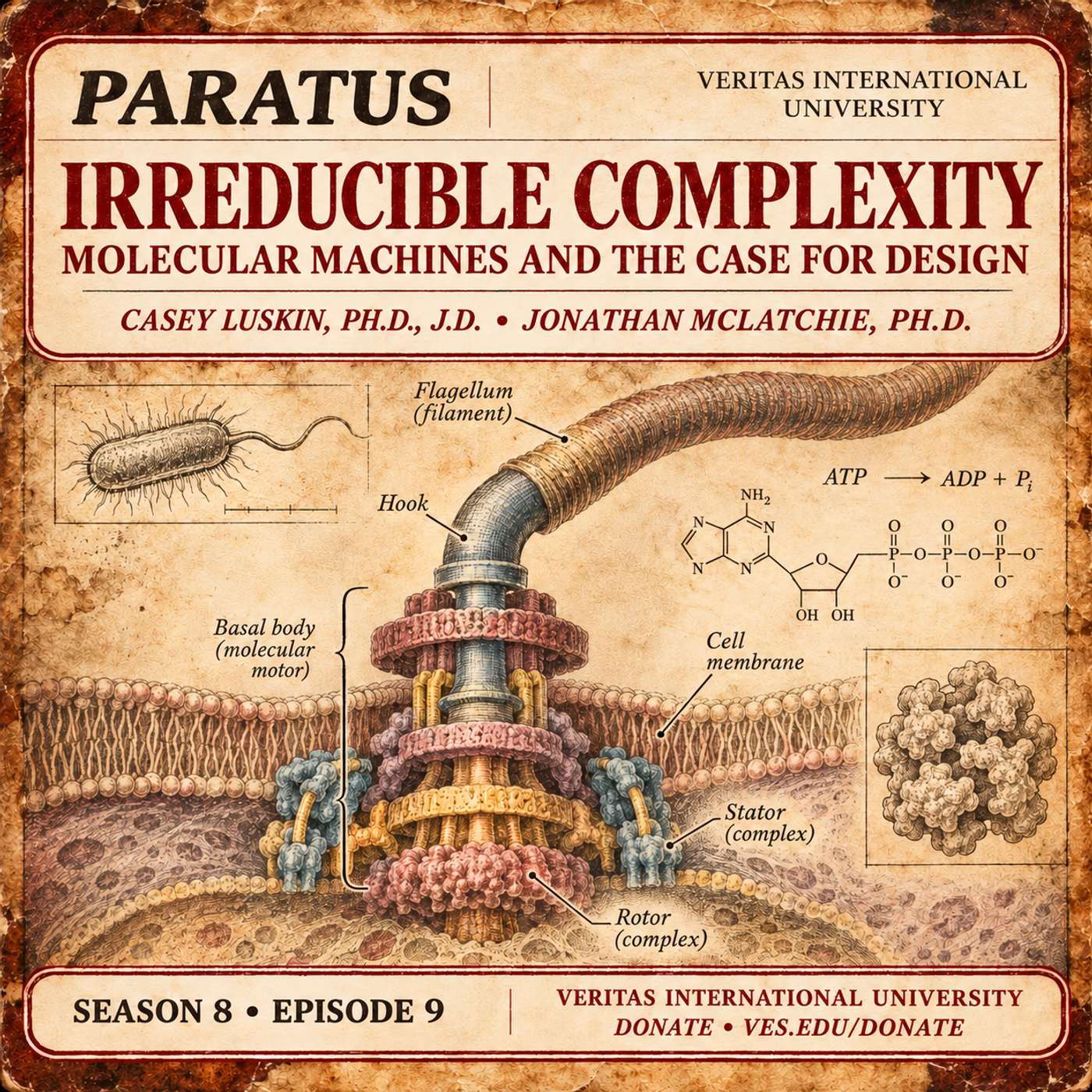
Irreducible Complexity: Can Darwinian Evolution Build Molecular Machines? | Casey Luskin & Jonathan McLatchie
Dr. Casey Luskin, Dr. Jonathan McLatchie · Nov 7, 2026 · 1h 8m
Can Darwinian evolution build the irreducibly complex molecular machines found inside living cells—or do these systems point beyond unguided processes to intelligent design?Host Luke Betzner...
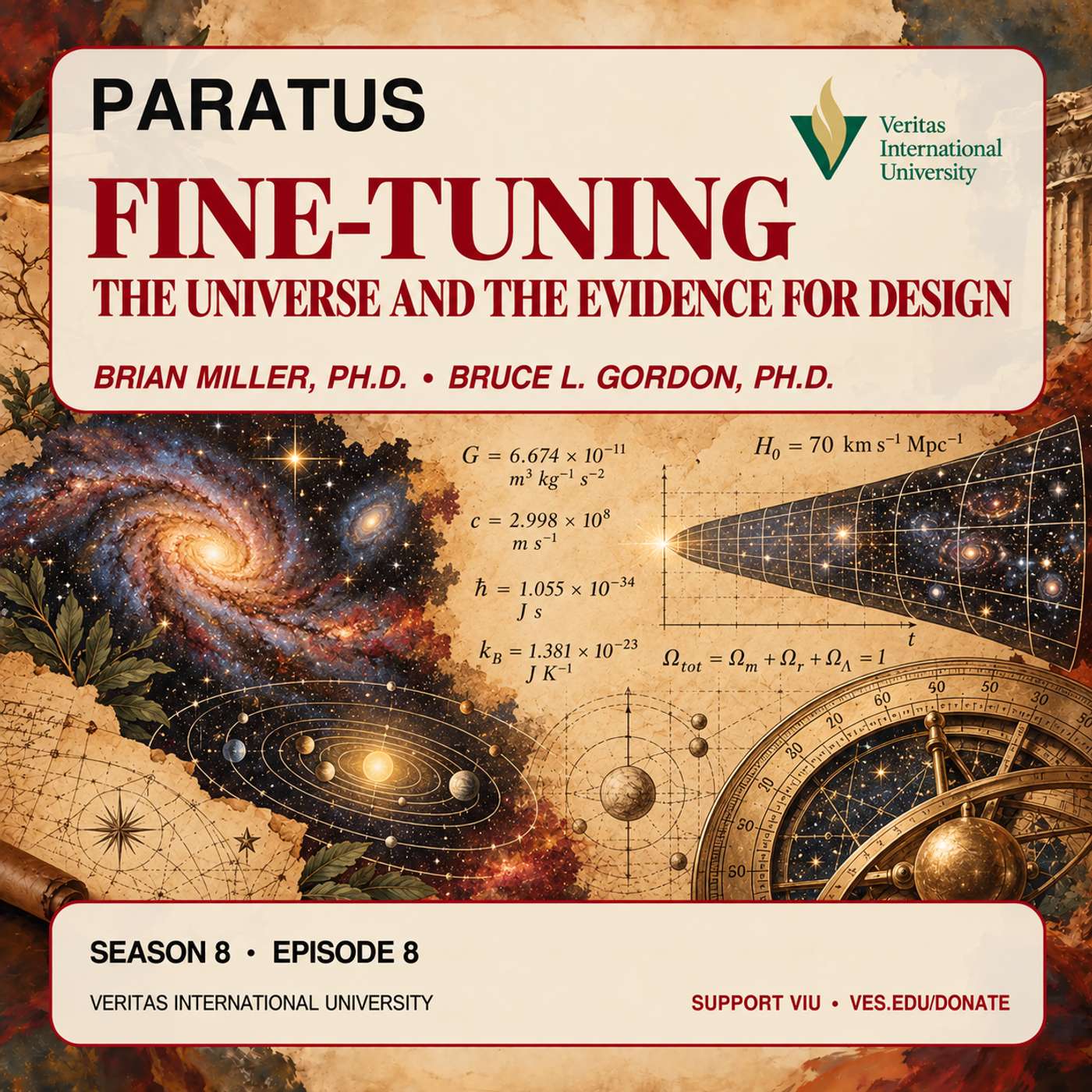
Fine-Tuning: Does the Universe Point to a Designer? | Brian Miller, Ph.D. & Bruce L. Gordon, Ph.D.
Oct 31, 2026 · 1h 5m
Does the fine-tuning of the universe provide evidence of purpose and intelligent design? Luke Betzner welcomes physicist Brian Miller, Ph.D., and philosopher of physics Bruce L. Gordon, Ph.D., for a...
The Positive Case for Intelligent Design | William A. Dembski, Ph.D.
Oct 24, 2026 · 1h 5m
Can intelligent design make a positive, testable scientific case—or is it merely a criticism of Darwinian evolution? Luke Betzner welcomes mathematician, philosopher, and intelligent-design theorist...
Why Intelligent Design Matters | William A. Dembski
Oct 10, 2026 · 1h 5m
Can patterns in nature provide reliable scientific evidence of intelligence—and why does that question matter for Christian faith and contemporary culture?Dr. William A. Dembski joins host Luke...
What Is the Biblical and Scientific Case for a Historical Adam and Eve? | Casey Luskin & Michael Keas
Oct 3, 2026 · 55m
Were Adam and Eve real historical people, and how should Christians evaluate scientific arguments about human origins? Host Luke Betzner welcomes Dr. Casey Luskin and Dr. Michael Keas to examine the...
Take these sermons with you.
Follow Paratus in the Getsermons app to get every new sermon, build playlists, and pick up right where you left off.

