
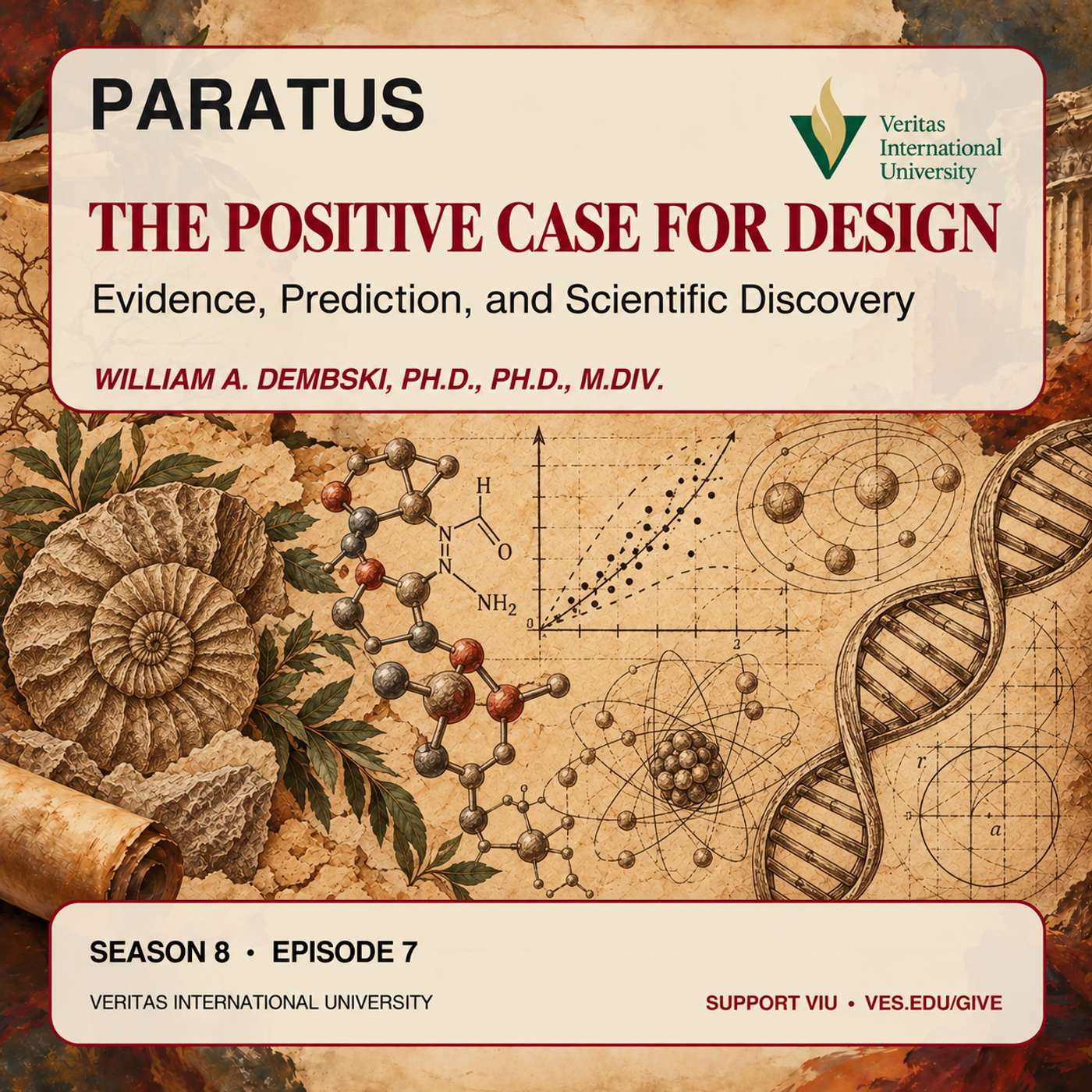
Paratus
The Positive Case for Intelligent Design | William A. Dembski, Ph.D.
Oct 24, 2026 · 1h 5m
Prefer sermons downloaded automatically?
About this sermon
Can intelligent design make a positive, testable scientific case—or is it merely a criticism of Darwinian evolution? Luke Betzner welcomes mathematician, philosopher, and intelligent-design theorist William A. Dembski, Ph.D., Ph.D., M.Div., for a wide-ranging discussion of how scientists detect the effects of intelligence in nature.
Dembski explains the logic of design inference, distinguishing induction, deduction, and inference to the best explanation. Drawing on examples from SETI, forensic science, archaeology, molecular biology, information theory, genetics, medicine, and paleontology, he argues that intelligent causation can be investigated rigorously and can generate testable expectations. The conversation examines biological codes, molecular machines, the origin of life, natural selection, the Cambrian explosion, orphan genes, information density, and the once-dominant idea of “junk DNA.”
In this episode
What makes the case for intelligent design positive rather than merely critical
How intelligence is detected in SETI, forensics, archaeology, and biology
Induction, deduction, abduction, and inference to the best explanation
DNA, RNA, proteins, biological codes, and the origin of life
The limits of natural selection and evolutionary time
The Cambrian explosion, common ancestry, and the fossil record
Design-based predictions about function, “junk DNA,” and orphan genes
Why intelligent design can guide productive scientific research
Chapters
00:00 Welcome to Paratus
00:26 Luke Betzner introduces William A. Dembski
01:05 Dembski’s background and the design inference
04:21 Induction, deduction, and abduction
06:48 The positive argument for intelligent design
12:27 Testable predictions and present-day causes
13:45 SETI, biological information, and the origin of life
19:37 Agency, molecular machines, and evolutionary theory
25:02 Design thinking, medicine, and biological systems
34:01 Natural selection, artificial selection, and evolutionary limits
40:58 Paleontology and the Cambrian explosion
51:48 Intelligent design as a research program
55:34 Orphan genes and information density
58:32 Final takeaways: science, evidence, and design
01:02:06 Recommended resources
01:04:24 Support VIU and next episode
About the guest
William A. Dembski, Ph.D., Ph.D., M.Div., is a mathematician and philosopher, a Founding and Senior Fellow of the Center for Science and Culture, and a Distinguished Fellow of the Walter Bradley Center for Natural and Artificial Intelligence. He has authored or edited more than twenty-five books and has published across mathematics, engineering, biology, philosophy, and theology.
Resources
William A. Dembski at the Discovery Institute
The Design Inference, Second Edition, by William A. Dembski and Winston Ewert
The Comprehensive Guide to Science and Faith, edited by William A. Dembski, Casey Luskin, and Joseph M. Holden
Support Paratus and Veritas International University: Visit ves.edu/give. Your tax-deductible gift helps VIU equip Christians to think deeply, stand firmly, and live purposefully.
Paratus is the broadcast ministry of Veritas International University, helping Christians develop a biblical worldview and think scripturally and soundly about the Christian faith and culture.
Next episode: Fine-Tuning with Brian Miller, Ph.D., and Bruce L. Gordon, Ph.D.
More from Paratus
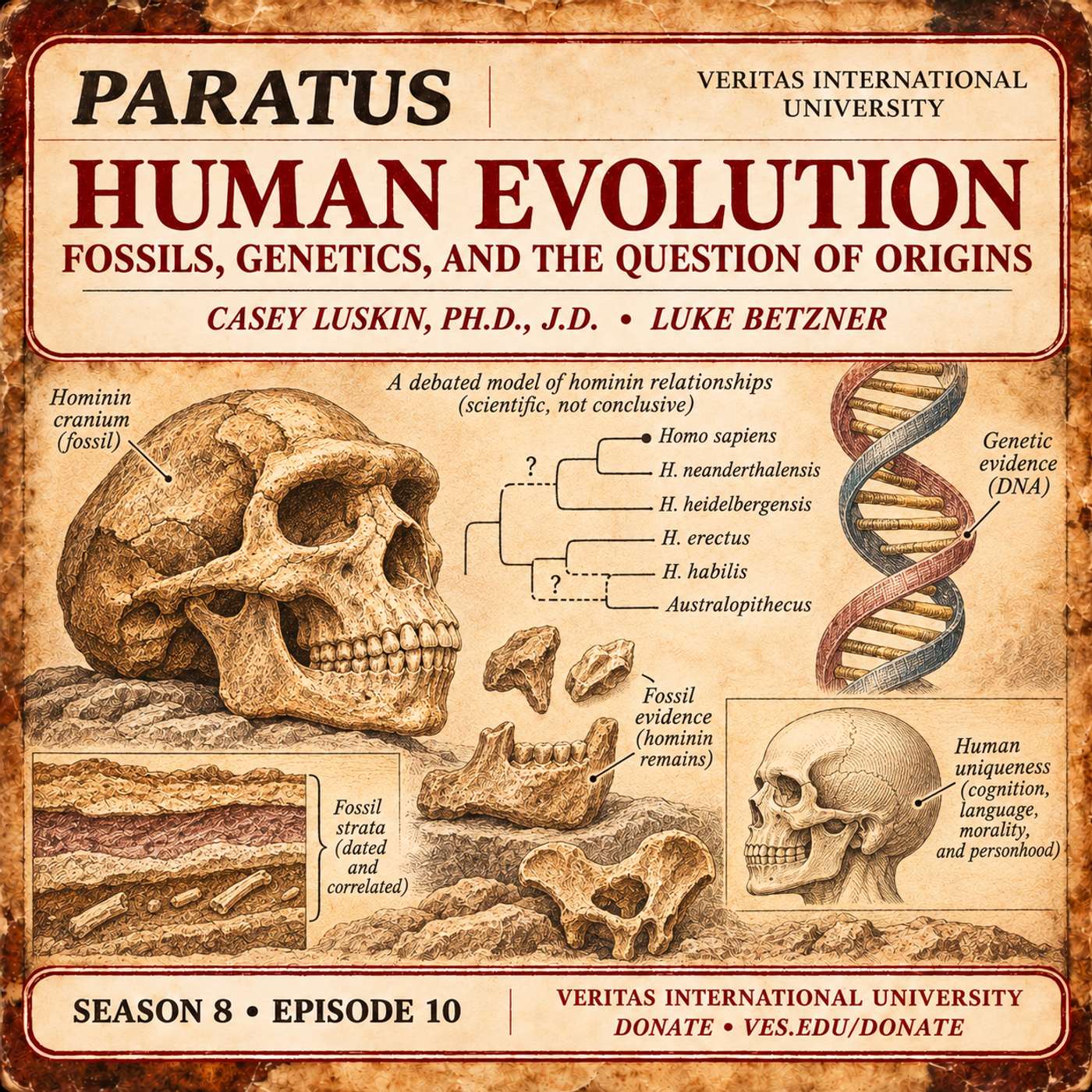
Human Evolution: Fossils, Genetics, and the Question of Origins | Casey Luskin, Ph.D., J.D.
Dr. Casey Luskin, Luke Betzner · Nov 14, 2026 · 1h 2m
What does the fossil record actually show about human origins—and how much confidence should we place in claims of a clear evolutionary lineage from ape-like ancestors to modern humans?In this...
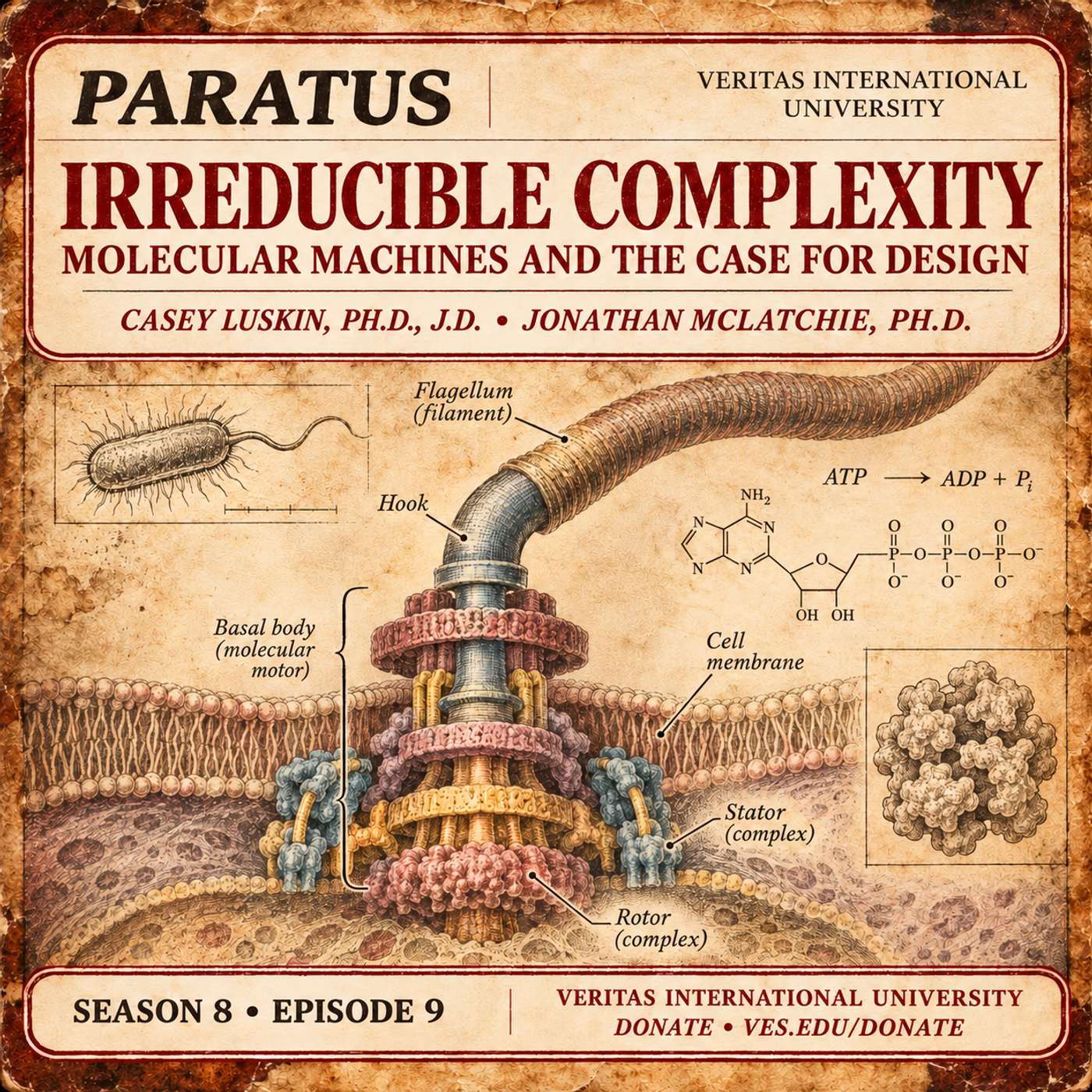
Irreducible Complexity: Can Darwinian Evolution Build Molecular Machines? | Casey Luskin & Jonathan McLatchie
Dr. Casey Luskin, Dr. Jonathan McLatchie · Nov 7, 2026 · 1h 8m
Can Darwinian evolution build the irreducibly complex molecular machines found inside living cells—or do these systems point beyond unguided processes to intelligent design?Host Luke Betzner...
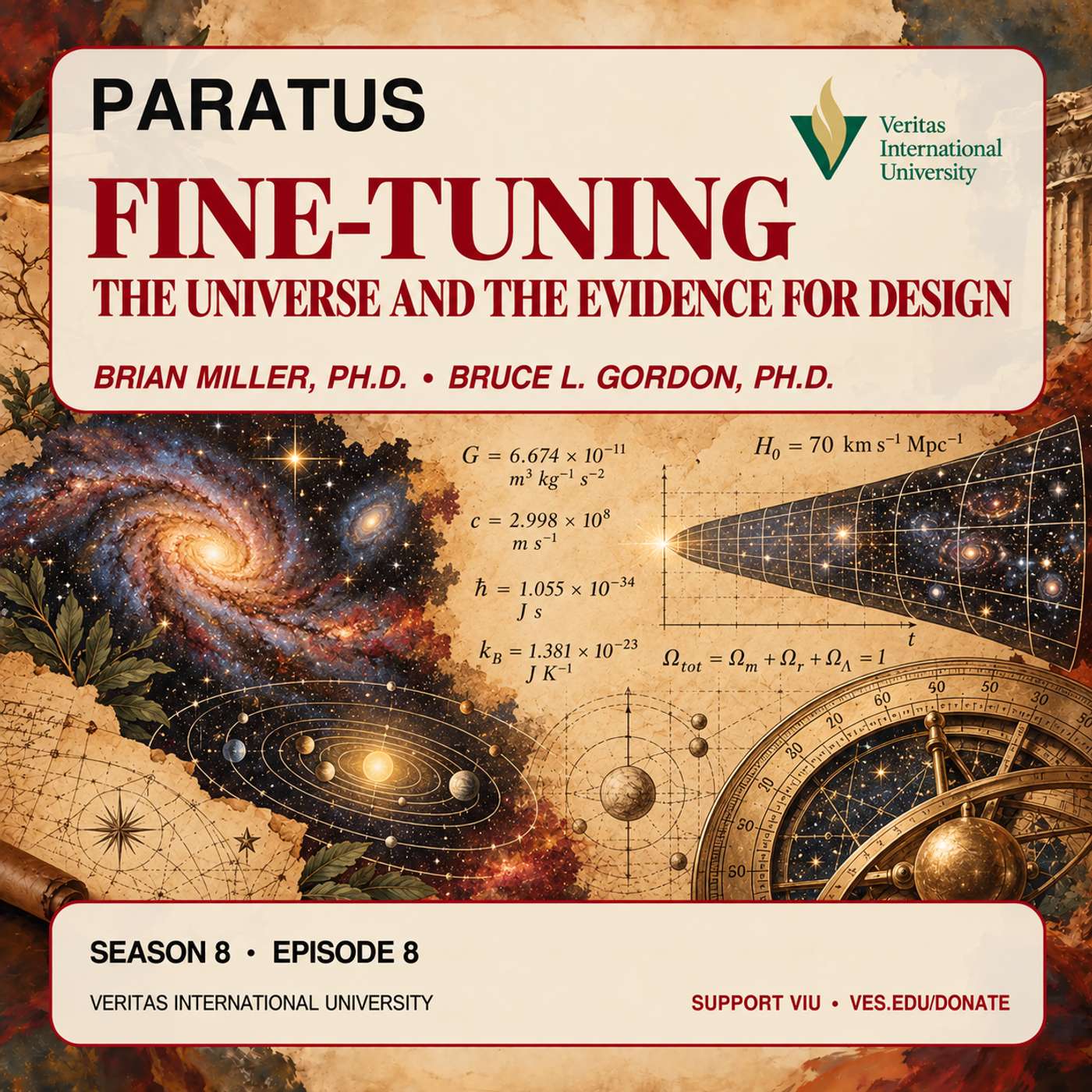
Fine-Tuning: Does the Universe Point to a Designer? | Brian Miller, Ph.D. & Bruce L. Gordon, Ph.D.
Oct 31, 2026 · 1h 5m
Does the fine-tuning of the universe provide evidence of purpose and intelligent design? Luke Betzner welcomes physicist Brian Miller, Ph.D., and philosopher of physics Bruce L. Gordon, Ph.D., for a...
Design in Nature: Does Biology Reveal Intelligent Design? | Emily Reeves & Brian Miller
Oct 17, 2026 · 54m
Does nature merely look designed, or does biology provide testable evidence of intelligent purpose?Host Luke Betzner welcomes biochemist Emily Reeves, Ph.D., and physicist Brian Miller, Ph.D., of...
Why Intelligent Design Matters | William A. Dembski
Oct 10, 2026 · 1h 5m
Can patterns in nature provide reliable scientific evidence of intelligence—and why does that question matter for Christian faith and contemporary culture?Dr. William A. Dembski joins host Luke...
What Is the Biblical and Scientific Case for a Historical Adam and Eve? | Casey Luskin & Michael Keas
Oct 3, 2026 · 55m
Were Adam and Eve real historical people, and how should Christians evaluate scientific arguments about human origins? Host Luke Betzner welcomes Dr. Casey Luskin and Dr. Michael Keas to examine the...
Take these sermons with you.
Follow Paratus in the Getsermons app to get every new sermon, build playlists, and pick up right where you left off.

