
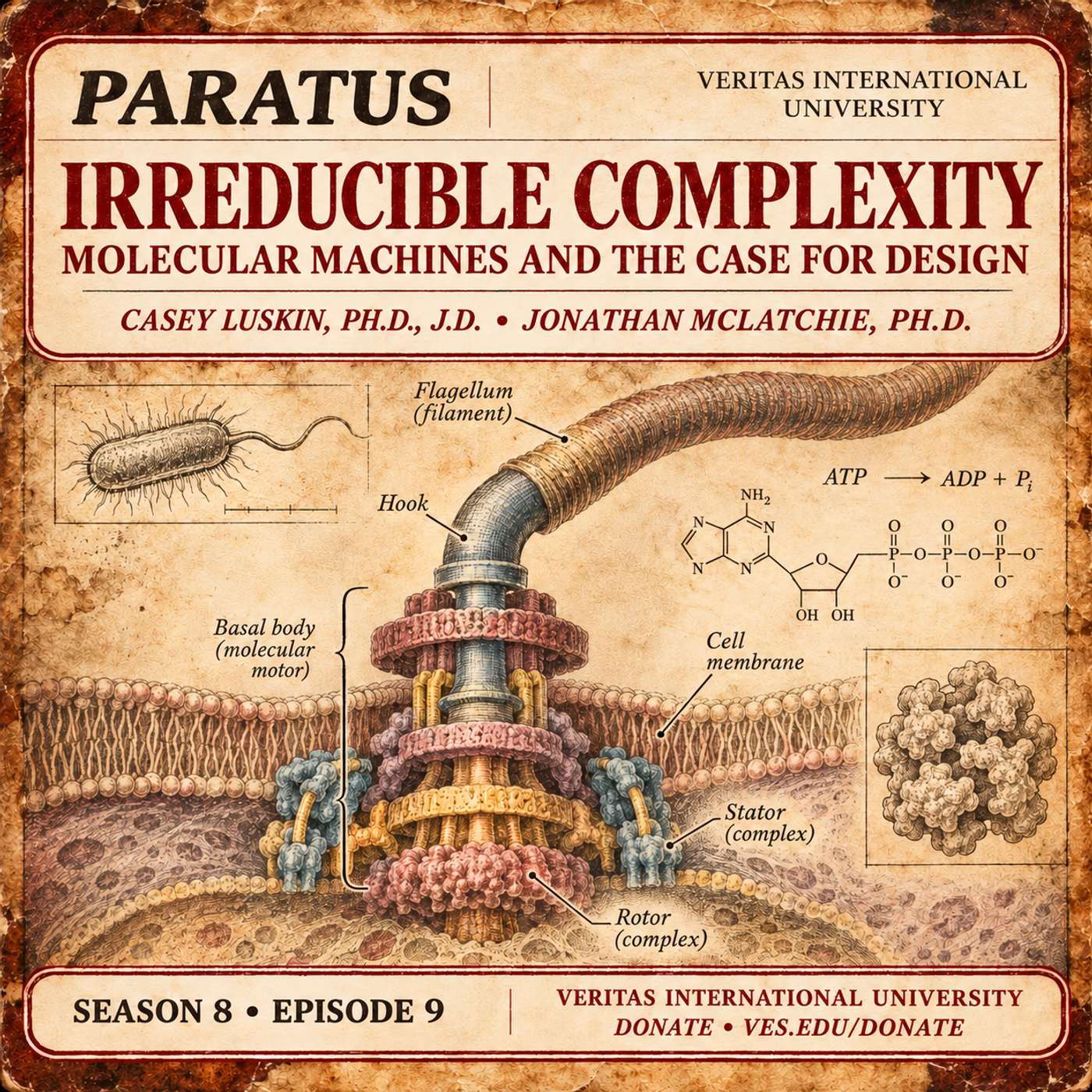
Paratus
Irreducible Complexity: Can Darwinian Evolution Build Molecular Machines? | Casey Luskin & Jonathan McLatchie
Dr. Casey Luskin, Dr. Jonathan McLatchie · Nov 7, 2026 · 1h 8m
Prefer sermons downloaded automatically?
About this sermon
Can Darwinian evolution build the irreducibly complex molecular machines found inside living cells—or do these systems point beyond unguided processes to intelligent design?
Host Luke Betzner welcomes back Casey Luskin, Ph.D., J.D., Associate Director, Research Director, and Senior Fellow at Discovery Institute’s Center for Science and Culture, and Jonathan McLatchie, Ph.D., Resident Biologist and Fellow at the Center for Science and Culture. Together they examine the biochemical challenge of irreducible complexity: systems whose coordinated parts must work together to accomplish a higher-level function.
The discussion moves from Darwin’s own proposed test of his theory to neo-Darwinism, DNA replication, molecular machines, apoptosis, co-option, and evidence that beneficial mutations often degrade or disable existing functions rather than construct genuinely new machinery. The guests also explain the positive case for design using empirical reasoning and Bayesian likelihoods.
In this episode:
What irreducible complexity means—and why it matters
Darwin’s “numerous successive slight modifications” criterion
What neo-Darwinism added through genetics and DNA
Why mutation and selection struggle to construct coordinated systems
The DNA replisome, bacteriophages, apoptosis, and molecular machines
Michael Behe’s “Darwin devolves” thesis
Experiments involving E. coli, citrate metabolism, and the TRP-A gene
Polar bears, APOB, and adaptation through loss of function
Co-option, teleology, and the positive case for intelligent design
Chapters
00:26 — Introduction: Casey Luskin and Jonathan McLatchie
01:28 — The guests and their current research
03:44 — Defining irreducible complexity
05:11 — Darwin’s test and the challenge of molecular biology
10:08 — What neo-Darwinism added to Darwin’s theory
18:46 — Mutation, information loss, and Darwin Devolves
22:54 — The irreducibly complex DNA replication machinery
29:24 — Research on DNA replication and bacteriophages
34:11 — Molecular machines inside the cell
38:50 — The “Third Way” and teleology in biology
43:25 — Apoptosis, foresight, and the co-option objection
47:47 — What beneficial-mutation studies actually show
50:10 — E. coli, citrate metabolism, and broken regulation
52:19 — Polar bears, APOB, and adaptive degradation
57:22 — The Bayesian positive case for design
01:01:01 — Final takeaways and the limits of co-option
01:05:54 — Recommended resources
01:07:30 — Support Paratus and preview of Episode 10
Guests
Casey Luskin, Ph.D., J.D. — Associate Director, Research Director, and Senior Fellow, Center for Science and Culture, Discovery Institute.
Jonathan McLatchie, Ph.D. — Resident Biologist and Fellow, Center for Science and Culture, Discovery Institute.
Resources mentioned
Darwin Devolves by Michael J. Behe
Darwin’s Black Box by Michael J. Behe
Undeniable by Douglas Axe
Science and Culture Today
Secrets of the Cell with Michael J. Behe
The Comprehensive Guide to Science and Faith, edited by William A. Dembski, Casey Luskin, and Joseph M. Holden
About Paratus
Paratus—Latin for “prepared”—is the broadcast ministry of Veritas International University. We help Christians develop a biblical worldview and think scripturally and soundly about the Christian faith and contemporary culture.
Learn more at ves.edu. Help sustain this outreach through a tax-deductible gift at ves.edu/donate.
More from Paratus
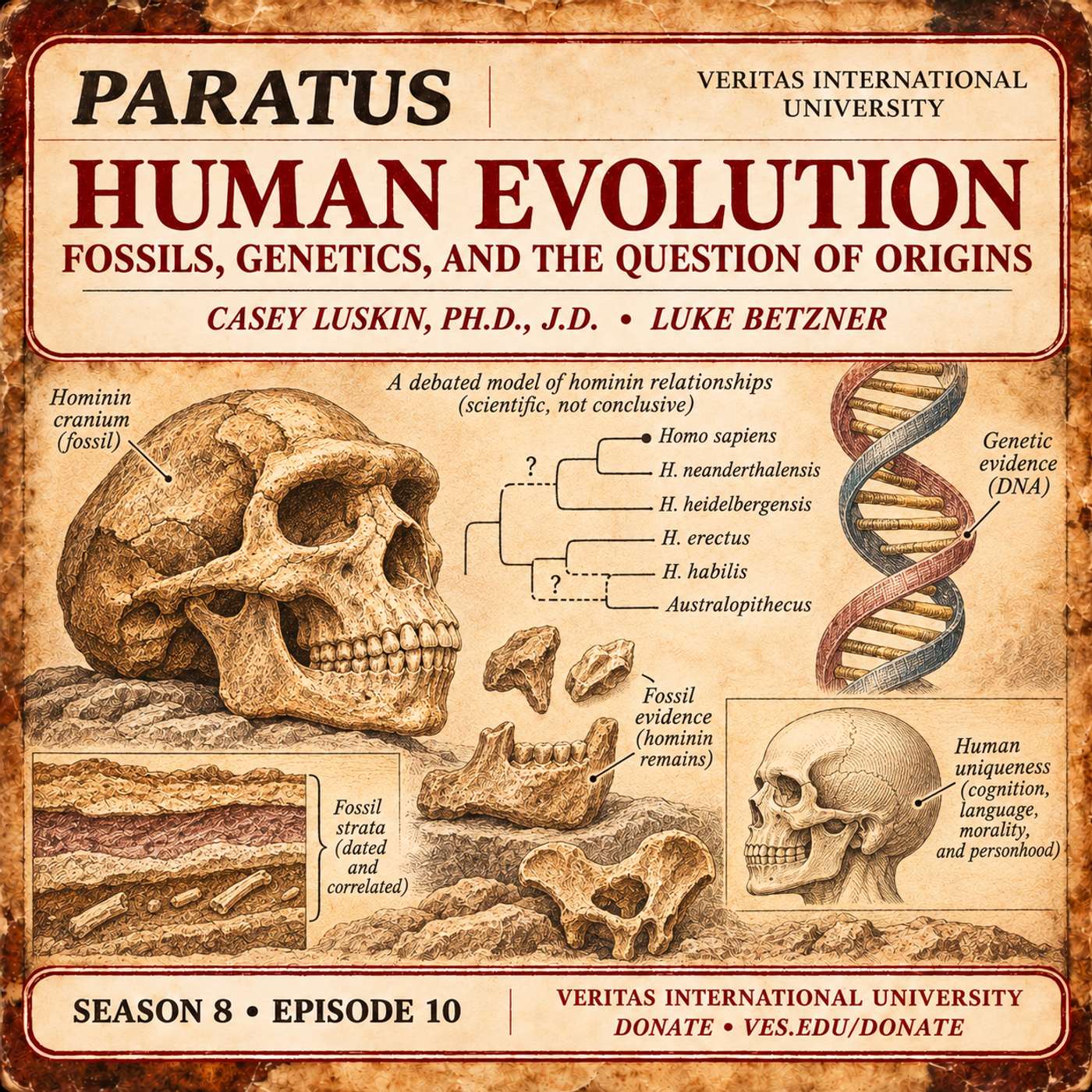
Human Evolution: Fossils, Genetics, and the Question of Origins | Casey Luskin, Ph.D., J.D.
Dr. Casey Luskin, Luke Betzner · Nov 14, 2026 · 1h 2m
What does the fossil record actually show about human origins—and how much confidence should we place in claims of a clear evolutionary lineage from ape-like ancestors to modern humans?In this...
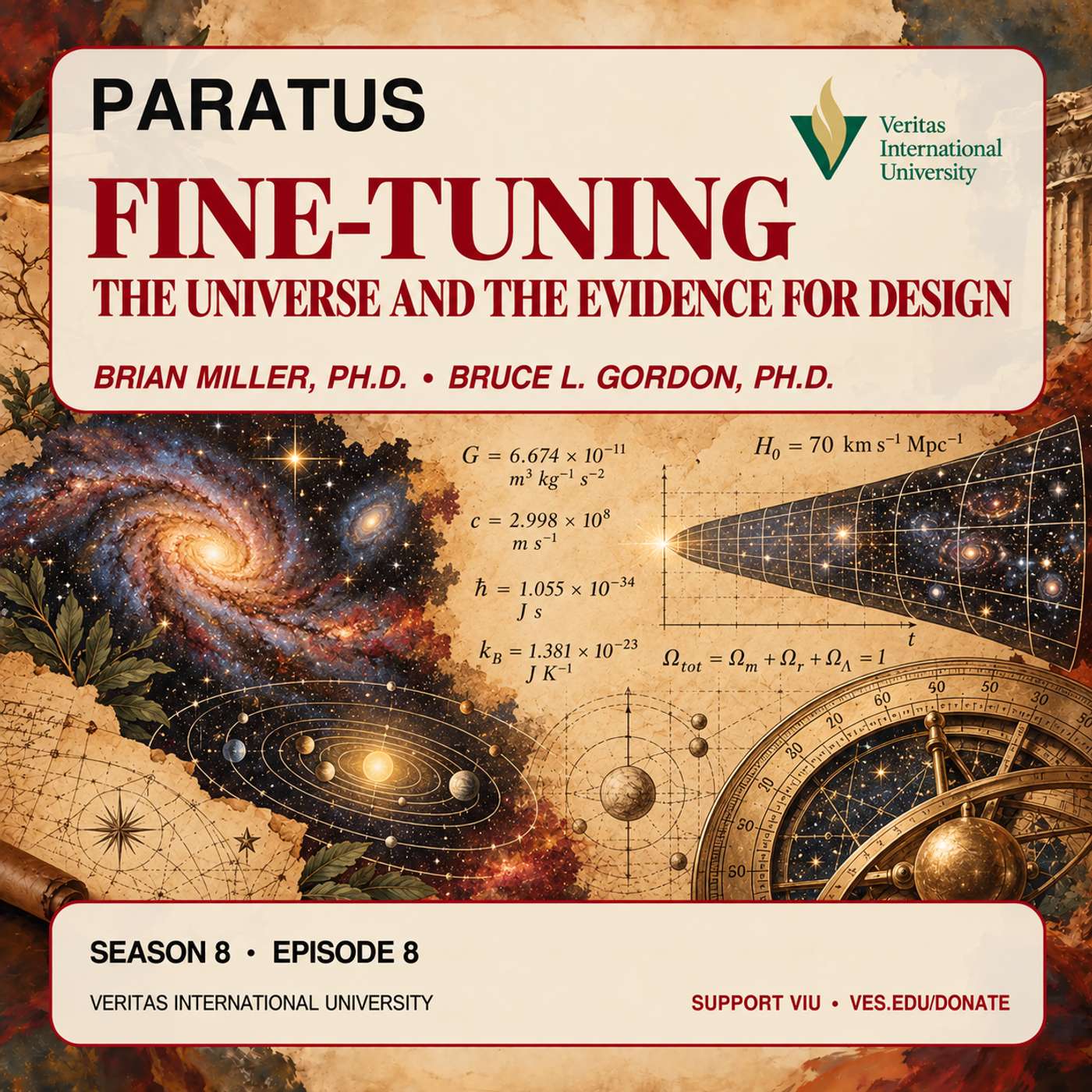
Fine-Tuning: Does the Universe Point to a Designer? | Brian Miller, Ph.D. & Bruce L. Gordon, Ph.D.
Oct 31, 2026 · 1h 5m
Does the fine-tuning of the universe provide evidence of purpose and intelligent design? Luke Betzner welcomes physicist Brian Miller, Ph.D., and philosopher of physics Bruce L. Gordon, Ph.D., for a...
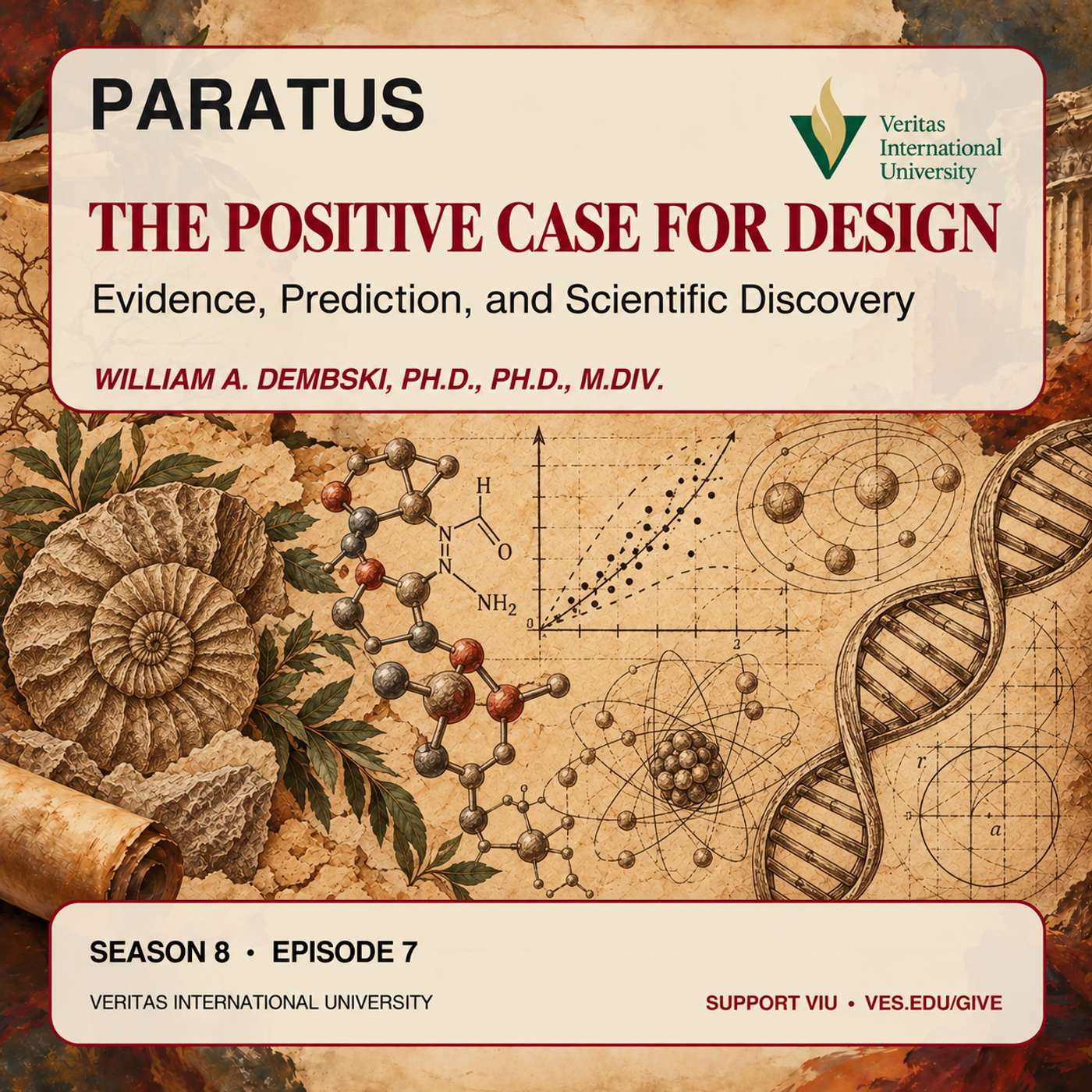
The Positive Case for Intelligent Design | William A. Dembski, Ph.D.
Oct 24, 2026 · 1h 5m
Can intelligent design make a positive, testable scientific case—or is it merely a criticism of Darwinian evolution? Luke Betzner welcomes mathematician, philosopher, and intelligent-design theorist...
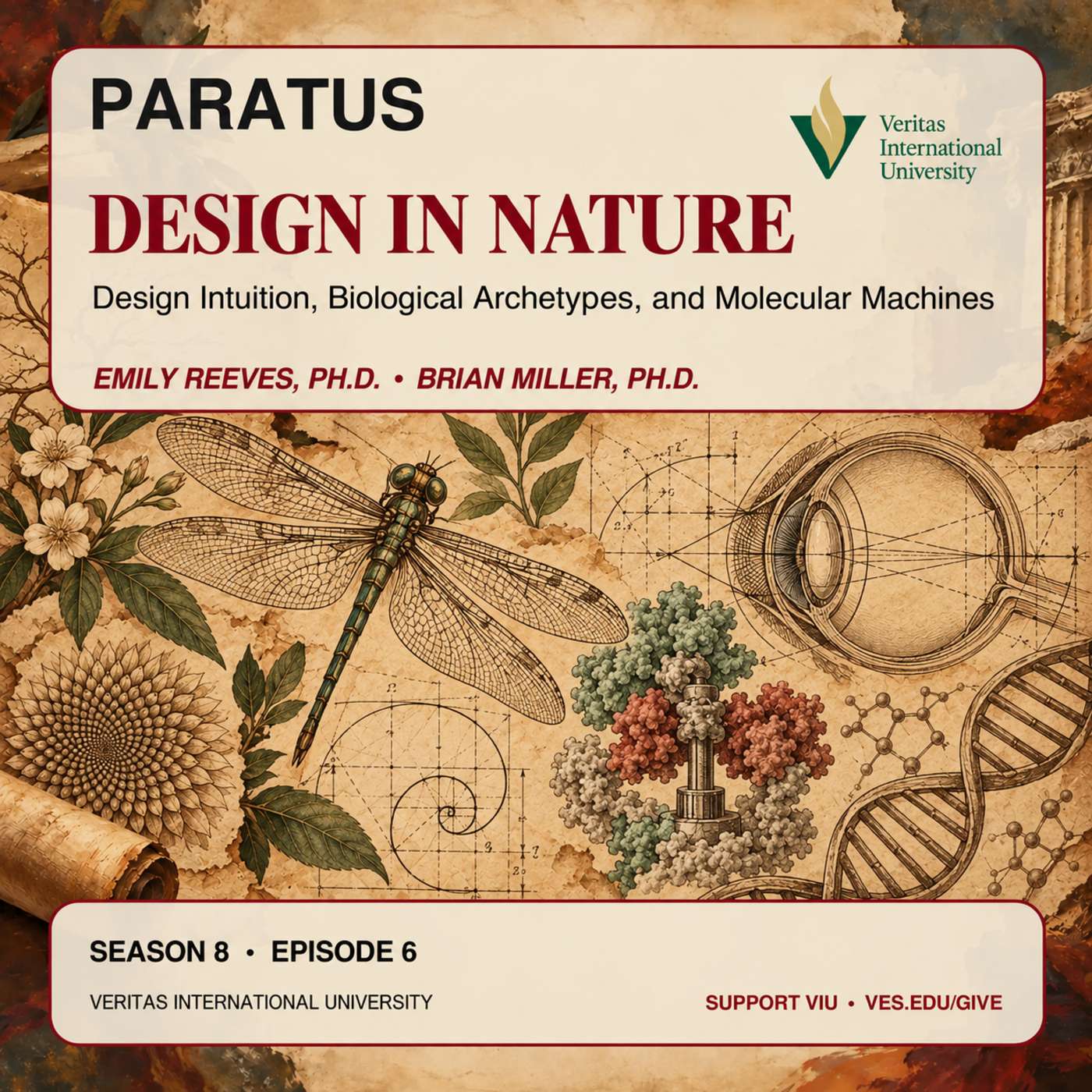
Design in Nature: Does Biology Reveal Intelligent Design? | Emily Reeves & Brian Miller
Oct 17, 2026 · 54m
Does nature merely look designed, or does biology provide testable evidence of intelligent purpose?Host Luke Betzner welcomes biochemist Emily Reeves, Ph.D., and physicist Brian Miller, Ph.D., of...
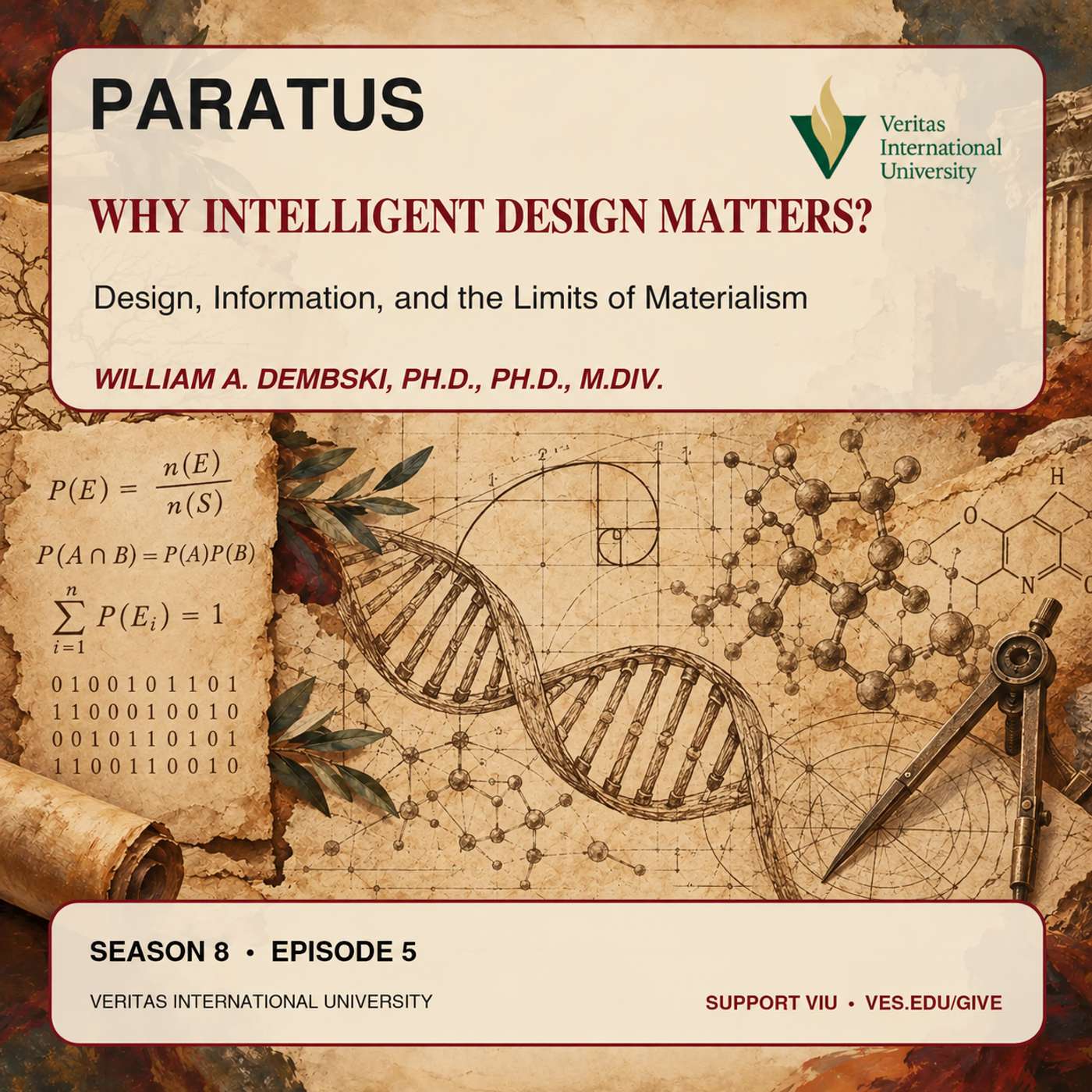
Why Intelligent Design Matters | William A. Dembski
Oct 10, 2026 · 1h 5m
Can patterns in nature provide reliable scientific evidence of intelligence—and why does that question matter for Christian faith and contemporary culture?Dr. William A. Dembski joins host Luke...
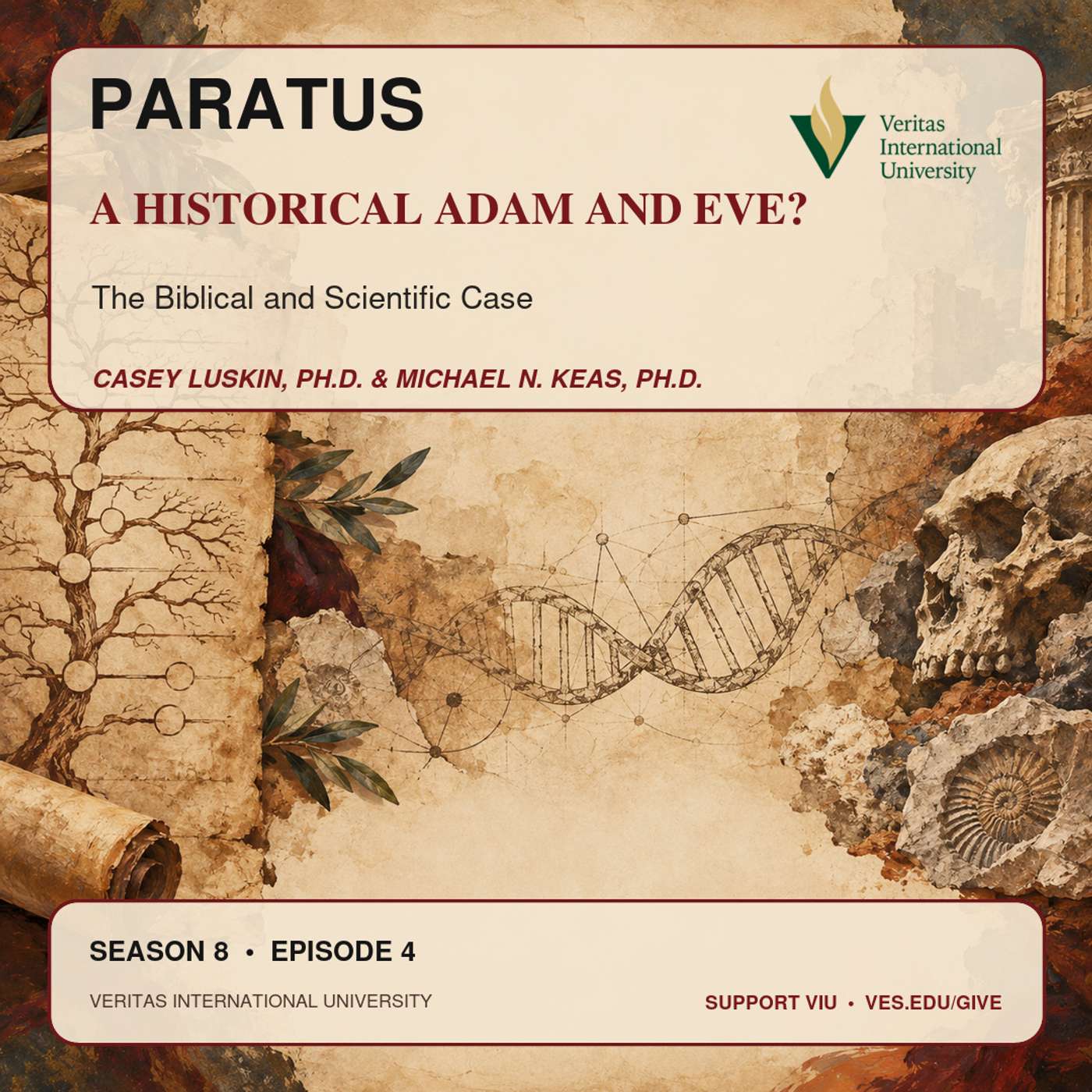
What Is the Biblical and Scientific Case for a Historical Adam and Eve? | Casey Luskin & Michael Keas
Oct 3, 2026 · 55m
Were Adam and Eve real historical people, and how should Christians evaluate scientific arguments about human origins? Host Luke Betzner welcomes Dr. Casey Luskin and Dr. Michael Keas to examine the...
Take these sermons with you.
Follow Paratus in the Getsermons app to get every new sermon, build playlists, and pick up right where you left off.

