
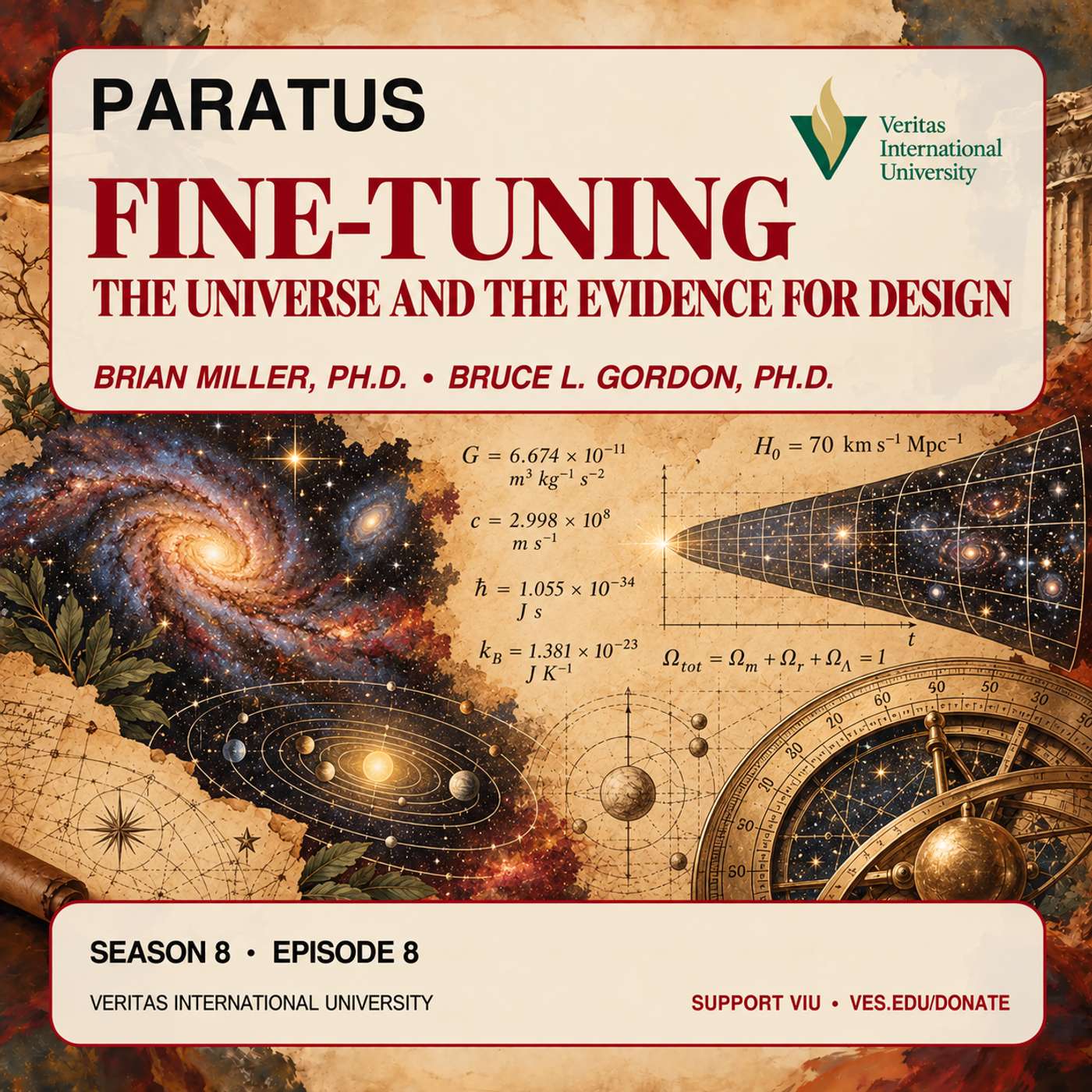
Paratus
Fine-Tuning: Does the Universe Point to a Designer? | Brian Miller, Ph.D. & Bruce L. Gordon, Ph.D.
Oct 31, 2026 · 1h 5m
Prefer sermons downloaded automatically?
About this sermon
Does the fine-tuning of the universe provide evidence of purpose and intelligent design? Luke Betzner welcomes physicist Brian Miller, Ph.D., and philosopher of physics Bruce L. Gordon, Ph.D., for a rigorous and accessible exploration of the physical conditions that make life possible.
The conversation examines the form of nature’s laws, physical constants, and the universe’s initial conditions; Fred Hoyle’s prediction of the carbon resonance; cosmic expansion, dark energy, inflation, and entropy; and the interconnected requirements for galaxies, stars, planets, chemistry, biological life, and technological civilization. Miller and Gordon also explain how fine-tuning probabilities should be assessed responsibly, what the evidence can support scientifically and philosophically, and where specifically Christian theological conclusions require additional historical and revelatory evidence.
In this episode
What scientists mean by cosmic fine-tuning
The laws of nature, physical constants, and initial conditions
Fred Hoyle, carbon-12, and stellar nucleosynthesis
How scientists estimate life-permitting ranges
The expansion rate of the universe, dark energy, and cosmic inflation
Why a life-permitting universe must be immense and ancient
Global and local fine-tuning for galaxies, planets, chemistry, and life
How Earth’s atmosphere, gravity, plate tectonics, and material resources support advanced life
How to combine probability estimates without overstating the evidence
What fine-tuning can—and cannot—tell us about a designer
Chapters
00:00 Welcome to Paratus
00:26 Brian Miller and Bruce Gordon introduced
01:33 Brian Miller’s background and research
03:04 Bruce Gordon’s background and work
04:02 What is cosmic fine-tuning?
07:12 Fred Hoyle and the carbon resonance
11:32 Measuring life-permitting ranges
14:00 Cosmic expansion and dark energy
24:42 Why is the universe so immense and old?
31:47 One integrated life-supporting system
36:59 Fine-tuning for advanced and technological life
45:22 Assessing cumulative probability responsibly
55:41 What fine-tuning implies about purpose and a designer
01:00:15 Recommended resources
01:05:43 Support VIU and next episode
About the guests
Brian Miller, Ph.D., is Research Coordinator and a Senior Fellow of Discovery Institute’s Center for Science and Culture. He earned his doctorate in complex-systems physics from Duke University and researches thermodynamics, information theory, protein rarity, the origin of life, and the application of engineering principles to biological systems.
Bruce L. Gordon, Ph.D., is Associate Research Director and a Senior Fellow of the Center for Science and Culture. He is Professor of the History and Philosophy of Science at Saint Constantine College and holds a doctorate in the history and philosophy of physics from Northwestern University. His work focuses on physics, cosmology, intelligent design, and the relationship between science and faith.
Resources
Brian Miller at Discovery Institute
Bruce Gordon at Discovery Institute
Science and Culture Today
Return of the God Hypothesis by Stephen C. Meyer
A Fortunate Universe: Life in a Finely Tuned Cosmos by Geraint F. Lewis and Luke A. Barnes
The Privileged Planet by Guillermo Gonzalez and Jay W. Richards
God’s Crime Scene by J. Warner Wallace
Just Six Numbers by Martin Rees
The Goldilocks Enigma by Paul Davies
Support Paratus and Veritas International University: Visit ves.edu/donate. Your tax-deductible gift helps VIU equip Christians to think deeply, stand firmly, and live purposefully.
Paratus is the broadcast ministry of Veritas International University, helping Christians develop a biblical worldview and think scripturally and soundly about the Christian faith and culture.
Next episode: Irreducible Complexity with Casey Luskin, Ph.D., and Jonathan McLatchie, Ph.D.
More from Paratus
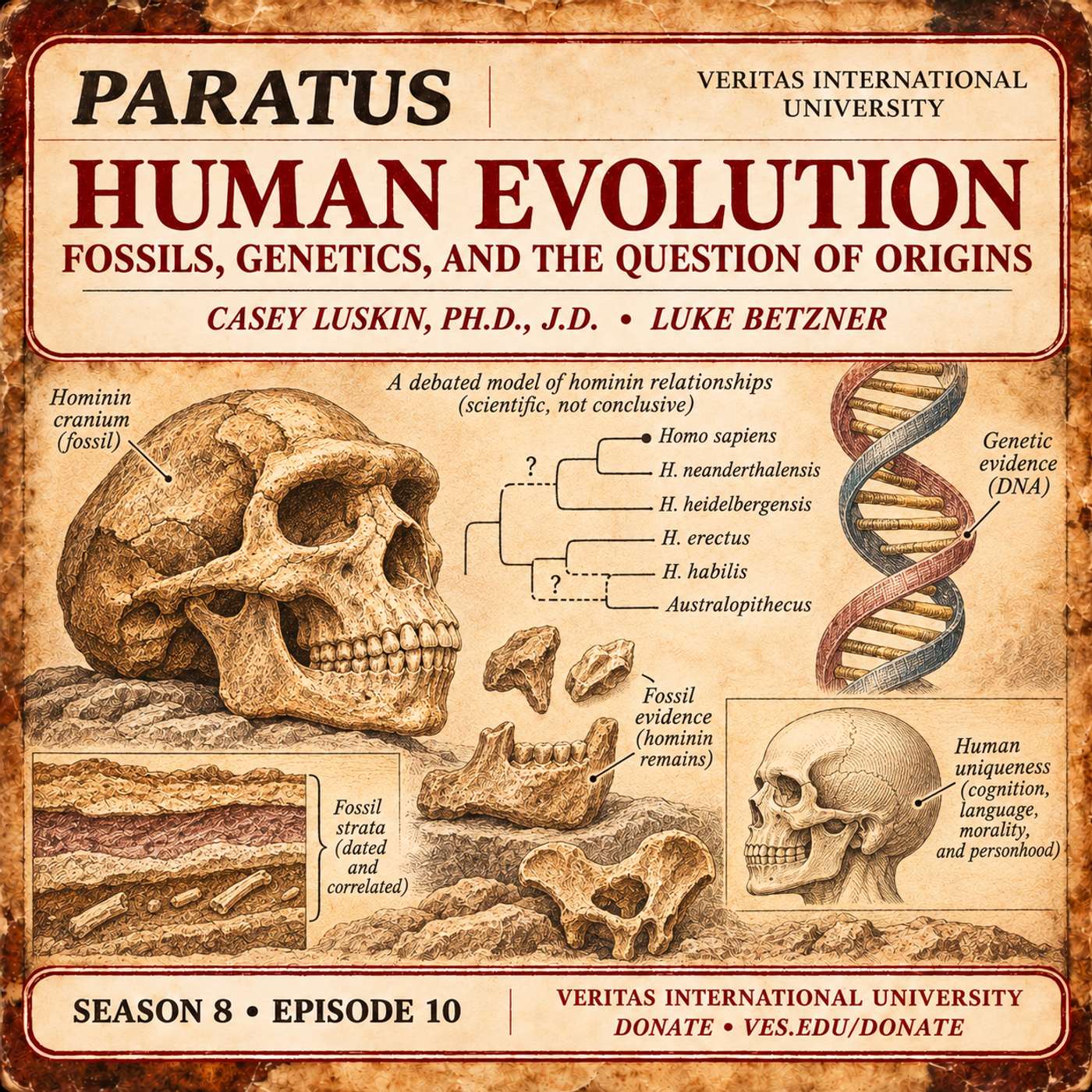
Human Evolution: Fossils, Genetics, and the Question of Origins | Casey Luskin, Ph.D., J.D.
Dr. Casey Luskin, Luke Betzner · Nov 14, 2026 · 1h 2m
What does the fossil record actually show about human origins—and how much confidence should we place in claims of a clear evolutionary lineage from ape-like ancestors to modern humans?In this...
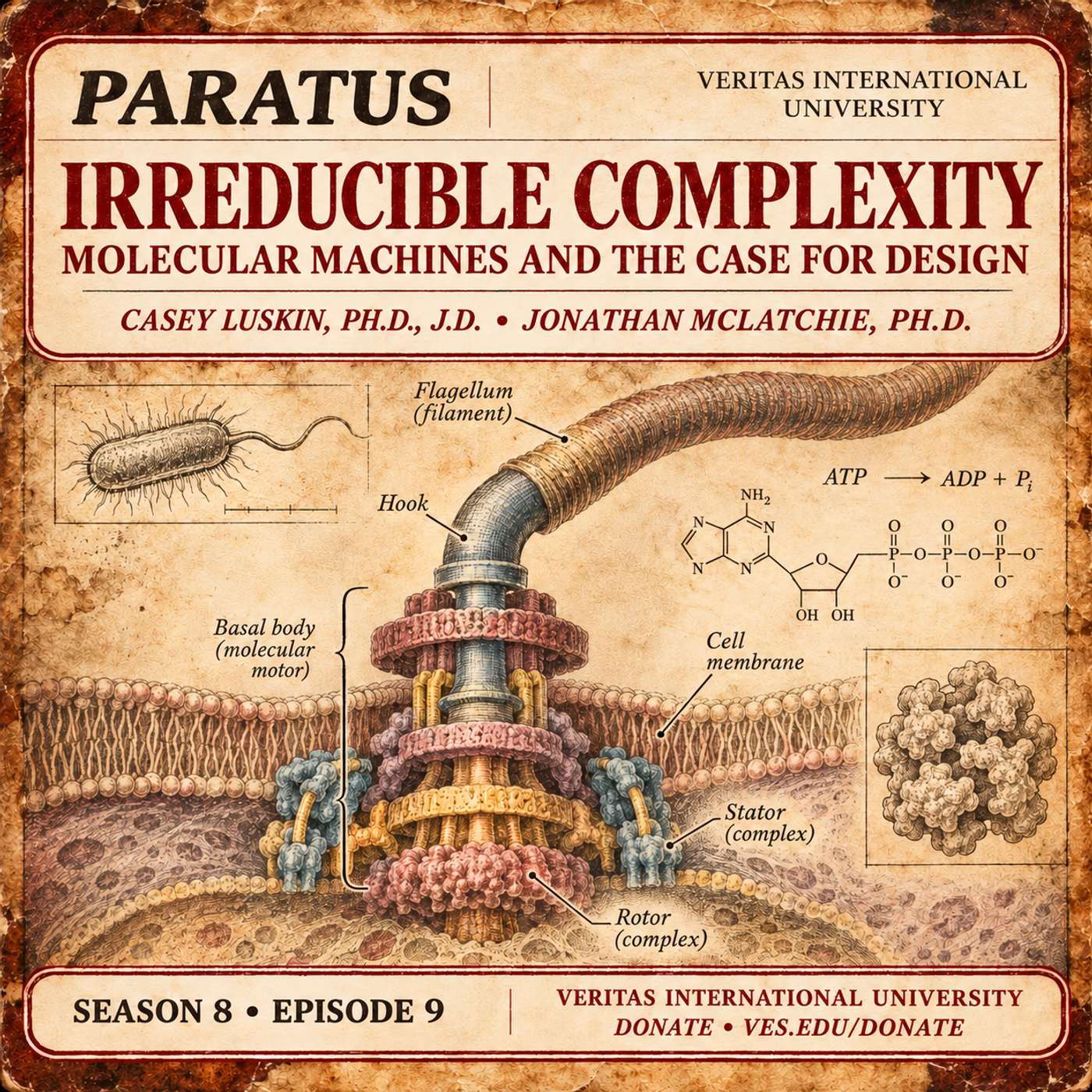
Irreducible Complexity: Can Darwinian Evolution Build Molecular Machines? | Casey Luskin & Jonathan McLatchie
Dr. Casey Luskin, Dr. Jonathan McLatchie · Nov 7, 2026 · 1h 8m
Can Darwinian evolution build the irreducibly complex molecular machines found inside living cells—or do these systems point beyond unguided processes to intelligent design?Host Luke Betzner...
The Positive Case for Intelligent Design | William A. Dembski, Ph.D.
Oct 24, 2026 · 1h 5m
Can intelligent design make a positive, testable scientific case—or is it merely a criticism of Darwinian evolution? Luke Betzner welcomes mathematician, philosopher, and intelligent-design theorist...
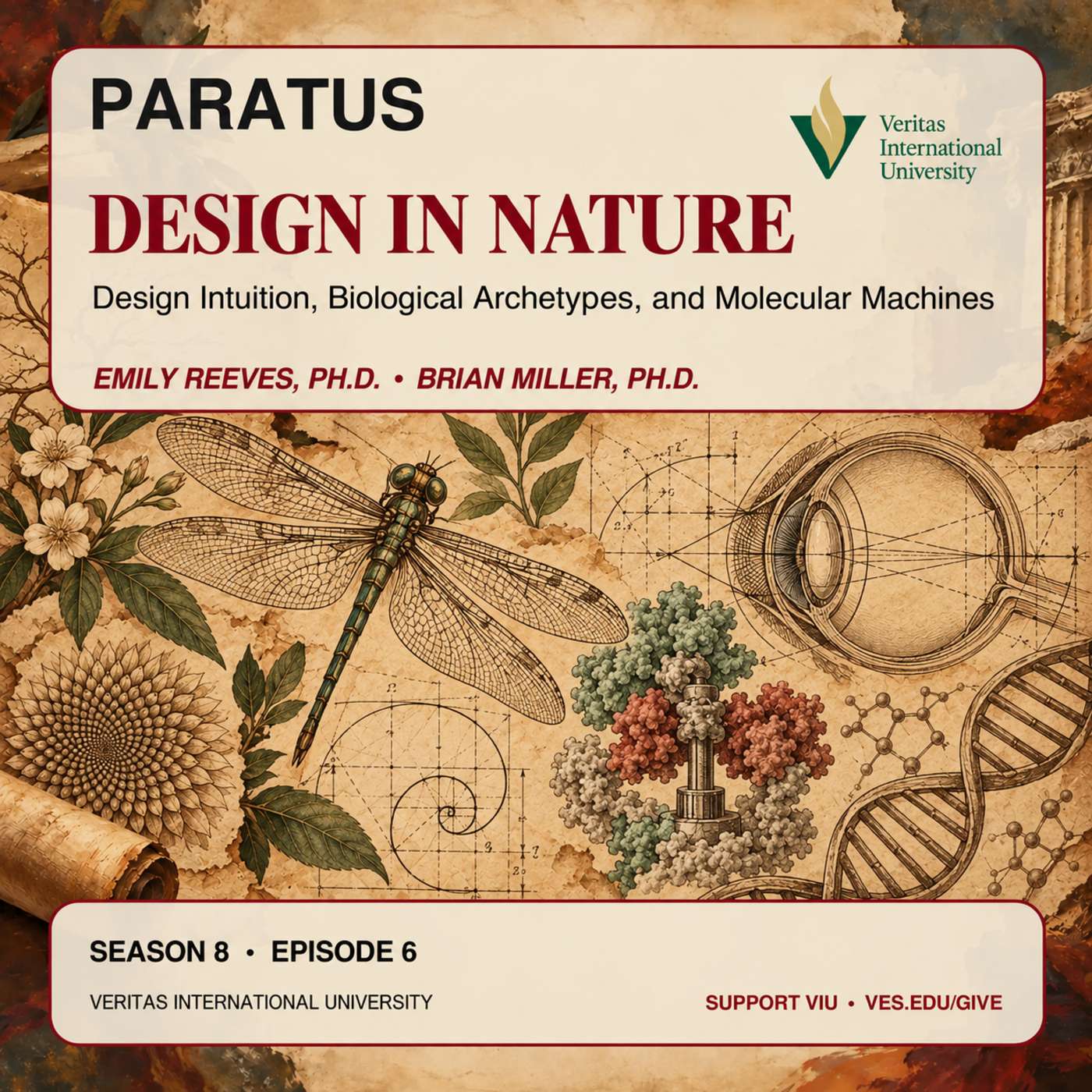
Design in Nature: Does Biology Reveal Intelligent Design? | Emily Reeves & Brian Miller
Oct 17, 2026 · 54m
Does nature merely look designed, or does biology provide testable evidence of intelligent purpose?Host Luke Betzner welcomes biochemist Emily Reeves, Ph.D., and physicist Brian Miller, Ph.D., of...
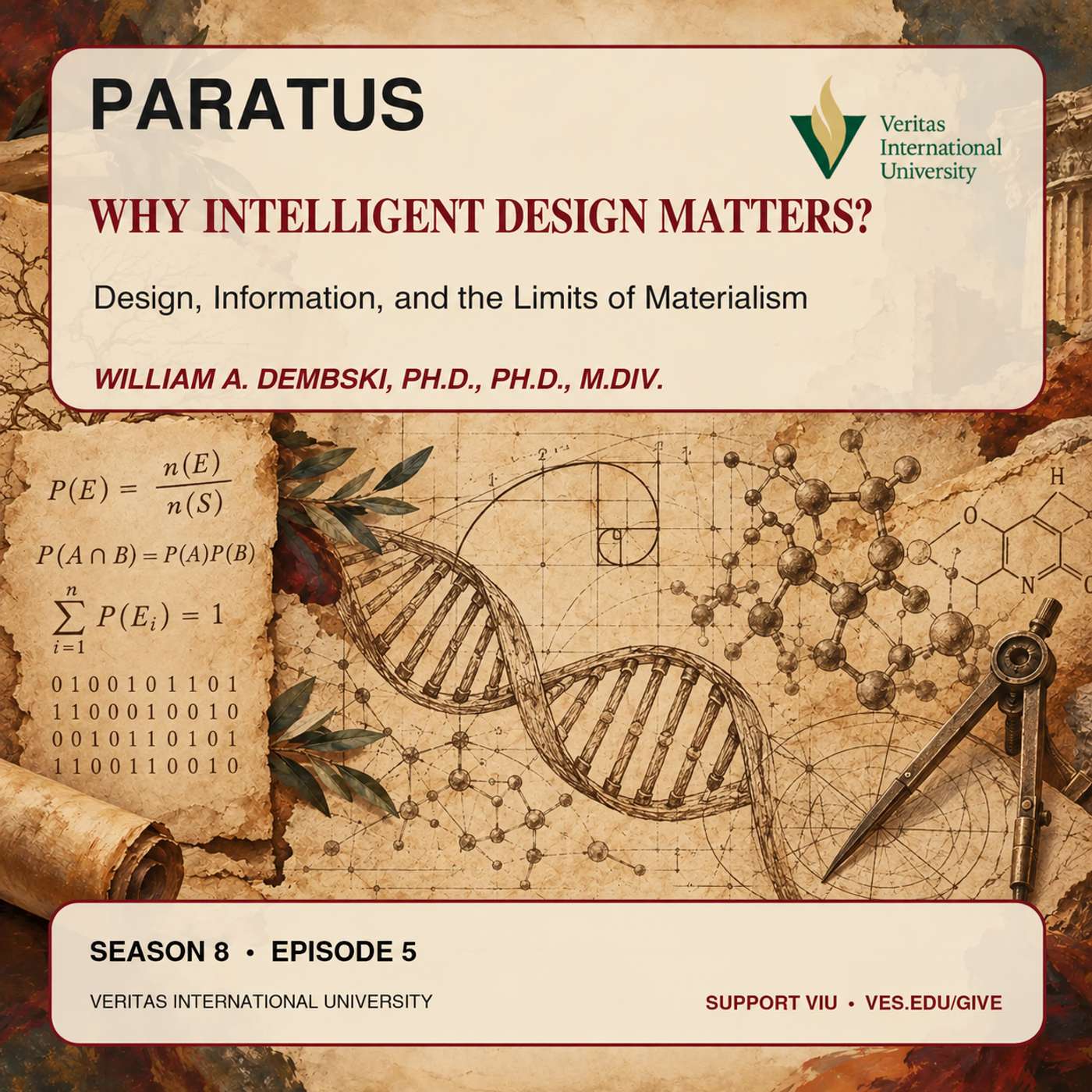
Why Intelligent Design Matters | William A. Dembski
Oct 10, 2026 · 1h 5m
Can patterns in nature provide reliable scientific evidence of intelligence—and why does that question matter for Christian faith and contemporary culture?Dr. William A. Dembski joins host Luke...
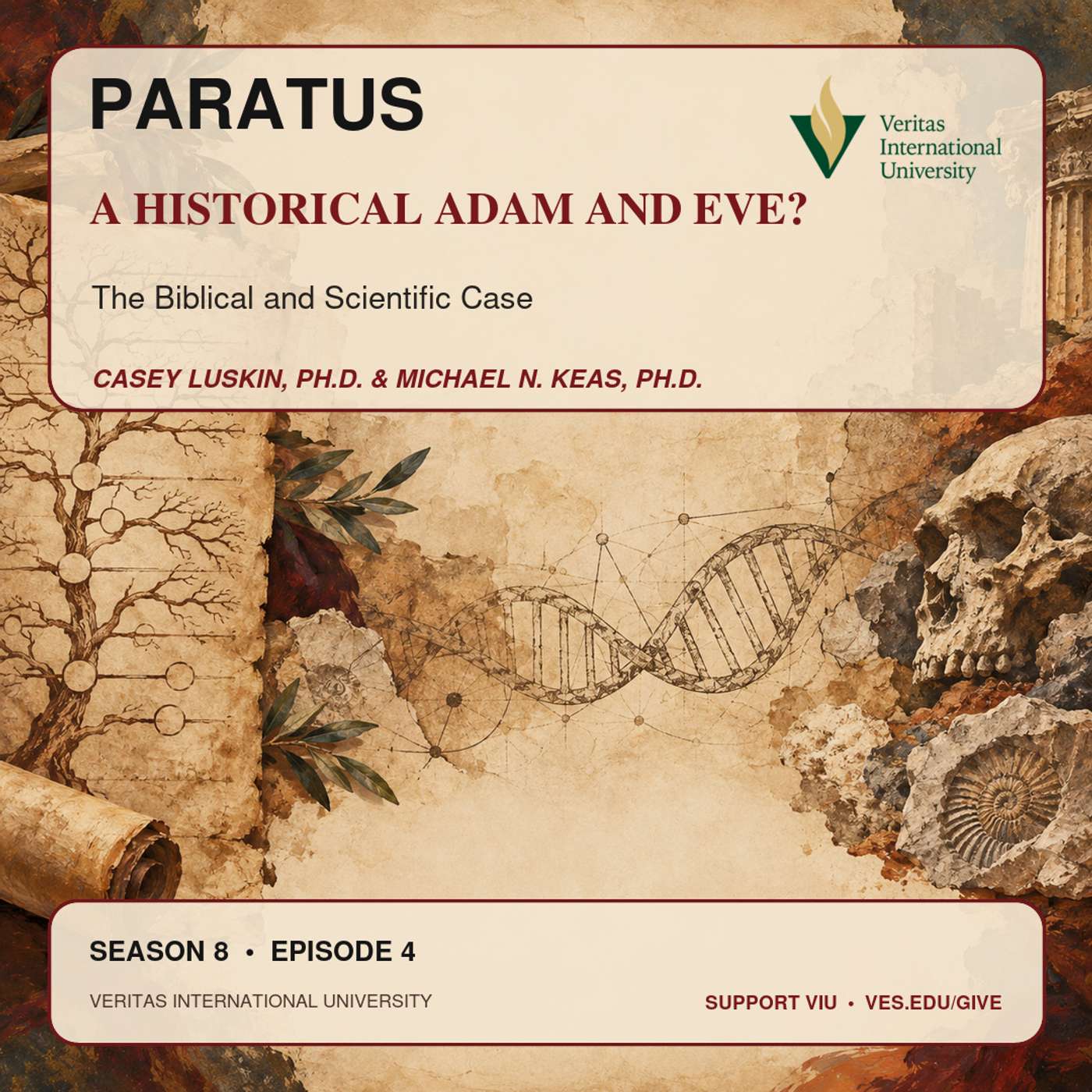
What Is the Biblical and Scientific Case for a Historical Adam and Eve? | Casey Luskin & Michael Keas
Oct 3, 2026 · 55m
Were Adam and Eve real historical people, and how should Christians evaluate scientific arguments about human origins? Host Luke Betzner welcomes Dr. Casey Luskin and Dr. Michael Keas to examine the...
Take these sermons with you.
Follow Paratus in the Getsermons app to get every new sermon, build playlists, and pick up right where you left off.

